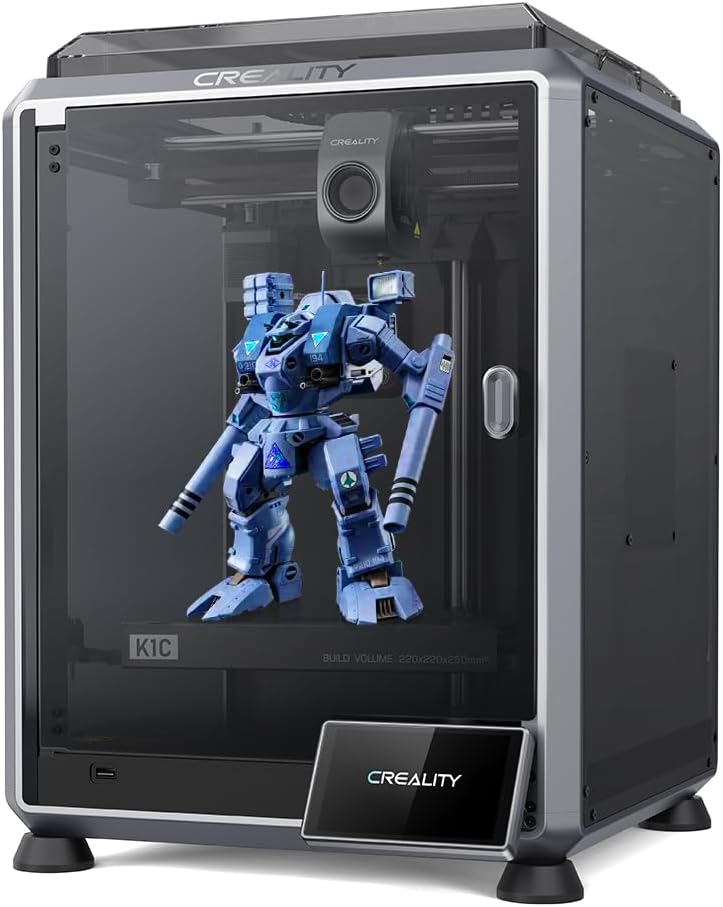
Creality K1C 3D Printer Support Carbon Fiber Filament Auto Leveling
4.3Editor score
300 degree high temp nozzle
Direct extruder for CF filament
600mm per second speed
This guide compares the top 10 3D printers for high temperature filaments based on enclosure, heated chamber, and hotend capabilities.
Finding the right 3D printer for high temperature filaments requires careful consideration of build chamber stability and extrusion limits. Advanced materials like PC or Nylon demand consistent heat to prevent warping and ensure structural integrity during the printing process.
We analyzed ten leading models available in the market to identify which machines handle engineering-grade plastics most effectively. Our comparison focuses on heated chamber capabilities, nozzle temperature ranges, and overall build stability for demanding applications.
Each pick below highlights specific strengths for working with ABS, ASA, and other thermally sensitive materials. Prices and availability fluctuate frequently so please verify current details before making your final purchasing decision today.
4.3Editor score

4.4Editor score

4.4Editor score
The following table provides a side-by-side overview of the key technical specifications for each model evaluated in this comprehensive guide to high temperature printing capabilities.




The FLASHFORGE Creator 5 Pro stands out as a top tier choice for users needing to print high temperature filaments like Polycarbonate or Nylon. It received a strong rating for its active heated chamber and industrial grade features.
We may earn a commission when you buy through this link, at no additional cost to you.
Its active heated chamber maintains temperatures up to 65 degrees Celsius to ensure advanced materials do not warp during cooling. The four independent extruders allow for complex multi-material prints without cross contamination or purging waste.
While the unit is more expensive than hobbyist options it delivers consistent performance that justifies the cost for serious prototyping or production work. The large footprint requires dedicated space which might be a constraint for smaller workbenches.
Buy this if you need reliable high temperature printing with multi-color capabilities and professional air filtration. It is ideal for engineering firms or advanced makers producing functional parts from demanding polymers.
This feature keeps the entire build environment warm to prevent warping on large prints with materials like ABS or PC.
Four separate toolheads allow you to switch materials instantly without wasting filament on purge cycles.
We may earn a commission when you buy through this link, at no additional cost to you.
The Creality K1C is an exceptional option for those seeking high temperature capability without a premium price tag. It features a hardened nozzle and direct extruder specifically designed for abrasive and high temperature materials.
We may earn a commission when you buy through this link, at no additional cost to you.
Its nozzle can reach 300 degrees Celsius making it suitable for engineering filaments. The direct extruder ensures consistent flow when using carbon fiber reinforced polymers which are difficult for standard extruders to feed smoothly.
The open frame design means you may need an enclosure for very large ABS prints but the performance per dollar is impressive. The smaller build volume limits large projects but is sufficient for most prototyping needs.
Choose this printer if you want high speed and high temp performance on a budget. It is perfect for hobbyists who need to print strong materials like ASA or PC without buying a full enclosure system.
The steel tipped copper nozzle with titanium heatbreak prevents clogs when printing with abrasive carbon fiber materials.
This feature ensures the bed is perfectly level every time so you spend more time printing and less time tuning.
We may earn a commission when you buy through this link, at no additional cost to you.
The Flashforge AD5X combines speed and material versatility with a 300 degree nozzle that handles high temperature filaments well. Its Independent Filament System allows for multi-color printing without the complexity of multiple extruders.
We may earn a commission when you buy through this link, at no additional cost to you.
This model is designed for rapid prototyping where speed and color variety are key. The independent system feeds different filaments directly to the print head reducing the time spent on color changes and purging.
While it lacks a heated chamber it excels at printing engineering materials that do not require extreme environmental control. The auto leveling ensures a perfect first layer every time reducing the chance of failed prints.
Select this printer if you need fast multi-color printing with high temperature capability. It suits small businesses that require rapid prototyping in various colors without slowing down production timelines.
This technology allows multiple filaments to be loaded simultaneously for instant color swaps during a single print job.
The system automatically adjusts the bed height to ensure consistent adhesion across the entire build surface.
We may earn a commission when you buy through this link, at no additional cost to you.
The Bambu Lab P2S offers a rare combination of high speed and a heated chamber that stabilizes prints with engineering materials. Its rating is very high due to its ease of use and reliable performance out of the box.
We may earn a commission when you buy through this link, at no additional cost to you.
The AMS 2 Pro enables multi-color printing while maintaining a 50 degree chamber temperature that helps with materials like ABS or ASA. The adaptive airflow system adjusts cooling based on the model requirements for better quality.
Although it comes at a premium price the reliability and speed make it a strong competitor in the high temperature category. The ecosystem is closed which limits some third-party customization but ensures smooth operation.
Choose this if you need a reliable printer that handles both high temp and multi-color printing seamlessly. It is best for users who want a hassle-free experience with professional grade results.
This system balances cooling and heat retention to keep the print environment stable for complex materials.
The filament system also dries spools automatically to prevent moisture issues during printing.
We may earn a commission when you buy through this link, at no additional cost to you.
The Bambu Lab P1S is a reliable enclosed printer that handles standard engineering plastics like ABS and ASA with ease. Its closed design keeps heat in which is essential for successful high temperature printing without warping.
We may earn a commission when you buy through this link, at no additional cost to you.
It is rated for high speed and quality making it a favorite for prototyping. The automatic bed leveling ensures setup is quick and consistent so you can start printing immediately after unboxing.
While it does not have an active chamber heater it maintains enough heat for most general engineering needs. It is not ideal for carbon fiber which requires specialized nozzles but works well for standard high temp materials.
Buy this for a fast reliable printer that handles high temperature filaments well. It is suitable for makers who need a balance of speed quality and temperature stability.
The fully enclosed frame traps heat inside to maintain a consistent environment for the print to succeed.
The printer self-calibrates before every print to ensure the nozzle height is perfect for adhesion.
We may earn a commission when you buy through this link, at no additional cost to you.
The Anycubic Kobra S1 Max is designed for those who need to print large parts from high temperature materials. It features a 350 degree hotend and a 65 degree active chamber to handle even the most demanding polymers.
We may earn a commission when you buy through this link, at no additional cost to you.
Its large build volume allows for printing substantial functional prototypes that other printers cannot accommodate. The CoreXY structure ensures stability at high speeds preventing vibrations that can ruin large prints.
This printer is robust and capable but requires significant space. The active chamber ensures that even tall PC parts do not warp during long print runs providing consistent quality.
Choose this if you need to print large scale parts with high temperature filaments. It is ideal for industrial prototyping or architectural models that require both size and material performance.
This system maintains a constant internal temperature to prevent warping on large ABS or PC prints.
The CoreXY system allows for high speeds with high precision ensuring detailed large prints stay stable.
We may earn a commission when you buy through this link, at no additional cost to you.
The Snapmaker U1 excels at multi-material printing where you need to combine different high temperature or flexible filaments. Its four toolheads allow you to swap materials in seconds without manual intervention or purging waste.
We may earn a commission when you buy through this link, at no additional cost to you.
It supports engineering materials like ABS and Nylon thanks to its robust extrusion system. The CoreXY structure maintains speed and precision even when switching between different material properties during a single print.
While it lacks an active chamber it is still capable of printing high temp materials with care. The rapid tool changing feature saves time and material making it efficient for complex functional parts.
Buy this if you need to combine high temp materials with supports or flexible parts. It is perfect for engineers who need complex assemblies in a single print run.
Four toolheads allow for true multi-material printing without stopping to load new filament manually.
The automated changer swaps tools in 5 seconds significantly reducing downtime compared to manual changes.
We may earn a commission when you buy through this link, at no additional cost to you.
The Flashforge AD5X Multicolor offers a high temperature hotend and fast printing in an affordable package. It uses a CoreXY system to achieve high speeds while maintaining precision for detailed high temp prints.
We may earn a commission when you buy through this link, at no additional cost to you.
Its all-metal hotend is ready for 300 degrees ensuring that materials like Nylon or PC can be extruded reliably. The independent filament system allows for color switching without manual loading during the print.
As an open frame printer it is best for materials that do not require extreme enclosure temperatures. It provides great value for those who need speed and temperature capability without paying for industrial features.
Choose this for a versatile printer that handles high temps and multi-color printing. It is suitable for hobbyists who want professional features at a lower price point.
This build prevents heat creep allowing the nozzle to reach 300 degrees without clogging.
This system allows you to switch colors instantly during a print job without pausing.
We may earn a commission when you buy through this link, at no additional cost to you.
The Bambu Lab A1 is a high speed printer that brings advanced features to beginners including active flow compensation. While it is open frame it can handle standard engineering plastics with the right settings and enclosure.
We may earn a commission when you buy through this link, at no additional cost to you.
It features a quick swap nozzle system and auto calibration making it incredibly easy to start printing. The speed and precision are impressive allowing for fast prototyping of functional parts.
Because it lacks an enclosure it is better for materials that do not warp heavily. It is best for users who need speed and simplicity rather than a dedicated high temp chamber.
Buy this if you want a beginner friendly printer that can handle a variety of filaments. It is excellent for rapid prototyping in a home office or school environment.
This system ensures consistent flow rates during speed changes leading to smooth and accurate prints.
The motor noise canceling keeps the environment quiet allowing you to work while prints are running.
We may earn a commission when you buy through this link, at no additional cost to you.
This variant of the Creator 5 Pro focuses on reducing waste while maintaining high temperature performance. It uses independent toolheads to switch colors without purging saving material and money over time.
We may earn a commission when you buy through this link, at no additional cost to you.
The active heated chamber ensures stable printing for high temperature materials like ABS and PC. It is built for industrial reliability and consistency which is vital for production environments.
While the cost is high the waste reduction system pays off in the long run. It is designed for users who print daily and want to minimize material loss and operational costs.
Select this for a production focused printer that saves material. It is best for small businesses running multiple high volume jobs with high temperature filaments.
This system eliminates the need to purge filament between color changes saving material and time.
Maintains a stable environment up to 65 degrees for warping free prints of engineering materials.
We may earn a commission when you buy through this link, at no additional cost to you.
Selecting the right printer for high temperature filaments requires understanding the specific thermal requirements of your chosen materials and matching them to the machine capabilities.
High temperature filaments like PC and Nylon require a stable heated environment to prevent warping and delamination. Look for a printer with an active heated chamber that maintains at least 50 degrees Celsius to ensure consistent interlayer adhesion.
A higher chamber temperature helps maintain the temperature of the printed part as it cools reducing the risk of warping on larger models.
Your hotend must be capable of reaching the melting point of your chosen filament. High temperature plastics often require nozzle temperatures exceeding 280 degrees so check that the printer supports at least 300 degrees.
An all-metal hotend is essential to prevent clogging when pushing material through at these extreme temperatures.
Abrasive materials such as carbon fiber or glass reinforced polymers require a hardened nozzle to prevent wear over time. A brass nozzle will degrade quickly so look for hardened steel or ruby tipped nozzles.
Ensure the heat break is made of high conductivity metal like titanium to handle the thermal load efficiently.
Printing with high temperature materials often involves longer print times which means stability is crucial to avoid defects. A rigid metal frame with linear rails will maintain accuracy throughout the entire print.
Vibration compensation software helps reduce artifacts on large prints ensuring high quality results.
The build plate must have a high temperature heater to ensure the part sticks during the long print process. A heated bed reaching 100 degrees is typically necessary for ABS or PC prints.
Surface materials like PEI or glass provide excellent adhesion for high temperature plastics but may require a primer or glue stick for best results.
High temperature printing often releases fumes and volatile compounds that can be harmful to health. Look for a printer with HEPA or carbon filters to clean the air inside the chamber.
Good ventilation is necessary for open frame printers to ensure the workspace remains safe during operation.
Slicing software should offer specific settings for high temperature materials including cooling profiles and support structures. Check if the printer has a well maintained community or manufacturer support for profiles.
Good software can help manage the thermal expansion of materials to prevent print failures and improve quality.
Safety sensors like filament runout detection and thermal runaway protection are critical when running prints at high temperatures. These features prevent fires and wasted material if the machine encounters an issue.
Always ensure the printer has overheat protection for both the bed and the hotend to prevent damage.
Preheat your printer and chamber sufficiently before starting a print to ensure the entire build volume is stable. This prevents early layer warping especially on materials like ABS that contract significantly when cooling.
Use a brim or raft for larger prints to increase surface area and adhesion to the bed. This technique helps hold the part down against the internal stresses caused by thermal contraction.
Clean your nozzle regularly with a brass brush or filament cleaning filament to remove debris that can clog the hotend. Inspect the PTFE tube for signs of wear if you are using high temperature materials near the heat break.
The Bambu Lab P1S is an excellent choice for ABS and ASA because it has an enclosed body that stabilizes temperature. For better results consider adding an external enclosure to maintain consistent heat.
Yes you need a hardened steel or ruby tipped nozzle because carbon fiber is highly abrasive. A standard brass nozzle will wear down quickly leading to inconsistent extrusion and clogs.
It is difficult to print Polycarbonate reliably on an open frame printer because it requires a heated chamber. You may need to build an external enclosure to maintain the necessary temperature.
Set your bed temperature based on the filament manufacturer recommendations typically between 90 and 110 degrees for high temp materials. Consistent bed heat is essential for first layer adhesion.
You should inspect the nozzle and heat break at least once a month or after every 500 hours of printing. Cleaning with a brass brush prevents buildup that causes inconsistent extrusion.
Yes if you have proper ventilation and use a printer with air filtration. High temp materials release fumes so ensure the room is well ventilated during operation.
Choosing the right printer for high temperature filaments depends on your specific needs for speed, enclosure, and budget. Our top picks cover a wide range of options for every level of user.
Prioritize a heated chamber and hardened nozzle if you plan to print frequently with engineering materials. These features ensure reliability and consistent quality for your critical projects.
Remember to check current prices and availability before buying as models and offers change often. Verify the exact specifications match your needs to ensure you get the best value for your investment.