
Ueteto Mechanical Metronome Black
4.4Editor score
Affordable entry-level mechanical option
Loud sound for clear beat tracking
Supports multiple beat selections easily
This guide compares the top mechanical metronome for piano options to help you choose the best reliable tool for maintaining accurate tempo and rhythm during
Finding the right mechanical metronome for piano can transform your practice sessions by providing a reliable, battery-free way to keep time. Unlike digital options, these classic devices offer a tactile and auditory experience that many musicians prefer for developing a strong internal sense of rhythm and timing accuracy.
We have carefully evaluated ten top-rated mechanical metronomes based on their build quality, precision, ease of use, and overall value. Our comparison focuses on features like tempo range, bell options, and durability to ensure you find a model that fits your specific musical needs and practice environment perfectly.
Each selection below highlights key strengths and potential trade-offs to help you make an informed decision. Please note that product availability and pricing can change frequently, so we recommend checking the latest details on the product pages before making your final purchase decision.
4.4Editor score

4.5Editor score

4.6Editor score
The following table provides a side-by-side comparison of all ten mechanical metronomes featured in this guide. Review the key specifications for each model to quickly identify which one aligns best with your specific practice requirements and aesthetic preferences.


The Tempi Metronome for Musicians stands out as a top choice for pianists seeking a blend of classic aesthetics and reliable performance. With a strong rating of 4.5 stars, users appreciate its ability to establish accurate musical timing and help develop finger agility through consistent rhythmic feedback.
We may earn a commission when you buy through this link, at no additional cost to you.
Its standout quality lies in the durable steel gears that ensure the pendulum swings smoothly without error over time. The brown grain veneer finish adds a touch of elegance to your practice space, making it more than just a tool but also a piece of decor. The inclusion of a free microfiber cleaning cloth shows attention to detail in customer care.
While it is priced higher than some entry-level options, the two-year warranty and solid construction justify the investment for serious students. The wind-up mechanism provides about 20 minutes of practice time per full wind, reducing interruptions during intense sessions. The only minor drawback is the plastic core which some might prefer to be fully wood for traditionalists.
This metronome is ideal for both adults and kids who value precision and style. Whether you are practicing solo or preparing for a performance, the Tempi offers the consistency needed to master rhythm and tempo. We recommend it for anyone looking for a high-quality mechanical device that combines function with form effectively.
The use of steel gears ensures that the internal movement remains precise and resistant to wear over years of daily use.
Its beautiful brown grain veneer looks perfect on a piano top, blending functionality with an elegant home decor style.
We may earn a commission when you buy through this link, at no additional cost to you.
The Ueteto Mechanical Metronome in Black is a fantastic entry-level option for pianists on a budget. It holds a solid 4.4 rating and is designed to help you develop rhythm and maintain tempo without the need for batteries. Its loud sound ensures you can hear the beat clearly even in a busy practice environment.
We may earn a commission when you buy through this link, at no additional cost to you.
Key strengths include its ease of use and versatility across different instruments. You can simply wind it up, adjust the tempo slider, and start playing. The bell ring feature helps you keep track of the downbeat, which is crucial for mastering complex pieces. It is a straightforward tool that focuses on delivering accurate beats.
The trade-off here is the basic construction which lacks the premium feel of higher-end models. It may not last as long as metal-gear alternatives but offers excellent value for the price. For beginners or casual players, the durability is usually sufficient to handle regular practice sessions without issues.
We recommend this for students who need a reliable practice aid without spending too much. It is perfect for setting up a practice station quickly. The 100 percent customer support backing adds confidence to your purchase, ensuring you can get help if any mechanical issues arise.
The audible click and bell ring are designed to be loud enough to maintain rhythm while you are reading music sheets.
Taking out the brake and pulling off the cover are simple steps that make it ready for use even for young children.
We may earn a commission when you buy through this link, at no additional cost to you.
The Wittner 836 Taktell Piccolo is a premium choice backed by a reputation for German craftsmanship. With a high rating of 4.6 stars, it appeals to professionals and students who prioritize accuracy above all else. Its compact black design makes it easy to transport to lessons or rehearsals without hassle.
We may earn a commission when you buy through this link, at no additional cost to you.
The standout quality is its precision mechanical movement which ensures the tempo remains consistent throughout your practice. While it lacks a bell, the clear click sound is sufficient for most pianists who do not need accent marks. The lightweight plastic casing does not compromise on the robustness of the internal mechanism.
One trade-off is the absence of a bell which some users might prefer for highlighting the downbeat. Additionally the price is higher than generic models but you are paying for proven reliability. The simplicity of the design means there are fewer parts to break over time.
This metronome is best suited for advanced pianists or those who travel frequently. Its reliability makes it a trusty companion for serious practice. If you value precision and portability, the Wittner Taktell Piccolo is worth the investment to ensure your timing remains impeccable.
Wittner has a long history of producing high quality metronomes known for their accurate timing and durable construction.
The small black casing fits easily into bags allowing you to take your metronome anywhere without adding bulk.
We may earn a commission when you buy through this link, at no additional cost to you.
The M350 AUPHY Mechanical Metronome combines classic styling with functional features that appeal to pianists. It holds a 4.4 rating and is built with high-strength PC material and metal clockwork to ensure accurate beats. The transparent dust cover protects the gears while maintaining a clean look.
We may earn a commission when you buy through this link, at no additional cost to you.
Its key strength is the accent bell which activates on beat selections like 2, 3, 4, or 6. This helps pianists keep track of measure lengths effectively. The lowered center of gravity ensures it stays stable on the piano top without tipping over during strong playing.
While the PC material is durable, it may not feel as substantial as metal options. The transparent cover is convenient but can accumulate dust or scratches over time. However the error rate being controlled within one percent makes it a reliable tool for precise tempo training.
We suggest this for pianists who want an affordable metronome with clear rhythmic cues. It works well for both beginners and intermediate players. The factory inspection ensures that each unit meets quality standards before shipping. It is a practical choice for daily practice sessions.
Selecting beats other than zero triggers an accent bell which helps highlight the downbeat for better rhythmic awareness.
The lowered center of gravity keeps the metronome steady on the piano surface even when the keys are pressed hard.
We may earn a commission when you buy through this link, at no additional cost to you.
This Mechanical Metronome model is praised for its loud sound which makes it easy to hear over piano notes. With a 4.2 rating, it serves as a solid tool for beginners needing clear auditory feedback. The classic walnut color adds an elegant touch to your practice room decor.
We may earn a commission when you buy through this link, at no additional cost to you.
Its main advantage is the loud sound output combined with high precision mechanics. The metal movement ensures the beat remains accurate without rusting. You can wind it up for 15 to 45 minutes of practice time depending on the tempo you choose.
The trade-off is that it is a generic model without unique aesthetic features. The plastic body is functional but lacks the premium feel of branded names. However for the price it delivers the core function of keeping time effectively for daily practice needs.
We recommend this for students who need a dependable metronome without extra fluff. It is straightforward to operate with clear instructions for setup. If loudness is a priority for your practice environment, this model should not disappoint in performance.
The error is controlled within 1 percent ensuring that the tempo stays consistent throughout your entire practice session.
The classic walnut color adds style to your room while meeting your daily practice needs for rhythm training.
We may earn a commission when you buy through this link, at no additional cost to you.
The Universal Mechanical Metronome offers a range of colors to suit different personal tastes. It holds a strong 4.6 rating and is designed for ease of use by both children and adults. The standard black version provides a sleek look that fits into most music studios seamlessly.
We may earn a commission when you buy through this link, at no additional cost to you.
Its key strength is the durability provided by high-hardness plastic and metal components. The heavy bell sound ensures the beat is clearly audible during practice. The 30-day unconditional return policy and one-year warranty add security to your purchase decision.
The trade-off is that it is a standard design without unique features like a wood finish. However the functionality remains consistent with other models in the same price range. It is a safe choice for those who want reliable performance without complex settings.
We suggest this for families or schools needing multiple units. The variety of colors can help distinguish between different practice rooms. If you value ease of use and reliable beats, this model is a practical choice for consistent rhythm training.
You can choose from multiple colors to meet your individual color needs and match your practice room decor easily.
The combination of high hardness plastic and metal ensures a stable performance and long lasting durability for years.
We may earn a commission when you buy through this link, at no additional cost to you.
The Ueteto Mechanical Metronome with Wood Grain finish brings a classic look to your piano top. With a 4.3 rating, it balances aesthetics with functionality. The loud crisp tick ensures you stay focused on the music rather than counting beats manually.
We may earn a commission when you buy through this link, at no additional cost to you.
Its standout feature is the wood grain appearance which mimics traditional wooden metronomes. The bell ring activates on specific beat counts to help mark the tempo clearly. A full wind can last up to 54 minutes at slow tempos allowing long practice sessions without interruption.
The trade-off is that the winding key requires gentle handling to avoid damaging the mainspring. The felt bottom padding may wear over time but is easy to replace. For the price, it offers a stylish alternative to purely plastic models.
We recommend this for pianists who appreciate traditional design. It is perfect for home studios where looks matter. The clear scale markings make adjusting tempo simple. If you want a metronome that looks good and performs well, this is a strong contender.
The wood grain finish provides a classic yet elegant style that most music lovers will appreciate on their instrument.
Depending on the tempo a full wind can last a long time so you can practice without frequent winding interruptions.
We may earn a commission when you buy through this link, at no additional cost to you.
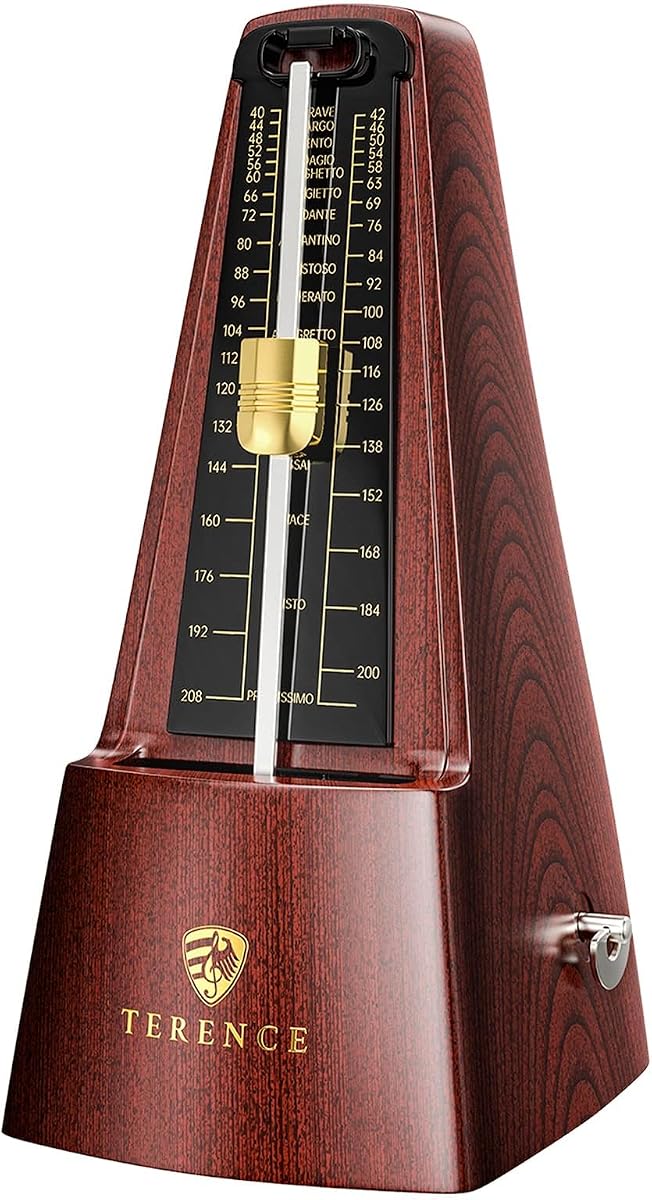
The TERENCE Mechanical Metronome features a unique transparent design that showcases the internal mechanics. It has a 4.0 rating and uses an upgraded all-metal movement for stability. The all-copper pendulum swings smoothly to adjust beat speed without rusting issues.
We may earn a commission when you buy through this link, at no additional cost to you.
Its key strength is the modern look that stands out among traditional models. The metal knob allows for precise adjustments and wear resistance. The sound remains clear and loud to ensure attention stays concentrated on the rhythm during practice sessions.
The trade-off is that transparent ABS can yellow over long-term use although it is resistant. The rating suggests some users may find it less precise than others. However the metal components suggest a potential for longevity if cared for properly.
We suggest this for pianists looking for a distinctive teaching tool. The design helps visualize the pendulum movement which can aid beginners in understanding rhythm. If you value visual appeal alongside functionality, this model offers a fresh take on classic metronomes.
The transparent material makes the metronome more beautiful and allows you to see the internal gears at work.
Using all metal movement makes the unit sturdier and allows longer use without frequent winding requirements.
We may earn a commission when you buy through this link, at no additional cost to you.
This Mechanical Metronome is designed for delivering a loud clear sound to help master rhythm efficiently. With a 3.8 rating, it serves as a basic value option for those needing a functional tool. The engraved markings ensure you can read the tempo easily.
We may earn a commission when you buy through this link, at no additional cost to you.
Its main advantage is the simple operation which includes removing a dust cover and winding the spring. It offers five tempo settings and a range from 40 to 208 BPM. The premium materials claim suggests durability though feedback varies on long-term reliability.
The trade-off is the lower rating which may indicate occasional quality control issues. It is best for casual users or backup purposes. If you need a metronome quickly without much investment, this can serve as a decent starting point.
We recommend this for beginners who want a low-risk entry. It meets daily training requirements for simple pieces. If you prioritize function over form and want a budget-friendly option, this model is worth considering for basic practice needs.
You simply remove the dust cover and pull out the bottom slot to begin adjusting the speed for your needs.
The device delivers precise beats with a loud sound to help you efficiently master rhythm during your sessions.
We may earn a commission when you buy through this link, at no additional cost to you.
The Mechanical Metronomes Wood Grain model is specifically noted for being effective for beginners. It holds a 4.4 rating and features an all-metal movement to ensure long time use without errors. The wood grain finish adds a touch of elegance to your practice space.
We may earn a commission when you buy through this link, at no additional cost to you.
Its key strength is the high precision track beat range which helps master rhythm skills effectively. The loud sound allows for clear tempo tracking even in noisy rooms. Simple setup steps make it accessible for children and new learners right away.
The trade-off is that the body remains plastic with a wood grain overlay rather than solid wood. However the metal internals provide the reliability needed for consistent practice. It is a practical tool to develop a solid sense of rhythm.
We recommend this for students starting their musical journey. It helps establish the concept of the beat visually and intuitively. If you want a device that supports early learning without complex features, this model is an excellent choice for steady progress.
All pieces of the movement are made of metal which ensures long time use without error for consistent tracking.
It helps to master rhythm skills and improve your beat and sense of rhythm for better musical awareness.
We may earn a commission when you buy through this link, at no additional cost to you.
Selecting the right mechanical metronome involves considering several key factors that affect performance and usability. Here are the most important aspects to evaluate before making your decision.
Look for a metronome that offers a wide tempo range such as 40 to 208 beats per minute to accommodate both slow warm-ups and fast technical exercises. A broader range ensures the device can grow with your skills as you progress through different musical styles and difficulty levels.
Ensure the scale allows for precise adjustments so you can fine-tune the speed for specific practice challenges without gaps in settings.
Choose a model with metal gears and a sturdy pendulum to ensure the internal mechanism remains accurate over years of use. Plastic gears may wear out faster leading to inconsistent beats which can hinder your rhythm development.
Prioritize models with reinforced centers of gravity and durable materials to prevent tipping and breakage during regular practice sessions.
The click and bell sound should be loud enough to hear clearly above piano notes or ambient room noise. A soft sound might force you to stop playing to check the time which disrupts your flow and concentration.
Test or read reviews about the volume levels to ensure the metronome provides consistent auditory feedback without being uncomfortably loud.
Decide if you need an accent bell to mark the downbeat or specific measure lengths such as 2, 3, 4, or 6 beats. This feature is crucial for learning complex time signatures and keeping track of your place in the music.
Look for models that allow you to turn the bell off so you can practice without accents once you are comfortable with the tempo.
Select a device with clear markings and simple winding mechanisms to avoid frustration during setup. Beginners and children benefit from straightforward controls that require minimal effort to adjust the tempo and beat settings.
Check for features like removable brakes and covers that make the device ready to use quickly without complicated steps.
Consider the visual style such as wood grain veneers or classic black finishes to match your piano and home decor. A nice looking metronome can encourage you to keep it out on your piano for more regular use.
Balance form with function ensuring the design does not compromise the stability or readability of the tempo markings on the device.
Opt for a fully mechanical wind-up model to avoid battery waste and ensure you can practice anywhere without needing spare power. This also simplifies the device and reduces points of failure that can occur with electronic components.
Check the wind-up duration per full wind to ensure it lasts long enough for your typical practice session without interruption.
Look for manufacturers that offer at least a one-year warranty and responsive customer support in case of mechanical failures. This assurance can save you money and stress if parts stop working correctly over time.
Read the return policies and warranty terms carefully to understand what is covered when you purchase your new metronome.
To start using your mechanical metronome, remove the protective stopper from the bottom and wind the key gently clockwise until you feel resistance. Place the metronome horizontally on a stable surface like your piano top to ensure it stays upright during the pendulum's movement.
Set your desired tempo by sliding the pendulum weight up or down along the numbered scale. Then select your beat mode by moving the bell switch to your preference such as 0 for no bell or 4 for four beats per measure.
Flick the pendulum to one side and release it to start the ticking. After use, return the pendulum to the center and remove the winding key to prevent accidental damage to the mainspring.
No, mechanical metronomes do not require batteries as they operate using a wind-up mainspring mechanism. This design eliminates the need for power sources and makes them portable and reliable for practice anywhere without worrying about battery life.
To set the tempo, slide the weighted pendulum up or down the numbered scale until the pointer aligns with your desired beats per minute. Moving the weight higher slows the tempo while moving it lower speeds it up.
Yes, mechanical metronomes are designed for universal use across all instruments including piano, guitar, violin, and drums. They provide a consistent beat that helps any musician maintain proper timing and rhythm during practice or performance.
The bell button or switch activates an accent bell that rings on specific beats such as the first beat of each measure. This helps musicians identify the downbeat and understand the structure of the rhythm while playing.
If your metronome is too quiet, check if it is wound up fully and ensure the pendulum swings freely. Dust or debris may also block the gears, so gently clean the mechanism or contact the manufacturer if the sound remains low.
A full wind-up typically lasts between 15 to 45 minutes depending on the tempo you select. Slower tempos use less energy per tick, extending the duration, while faster tempos deplete the spring faster.
High-quality mechanical metronomes are very accurate and can maintain a consistent tempo with an error margin of less than one percent. Precision internal gears ensure the pendulum swings at a steady rate for reliable rhythm training.
Store your metronome in a dry place away from extreme temperatures to prevent warping or rust. Always return the pendulum to the center position and remove the key to reduce tension on the spring when not in use.
In summary, selecting the best mechanical metronome for piano depends on your specific needs for precision, sound, and style. Models like the Tempi Metronome offer a blend of durability and aesthetics while budget options like the Ueteto provide reliable functionality at a lower cost.
Prioritize features that support your practice goals such as loud sound for clarity or a wide tempo range for advanced exercises. Consistent timing is essential for musical growth so investing in a device that remains accurate over time is highly beneficial.
Remember that prices and availability can change so verify the latest details before purchasing. Check current offers on Amazon to ensure you get the best value for your investment in this essential practice tool.