
FotoZ Macro Conversion Lens
4.6Editor score
37mm to 72mm universal fit
Three element optical design
Tool-free snap on attachment
This comprehensive guide compares the top ten macro lenses for insect photography, evaluating optical performance, magnification capabilities, and build
Capturing the intricate details of the natural world requires specialized equipment that can bring tiny subjects to life. Macro lenses allow photographers to explore the hidden textures and patterns found in insects and flora with remarkable clarity and precision.
We evaluated ten distinct optical solutions ranging from smartphone attachments to professional mirrorless lenses. Our assessment focuses on magnification ratios, optical sharpness, build durability, and ease of use for various photography scenarios.
Each selection highlights unique strengths tailored to different budgets and camera systems. Please note that availability and pricing can fluctuate regularly, so verifying current stock levels is recommended before making your final purchase decision.
4.6Editor score

4.7Editor score
4.6Editor score
This side-by-side comparison outlines the core specifications and intended use cases for each lens model featured in this guide to help you quickly identify the most suitable option for your specific camera system and shooting requirements.


This lens represents the pinnacle of macro optical engineering for Canon RF users. Its industry leading 1.4x magnification allows for extreme close-ups that reveal details invisible to the naked eye.
We may earn a commission when you buy through this link, at no additional cost to you.
The hybrid image stabilization system is particularly effective during handheld macro work where camera shake is magnified. It compensates for both angular and shift movements ensuring sharp images even at slower shutter speeds.
While the price point is significant, the build quality and optical performance justify the investment for serious photographers. The spherical aberration control ring offers unique creative flexibility for managing foreground and background blur.
Professional nature photographers seeking the highest fidelity should prioritize this lens. It delivers consistent results in challenging lighting conditions and provides a robust platform for commercial insect photography work.
The 1.4x magnification ratio exceeds standard macro offerings allowing you to fill the frame with minute subjects like insect eyes or wing venation without additional extension tubes.
Hybrid IS corrects for both tilt and shift movements which is critical when working at close focusing distances where even slight hand tremors can ruin image sharpness.
We may earn a commission when you buy through this link, at no additional cost to you.
This conversion lens offers an accessible pathway into macro photography without requiring a dedicated expensive lens. It screws onto your existing lens filter thread to transform it into a close-up tool.
We may earn a commission when you buy through this link, at no additional cost to you.
The spring-loaded adapter mechanism allows for quick attachment and removal between shots. This convenience is invaluable when you need to switch rapidly between standard and macro photography during field work.
Optical performance is surprisingly strong for the price point though minor edge softness may occur at wide apertures. The multi-coated glass helps reduce flare and maintain contrast during outdoor shooting.
Beginners or hobbyists seeking to explore macro techniques on a budget will find this solution highly practical. It eliminates the need for a second lens investment while delivering satisfactory close-up results.
Adapter rings included cover a wide range of filter threads from 37mm to 72mm ensuring compatibility with most standard consumer and professional lens barrels.
The snap-on design eliminates the need for tools allowing photographers to toggle between macro and standard focal lengths in seconds during active shooting sessions.
We may earn a commission when you buy through this link, at no additional cost to you.
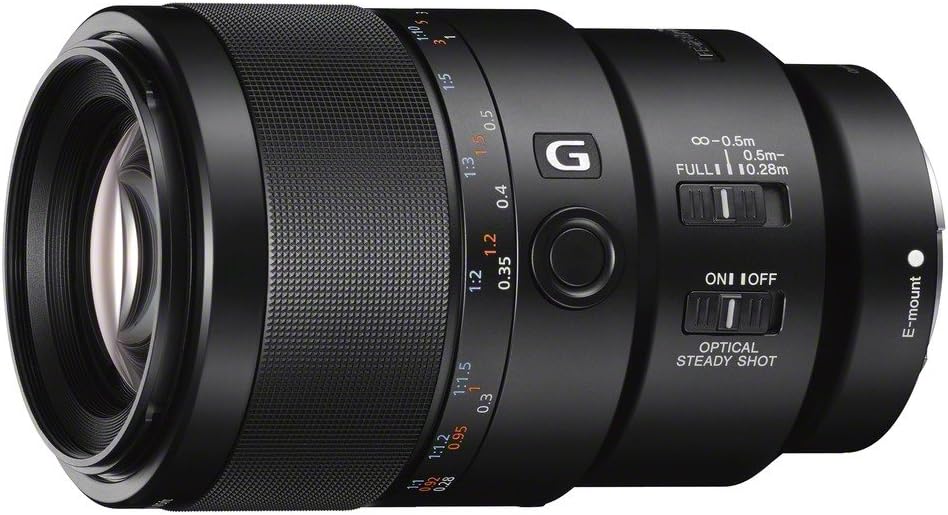
Designed for Sony Alpha full-frame users this lens delivers professional grade performance with a weather-sealed chassis. It withstands harsh field conditions including light rain and dusty environments.
We may earn a commission when you buy through this link, at no additional cost to you.
The optical steady shot image stabilization ensures sharp handheld images by compensating for camera shake effectively. This feature is essential when shooting insects that require longer focal lengths for safety.
Corner-to-corner sharpness is maintained even at maximum aperture thanks to advanced spherical elements and multi-coating. The 9-blade circular aperture creates smooth background blur that isolates subjects beautifully.
Professional photographers relying on reliability and image quality will appreciate its robust construction. The direct drive super silent motor ensures quiet focusing which is crucial when working with skittish wildlife.
Dust and moisture resistant sealing allows this lens to perform reliably in unpredictable outdoor conditions extending its lifespan in demanding field environments.
Optical Steady Shot provides up to five stops of stabilization enabling sharper handheld macro shots and reducing dependency on tripods in dynamic situations.
We may earn a commission when you buy through this link, at no additional cost to you.
This manual focus prime offers a compelling balance of optical quality and build durability. It provides 1:1 magnification for true macro work with a compact form factor that is easy to carry.
We may earn a commission when you buy through this link, at no additional cost to you.
The 11-blade aperture design produces smooth background bokeh that separates subjects from distracting backgrounds. This optical characteristic is particularly useful for isolating insects against cluttered foliage.
Weighing significantly less than comparable lenses it reduces fatigue during long field sessions. The all-metal construction ensures it can withstand bumps and minor drops in outdoor environments.
Photographers comfortable with manual focusing will find excellent value in this option. Its optical performance rivals more expensive alternatives making it a smart choice for creative still life or nature work.
The 11-blade aperture creates circular out-of-focus highlights that enhance image aesthetics and provide a professional look to close-up portraits of small subjects.
Weighing just 13.1 ounces this lens is lighter than many competitors making it ideal for travel photographers who prioritize portability without sacrificing macro capabilities.
We may earn a commission when you buy through this link, at no additional cost to you.
This lens offers a versatile focal length that works for both general photography and close-up work. It provides 0.5x magnification which is sufficient for many macro subjects without specialized equipment.
We may earn a commission when you buy through this link, at no additional cost to you.
The fast F1.8 aperture allows for excellent performance in low-light conditions while producing shallow depth of field effects. Optical image stabilization ensures sharp handheld shots in dimly lit environments.
A control ring allows direct adjustments to exposure settings without changing menus. This interface improves shooting efficiency and provides a tactile experience that appeals to professional users.
Travel photographers or those needing a versatile walk-around lens will appreciate its dual utility. It serves as a capable macro tool without compromising its effectiveness as a prime lens for other scenarios.
The wide F1.8 aperture combined with optical stabilization makes this lens effective in challenging lighting where slower shutter speeds would typically cause blur.
Customizable control ring allows quick access to shutter speed or ISO settings enhancing workflow speed during dynamic shooting situations.
We may earn a commission when you buy through this link, at no additional cost to you.
Designed specifically for extreme close-ups this lens offers 2 to 5 times magnification surpassing standard macro capabilities. It fills a niche for micro-photography where details beyond life-size are required.
We may earn a commission when you buy through this link, at no additional cost to you.
The manual focus mechanism provides precise control over the focusing distance which is crucial at such high magnifications. Users can fine-tune sharpness to capture the finest textures on insect exoskeletons.
The wide-angle configuration at 25mm provides a greater depth of field compared to telephoto macro lenses. This optical characteristic ensures more of the subject remains in focus simultaneously.
Hobbyists exploring specialized micro-photography will find this lens a unique tool. It delivers significant optical performance for the price though it requires a tripod and manual focus technique for best results.
The 2x to 5x magnification ratio allows imaging of subjects significantly larger than life-size ideal for scientific documentation or detailed artistic macro work.
Wide angle optical design provides more depth of field than telephoto macros allowing greater focus tolerance on complex subjects.
We may earn a commission when you buy through this link, at no additional cost to you.
This kit includes four different diopter strengths allowing photographers to choose the magnification level that suits their needs. Stacking filters can create even higher magnifications for extreme close-up work.
We may earn a commission when you buy through this link, at no additional cost to you.
Double threaded design allows additional accessories like polarizers to be added on top without losing functionality. This versatility provides significant flexibility during complex shooting scenarios.
Image quality remains sharp for most subjects though corners may show slight softness at maximum magnification. The nylon pouch ensures the filters stay protected and scratch-free during travel.
Entry-level photographers looking to experiment with macro techniques without high costs will benefit from this kit. It provides a cost-effective way to test close-up photography before investing in dedicated lenses.
Filters can be stacked to combine diopter values allowing users to create custom magnification levels for specific subjects or creative requirements.
Double threads allow adding polarizers or other filters without removing the close-up lens enabling complex lighting and optical combinations.
We may earn a commission when you buy through this link, at no additional cost to you.
This kit transforms smartphone cameras into capable macro tools with a 15x macro lens and wide-angle attachment. The TruGrip clip ensures a stable and secure attachment for handheld shooting.
We may earn a commission when you buy through this link, at no additional cost to you.
The GlowClip LED fill light provides natural continuous illumination for close-up subjects. This is particularly useful when shooting in shaded areas where natural light is insufficient for sharp images.
The DuraCase keeps all components organized and protected during travel. This organization is essential for protecting delicate optics when moving between different shooting locations or environments.
Casual photographers and content creators working primarily on mobile devices will find this kit highly practical. It delivers reliable results for social media content and personal use without professional camera investment.
Rechargeable LED light clips anywhere on the phone providing continuous warm light that reduces harsh shadows during macro capture.
Superior gripping power holds lenses securely on various phone models ensuring stable framing and preventing accidental lens slippage during use.
We may earn a commission when you buy through this link, at no additional cost to you.
This lens offers up to 10x optical magnification with a lossless technology that preserves detail. It transforms smartphone cameras into powerful macro tools capable of capturing minute insect textures.
We may earn a commission when you buy through this link, at no additional cost to you.
The ultra-large F1.05 aperture allows more light to enter which is critical for high magnification work. This feature improves image brightness and enables shooting in lower light conditions.
Multi-lens combination minimizes internal reflections and increases light transmittance to 99.5 percent. This optical engineering ensures sharper and brighter images compared to standard phone camera attachments.
Smartphone enthusiasts seeking professional-quality close-ups without expensive gear will appreciate its performance. It delivers a significant upgrade in magnification and clarity for mobile photographers interested in nature subjects.
The F1.05 aperture helps manage low-light conditions effectively ensuring images are not underexposed when zoomed in on small subjects.
Multi-coated elements reduce flare and ghosting resulting in high contrast images that retain detail in complex macro compositions.
We may earn a commission when you buy through this link, at no additional cost to you.
This lens features a professional DSLR-style design with an aluminum alloy build that feels robust in the hand. It offers 10x optical magnification for detailed close-up work on smartphones.
We may earn a commission when you buy through this link, at no additional cost to you.
The tele-focusing operation allows users to control the shooting distance between 45mm and 90mm. This mechanism provides a professional workflow similar to traditional macro photography setups.
High-definition imaging combined with natural bokeh highlights minute details without sacrificing clarity. The multi-element optical design reduces distortion and improves light throughput for better image quality.
Users seeking a durable and aesthetically pleasing phone accessory will find this lens highly satisfying. The included 17mm adapter offers flexible mounting options for those who use compatible phone cases or cages.
The tele-focusing mechanism mimics professional camera workflows allowing precise control over focal distance for creative depth of field management.
Durable aluminum alloy construction ensures longevity and provides a premium feel during handling compared to plastic alternatives.
We may earn a commission when you buy through this link, at no additional cost to you.
Selecting the right macro lens depends heavily on your camera system budget and preferred shooting style. This guide outlines the critical factors to consider before making your investment.
Magnification ratio determines how large a subject appears on your camera sensor. A 1:1 ratio means the subject is life-size on the sensor while higher ratios like 2:1 or 5:1 provide greater detail.
For insect photography higher magnification allows you to capture fine textures without needing to get dangerously close. Consider whether you need true macro or super-macro capabilities based on your subject size.
Working distance is the space between the lens front element and your subject. Longer focal lengths provide more distance which reduces the risk of disturbing insects.
A 90mm or 100mm lens generally offers better working distance than a 40mm or 35mm option. This extra space helps prevent casting shadows and keeps skittish subjects from fleeing.
Handheld macro photography is susceptible to camera shake due to high magnification. Built-in image stabilization helps mitigate this issue allowing for sharper handheld images.
Look for optical or hybrid stabilization systems that compensate for both tilt and shift movements. This feature is especially useful in windy conditions or when a tripod is unavailable.
Ensure the lens matches your camera mount exactly. Canon RF and Sony E mounts have specific lens requirements and adapters may not preserve full macro functionality.
Check the manufacturer compatibility list to confirm support for your specific camera model. Incompatible mounts may result in loss of autofocus or aperture control.
Durability is essential for fieldwork where dust moisture and minor impacts are common. Look for weather sealing and robust construction materials like metal barrels.
A sturdy build protects internal optics and mechanisms ensuring longevity in harsh environments. Budget lenses may use more plastic which could be less reliable over time.
A wide maximum aperture like f/2.8 allows more light to enter which is critical for high magnification work. It also enables better low-light performance and background separation.
Consider how the aperture affects depth of field. Very wide apertures produce extremely shallow focus which requires precise technique to keep the subject sharp.
Macro lenses range from affordable attachments to professional investments. Determine your maximum budget and decide if you need a dedicated lens or a conversion kit.
Entry-level options provide a low-risk way to test the genre while professional lenses offer superior optics and durability. Balance cost against expected usage and quality needs.
Manual focus lenses offer precise control which is often preferred for macro work where autofocus can hunt. Autofocus provides convenience but may struggle in low contrast scenarios.
Consider your shooting speed needs. Fast-paced environments may favor hybrid systems while controlled setups benefit from manual precision for optimal sharpness.
Maintain optimal sharpness by using a sturdy tripod or stabilizing surface whenever possible. This minimizes camera shake especially when working at high magnification ratios where minute movements are amplified.
Adjust your aperture to balance depth of field and light intake. Stop down to f/8 or f/11 for greater sharpness across the subject but ensure you have adequate lighting to prevent motion blur.
Clean optics gently using a microfiber cloth and lens pen to avoid scratches. Store the lens in a dry case with silica gel to prevent internal mold growth during periods of inactivity.
A 1:1 ratio is standard for true macro work but ratios of 2:1 to 5:1 are ideal for extreme detail. For general insect photography 1:1 provides excellent results without needing specialized equipment.
A tripod is highly recommended for maximum sharpness but handheld shooting is possible with stabilized lenses. Use higher ISO or faster shutter speeds to compensate for shake when no support is available.
Focusing distance varies by model but macro lenses allow proximity within inches of the subject. Longer focal lengths like 90mm or 100mm offer more working room than shorter lenses.
Specialized smartphone lenses exist but they differ from interchangeable camera lenses. Ensure you select a clip-on option specifically designed for your phone model to avoid image degradation.
Yes weather sealing protects internal mechanics from dust and moisture encountered in field conditions. It extends the lifespan of the lens especially in humid or rainy environments.
Use a soft microfiber cloth and a blower to remove dust. Avoid abrasive materials and store the lens in a protective case to prevent scratches during transport.
Choosing the right macro lens depends on your specific camera system and budget constraints. Our top picks offer a range of options from professional full-frame choices to accessible smartphone kits.
Prioritize magnification ratio and working distance to ensure you can capture details without disturbing the subject. A sturdy build and effective stabilization will significantly improve your image quality.
Remember to check current prices and availability before purchasing since market conditions change frequently. Investing in the right tool will enhance your ability to document the intricate beauty of nature.