
Neoteck 10kHz LCR Meter Tweezers
4.7Editor score
Rotatable display design
Data export to Excel
Auto component identification
This guide compares the top ten Lcr Meter Tweezer models for SMD testing, offering expert insights on accuracy, features, and value for professionals and
Selecting the right Lcr Meter Tweezer is essential for efficient electronic component testing. These tools combine precision measurement with ergonomic designs, allowing users to test resistors, capacitors, and inductors quickly without bulky probes.
We evaluated ten leading models based on accuracy, frequency range, display quality, and user features. Our analysis includes portable options for field work and advanced units for detailed laboratory diagnostics to help you find the perfect fit.
Each recommendation highlights unique strengths like auto-recognition, data export, or specific calibration modes. Please note that market availability and pricing can shift frequently, so verify current details before purchasing your preferred unit.
4.7Editor score
4.3Editor score

4.7Editor score
The following table provides a side-by-side technical comparison of all ten selected models to help you evaluate key specifications at a glance.




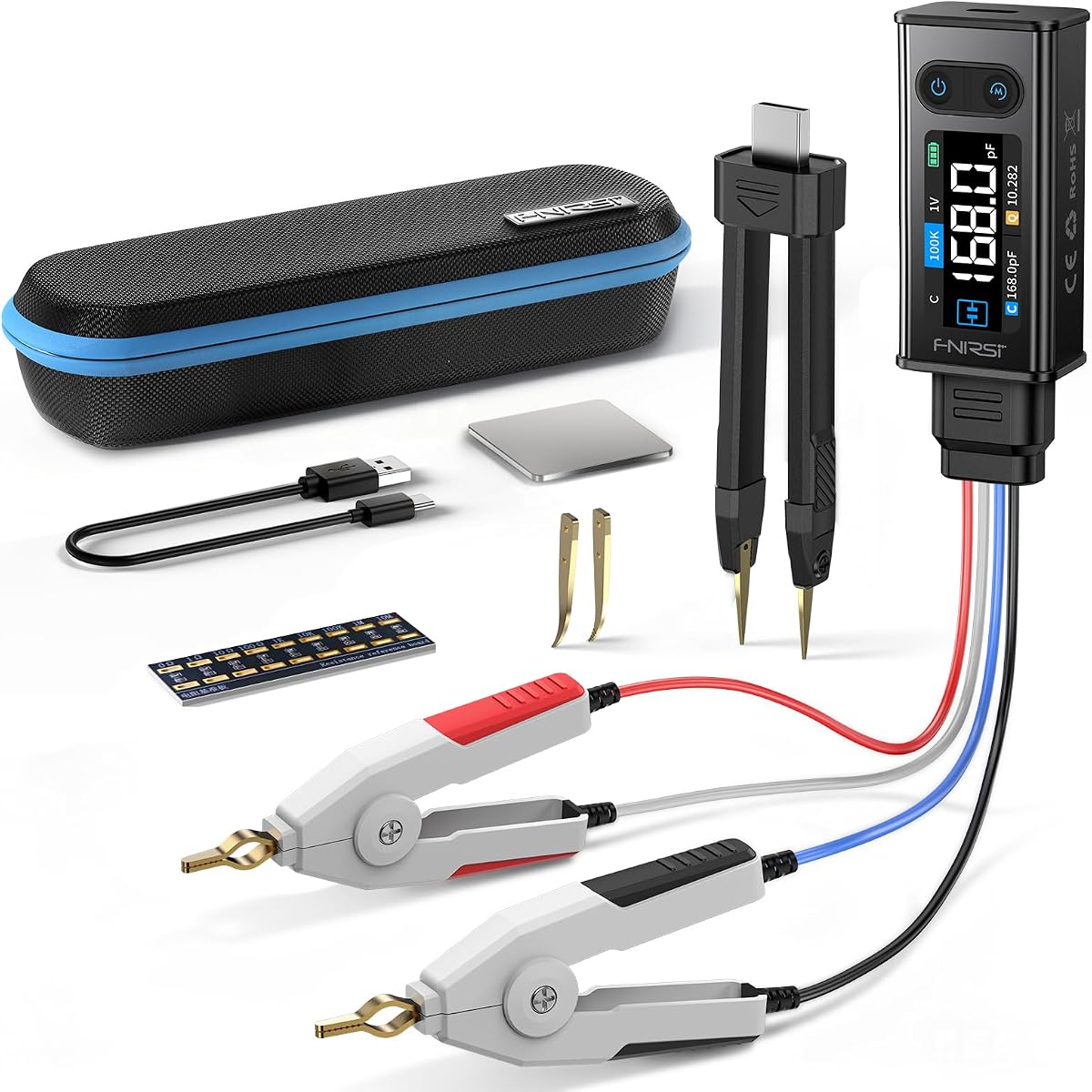
The FNIRSI LCR-ST2 stands out as a comprehensive tool for both hobbyists and professionals needing detailed analysis. It offers a wide frequency range and primary-secondary parameter display for thorough component verification.
We may earn a commission when you buy through this link, at no additional cost to you.
Its five test frequencies ranging from 100Hz to 100kHz ensure accuracy across various component sizes. The display shows secondary parameters like D, Q, and X alongside main values for better diagnostics.
While the battery is functional, some users might prefer larger capacity for all-day lab sessions. However, the magnetic back and portable kit compensate well for this minor trade-off in daily use.
Ideal for electronics repair shops or serious hobbyists, this model balances high-end features with portability. We recommend it for anyone needing reliable measurements for both small SMD and larger through-hole parts.
Displaying secondary parameters like Dissipation Factor and Impedance helps users identify component aging or quality issues quickly without manual calculations.
The built-in rear magnet allows the device to stay secure on metal workbenches, freeing up your hands for holding components or tools during testing.
We may earn a commission when you buy through this link, at no additional cost to you.
For users requiring laboratory-grade precision, the Smart Tweezers ST5S delivers top-tier accuracy with 0.1% basic error margins. It is widely recognized in professional circles for reliability and build quality.
We may earn a commission when you buy through this link, at no additional cost to you.
The OLED display ensures excellent readability in various lighting conditions, while the Swiss-made gold-plated leads maintain consistent contact resistance. This consistency is critical for precise measurements of small components.
The high cost makes it a significant investment compared to entry-level models. However, for commercial repair businesses or labs, the reduction in measurement errors often justifies the initial expense over time.
We recommend this unit for professionals who prioritize data integrity above budget. It is a premium choice for those who need certified accuracy and durable hardware for daily intensive testing.
The 0.1% accuracy ensures that your component measurements are trustworthy for critical circuit designs where even minor variances can cause system failures.
Swiss-made 24K gold plated leads prevent oxidation and wear, ensuring the device remains accurate and functional for many years of heavy use.
We may earn a commission when you buy through this link, at no additional cost to you.
The Neoteck 10kHz LCR Tweezer offers a robust set of features at an entry-level price point. It supports essential measurements and includes a rotatable display for convenience in tight spaces.
We may earn a commission when you buy through this link, at no additional cost to you.
One of its strongest assets is the ability to export data directly to Excel via USB. This feature is rare at this price range and helps organize records for projects or quality control.
Users should note the 10kHz frequency limit which may not suit all RF applications. However, for general electronics repair and hobbyist projects, it provides sufficient range and reliable results.
This model is perfect for beginners or those needing a secondary tester. Its balance of functionality and cost makes it a top recommendation for budget-conscious buyers needing professional tools.
Exporting test results to Excel allows you to build a history of component performance, which is vital for tracking failures or warranty claims.
The 180-degree rotating screen lets you view measurements comfortably whether you are right or left-handed or working at odd angles.
We may earn a commission when you buy through this link, at no additional cost to you.
The FNIRSI LCR-ST1 is designed for straightforward operation without compromising on essential functions. It serves as an excellent entry point for students or hobbyists starting with SMD repair.
We may earn a commission when you buy through this link, at no additional cost to you.
Its auto recognition feature simplifies the process by identifying components instantly. The display shows primary and secondary parameters clearly, making it easy to understand component health.
The fixed screen design might feel limited compared to rotating models, but it keeps the device slim. For most basic testing needs, this constraint does not significantly impact performance.
We suggest this model for those prioritizing ease of use over advanced features. It is a solid choice for general electronics tasks where portability and simplicity are key priorities.
The intuitive menu and automatic component ID remove the need for manual mode switching, reducing setup time and potential user errors.
Included storage bag and charging cable ensure you can keep your unit safe and ready to use anywhere without needing extra accessories.
We may earn a commission when you buy through this link, at no additional cost to you.
The DM103 distinguishes itself with a unique user-defined calibration feature that allows for long-term accuracy maintenance. This is a standout capability for devices typically lacking this level of user control.
We may earn a commission when you buy through this link, at no additional cost to you.
Its adjustable frequency and voltage options ensure versatility across different component types. The OLED screen provides clear visibility and can be flipped for ergonomic comfort during extended sessions.
While the device is slightly heavier than minimalist tweezers, the added weight often correlates with better build quality. The detachable tips allow for easy replacement if they wear out over time.
This device is recommended for users who value long-term consistency. Its calibration options make it ideal for those who need to ensure their readings remain reliable over years of use.
User-defined calibration allows you to reset the device baseline using standard resistors, preventing drift caused by temperature or aging.
The high-definition OLED screen offers excellent contrast and adjustability, ensuring that readings are always easy to read even in dim workshops.
We may earn a commission when you buy through this link, at no additional cost to you.
The LT1 Mini LCR Tweezer adds a signal generator function that is rarely found in handheld LCR tweezers. This allows users to perform sweep frequency measurements for deeper diagnostics.
We may earn a commission when you buy through this link, at no additional cost to you.
Its auto screen rotation adapts to your hand position, making it incredibly convenient for single-handed use. The 400mAh battery supports long continuous use without frequent recharging.
The complexity of the menu system might require some learning time for new users. However, once mastered, the extra features provide significant utility for advanced circuit troubleshooting tasks.
We recommend this unit for hobbyists who need extra versatility beyond simple resistance or capacitance checks. It is a powerful tool for those interested in frequency response testing.
The sweep frequency feature allows you to observe how components behave across different frequencies, which is crucial for filter and RF design.
Automatic screen rotation ensures that the display is always upright for you, reducing neck strain during detailed work on circuit boards.
We may earn a commission when you buy through this link, at no additional cost to you.
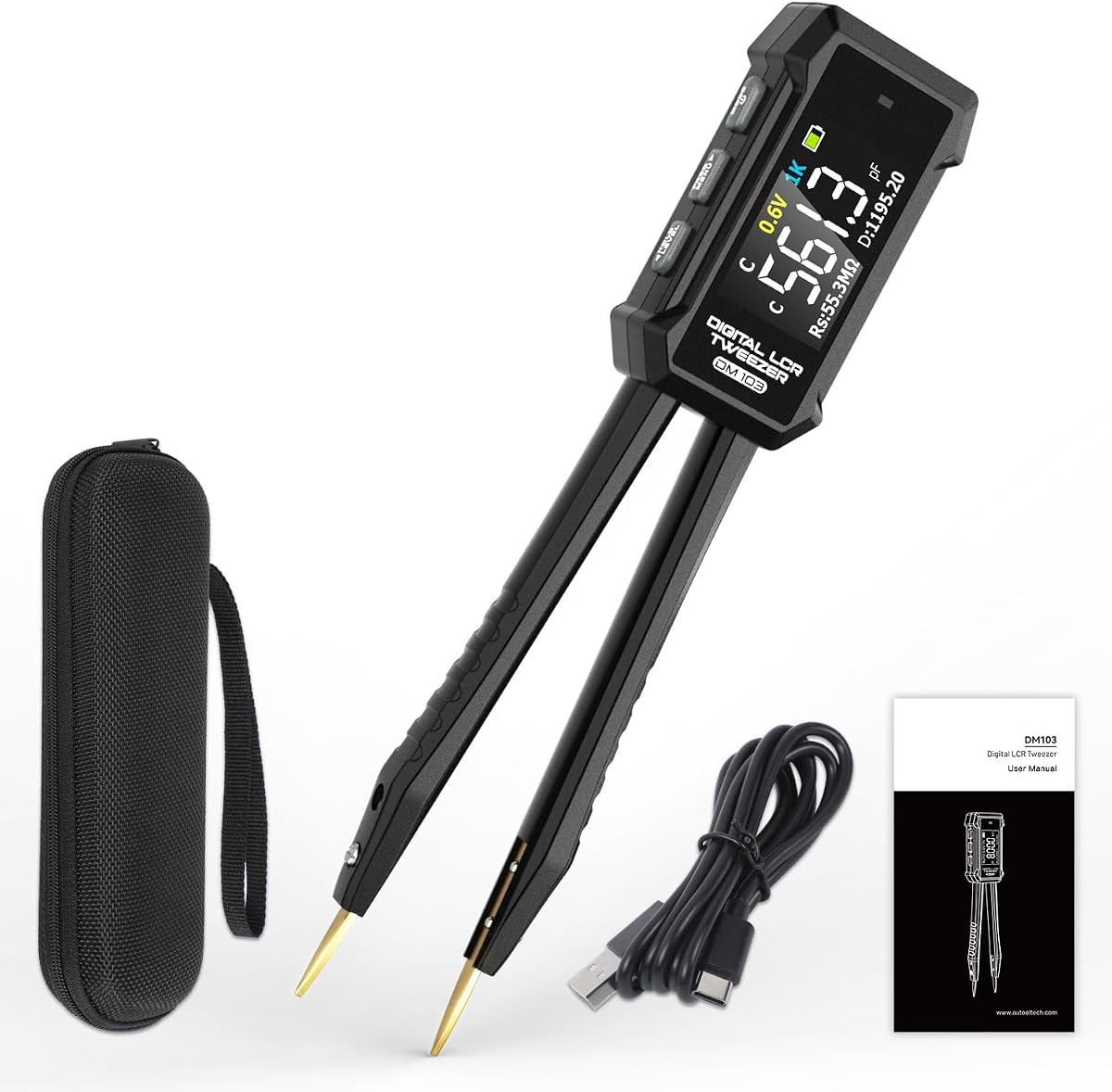
AUTOOL DM103 features an IPS color display that offers wide viewing angles and high contrast for easy reading. This visual quality makes it stand out among competitors using standard LCD screens.
We may earn a commission when you buy through this link, at no additional cost to you.
It provides simultaneous display of primary and secondary parameters, helping users assess component quality without toggling modes. The auto-identification streamlines the testing process significantly.
The lack of data export is a drawback for users needing to keep records. However, for quick, in-field checks, the speed and clarity of the device often outweigh this missing feature.
This model is well-suited for field service technicians who need quick, accurate readings. Its durability and clear interface make it a reliable companion for daily repair work.
The IPS screen provides consistent color and contrast from almost any angle, ensuring you never miss a reading due to poor visibility.
Seeing multiple parameters like D and Q at once helps you quickly identify bad capacitors or inductors without switching back and forth.
We may earn a commission when you buy through this link, at no additional cost to you.
The Pro1-100KHz LCR Meter delivers professional-grade accuracy with a 0.1% error margin that ensures reliable results for critical work. It balances high-end specs with a practical portable form factor.
We may earn a commission when you buy through this link, at no additional cost to you.
It includes five test frequencies and a wide measurement range to handle diverse electronic components. The inclusion of diode testing adds versatility to the basic LCR capabilities.
Although it is priced higher than basic models, the accuracy and build quality justify the investment for serious users. The lifetime support ensures long-term reliability and assistance if needed.
We recommend this tool for users who need precision for complex projects. It serves well for both detailed lab work and professional repair needs where accuracy is non-negotiable.
The 0.1% accuracy provides confidence in every measurement, reducing the risk of errors in sensitive circuit repairs or prototypes.
With multiple frequencies and voltage levels, this meter adapts to various component types including large capacitors and small SMD parts.
We may earn a commission when you buy through this link, at no additional cost to you.
The Global Specialties LCR-58 is a straightforward tool designed for basic measurements without unnecessary complexity. Its focus on reliability and safety makes it a solid choice for general tasks.
We may earn a commission when you buy through this link, at no additional cost to you.
It includes overload protection to prevent damage during unexpected surges. The series or parallel mode options allow for flexible testing configurations depending on the circuit requirements.
Advanced users might find the feature set limited compared to newer models. However, for quick checks or educational settings, its simplicity is often more advantageous than complex menus.
This device is suitable for basic repair tasks or schools. We recommend it for those who need a durable and easy-to-use instrument for common LCR measurements.
Built-in overload protection safeguards both the user and the device from voltage spikes, extending the lifespan of the unit.
With no complicated software or data export, it focuses on getting the job done quickly and accurately for standard component verification.
We may earn a commission when you buy through this link, at no additional cost to you.
The ZT-MD2 features a robust CNC metal housing that makes it highly durable for rough environments. Its compact design fits easily into small repair kits or pockets for mobility.
We may earn a commission when you buy through this link, at no additional cost to you.
It supports frequency scanning and voltage measurement alongside standard LCR functions. This versatility allows users to perform quick system checks without switching tools.
Documentation for this model can be sparse, requiring users to explore menus independently. However, the auto-recognition feature mitigates this by simplifying the setup process.
We recommend this model for field technicians needing a rugged tool. It is a good fit for those who prioritize durability and broad functionality in a small package.
The CNC metal casing protects internal components from drops and impacts, ensuring reliability even in demanding field environments.
Combining LCR, voltage, and frequency tests in one small unit allows for efficient troubleshooting of various electronic issues.
We may earn a commission when you buy through this link, at no additional cost to you.
Choosing the right Lcr Meter Tweezer requires understanding specific technical needs. This section breaks down key factors to help you select the most suitable model.
Accuracy determines how close the reading is to the actual value. Professional-grade models offer 0.1% accuracy, while entry-level units may range from 0.5% to 1%. Choose based on how critical precision is for your tasks.
For commercial repair or lab work, prioritize higher accuracy to avoid costly mistakes. Hobbyists can often accept slightly lower accuracy to save budget.
Different components behave differently at different frequencies. Standard units offer 10kHz, while advanced models go up to 100kHz. Higher frequencies are necessary for testing capacitors and inductors accurately.
Ensure the device covers the frequencies relevant to your work. If you work with RF components, a 100kHz range is essential for reliable results.
A clear display ensures you can read measurements easily in various lighting. Look for OLED or IPS screens with high resolution. Some models allow screen rotation for ergonomic comfort.
Choose a display with adjustable brightness for better visibility. This feature is particularly useful for working in dimly lit areas or long sessions.
Since these are handheld devices, build quality matters. Metal housings offer better durability than plastic. Consider weight and the presence of protective cases for transport.
Prioritize lightweight models if you travel often. A durable build ensures the device withstands drops and rough handling during field work.
Calibration maintains accuracy over time. Some devices allow user-defined calibration using standard resistors. Others require factory calibration, which might limit long-term precision.
Look for models with open, load, and short calibration modes. These features help minimize errors caused by probe resistance or parasitic effects.
Extra functions like data export or signal generation add versatility. Check if the device supports USB export for record-keeping or has built-in battery life management.
Decide which extras you truly need. Features like auto-recognition save time but may not justify higher costs for basic users.
Test voltage affects how the device interacts with components. Multiple voltage levels like 0.3V and 0.6V allow testing sensitive parts without damage. Higher voltages are useful for diode checks.
Ensure the tester offers adjustable voltages to suit various component sensitivities. This flexibility prevents damaging sensitive electronics during routine checks.
First, ensure the device is charged or has fresh batteries. Connect the probes securely and calibrate the unit if required using the short and open functions before testing.
When testing, hold the tweezers firmly but gently to avoid damaging small components. Place the probes across the leads or pads of the component to get an instant reading on the screen.
To maintain the device, store it in a dry place and clean the contacts regularly. Avoid dropping the tweezers and check for worn tips periodically to ensure consistent contact quality.
The main advantage is speed and convenience. Tweezers combine probes and a meter into one handheld tool, allowing you to test small SMD components quickly without managing separate leads.
Calibration usually involves shorting the tips and setting the zero point, then opening the tips to set the open point. Some models allow user-defined calibration with standard resistors for higher accuracy.
Generally, 100Hz to 1kHz is used for larger capacitors, while 10kHz or higher is better for smaller ones. Always check the component datasheet for optimal testing conditions.
Yes, most models support through-hole parts. While they are optimized for SMD, you can test through-hole components using the probes directly, though accuracy may vary slightly.
Budget models typically offer around 0.5% to 1% accuracy. This is sufficient for hobbyist and general repair work, but professional labs may require 0.1% accuracy units.
Yes, Lcr Meter Tweezers are designed to measure inductance along with capacitance and resistance. Ensure the inductor is disconnected from the circuit for accurate results.
We hope this guide has helped you navigate the options for Lcr Meter Tweezers. Whether you need high accuracy for a lab or a portable tool for repairs, there is a model on our list for you.
Consider your specific testing needs and budget when making your decision. Features like display quality and calibration options can greatly impact your daily workflow efficiency.
Always check current pricing and availability before buying to ensure you get the best deal. Our recommendations reflect the top performance and value options available in the market today.