Sipeed Tang Console 138K
4.8Editor score
138K LUT4 FPGA Core
HDMI 1080p Output
Dual PMOD Expansion
This guide compares the top FPGA retro consoles for 2026, analyzing performance, compatibility, and features to help you choose the best device.
FPGA retro consoles offer a unique way to play classic games with hardware-level accuracy. These devices use field-programmable gate arrays to replicate original chip behavior, ensuring authentic timing and visuals. Unlike software emulation, they provide low-latency gameplay and true-to-life audio that enthusiasts love.
We evaluated ten top models based on FPGA core support, connectivity options, and build quality. Our analysis covers everything from developer boards to handheld units, highlighting their strengths for different user needs. Whether you want a plug-and-play experience or a custom project, there is a fit here.
Each pick showcases specific capabilities like HDMI output, USB connectivity, and supported game cores. Note that prices and availability change frequently, so check current listings before buying. This guide helps you navigate the technical details to find the perfect retro gaming solution for your setup.
4.8Editor score

5.0Editor score

4.5Editor score
The following table provides a side-by-side comparison of all ten products reviewed in this guide. Each entry highlights key specifications, image links, and direct purchase URLs to help you make an informed decision based on your specific needs for retro gaming performance and features.




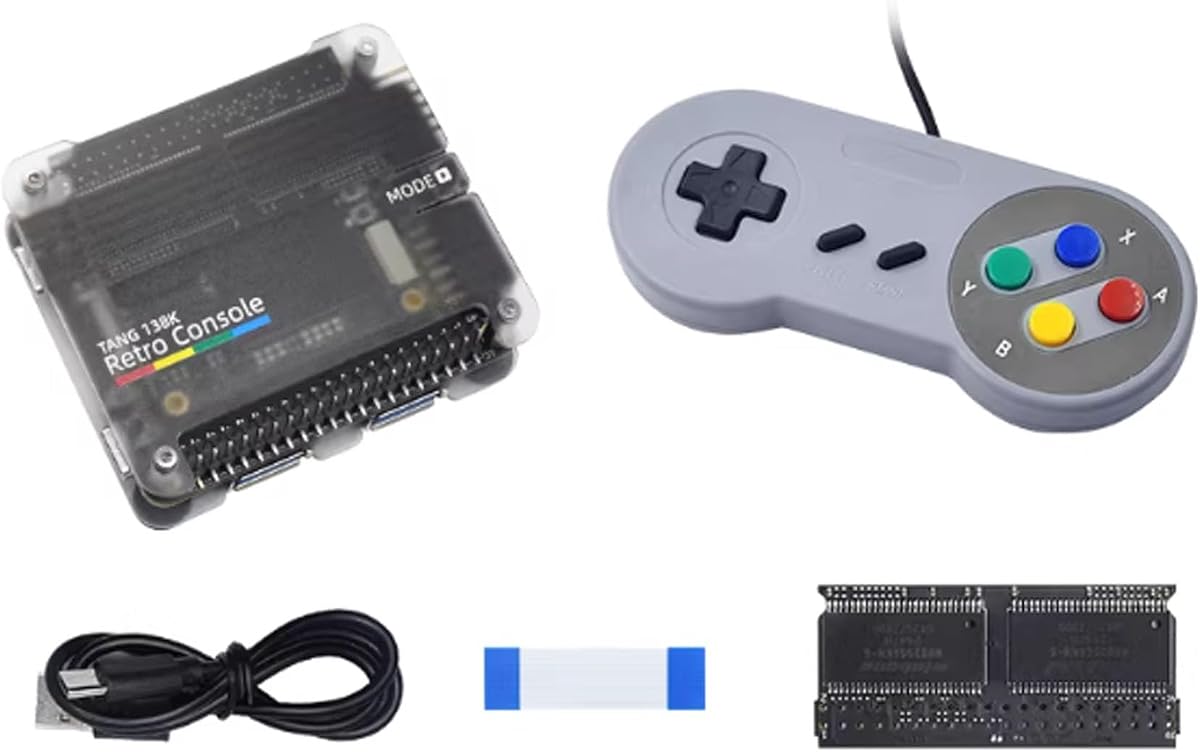
The Sipeed Tang Console 138K stands out as a premium FPGA solution designed for serious retro enthusiasts. It offers powerful 138K LUT4 logic with a RISC-V AE350 hardcore, enabling a wide range of game cores and applications. Its compact size and fanless design make it ideal for quiet home setups.
We may earn a commission when you buy through this link, at no additional cost to you.
Performance-wise, this device supports NES, SNES, GB, and Amiga cores with smooth operation. The HDMI output ensures crisp visuals on modern monitors or TVs, while USB 3.0 ports provide ample connectivity for controllers. The inclusion of dual PMOD ports allows for extensive custom expansions and hardware projects.
Despite its strengths, the price is higher than entry-level boards. It also lacks a built-in battery, requiring a constant power source during use. However, these trade-offs are acceptable given the high performance, expandability, and developer-friendly features it offers to hobbyists and gamers alike.
This console is perfect for users who want a robust FPGA board for both gaming and custom development. It fits well into setups with existing Raspberry Pi 5 HATs or as a standalone console. If you need powerful logic and flexible I/O, this is a top-tier choice for 2026.
Dual PMOD and 40 pin GPIO interfaces allow for extensive hardware expansions beyond gaming.
USB 3.0 and HDMI ensure compatibility with contemporary controllers and displays.
We may earn a commission when you buy through this link, at no additional cost to you.
The Sipeed Tang Console FPGA combines retro gaming with a powerful development kit. Featuring a Tang Mega SOM and BL616 MCU, it supports cores like NESTang and SNESTang for authentic emulation. Its Linux dev board nature makes it suitable for users wanting to program custom FPGA solutions.
We may earn a commission when you buy through this link, at no additional cost to you.
Its connectivity is impressive, with USB3.0 HDMI output and multiple PMOD ports for peripherals. The ability to switch between emulator cores quickly makes it versatile for different game libraries. This board is designed for those who need hardware flexibility alongside console functionality.
While feature-rich, the initial setup can be challenging for non-technical users. The reliance on Linux and FPGA IDE programming may deter casual gamers. However, for developers and tinkerers, these complexities are necessary trade-offs for the unmatched control and customization available.
Choose this console if you want a device that serves as both a gaming unit and a development platform. Its small size fits easily into portable cases, and its strong expandability supports endless project ideas. It is a solid choice for the tech-savvy retro community.
Switches between multiple emulator cores for diverse retro gaming libraries.
Runs Linux for advanced scripting and custom tool usage.
We may earn a commission when you buy through this link, at no additional cost to you.
This 138K Retro Premium FPGA Developed Board is optimized for Raspberry Pi 5 users. It integrates seamlessly as a PCIe HAT, leveraging the Pi's power while adding FPGA capabilities for retro gaming. The dual PMOD ports offer additional connectivity for peripherals and custom hardware.
We may earn a commission when you buy through this link, at no additional cost to you.
Its design focuses on delivering a compact solution that fits into existing setups without clutter. The HDMI output provides standard high-definition video, ensuring games look sharp on modern screens. This board is an excellent way to upgrade a Pi 5 with hardware-level emulation.
One limitation is its dependence on the Raspberry Pi 5 for operation, which adds to the total cost. It is not a standalone unit but an add-on module. For those already invested in the Pi ecosystem, this is a minor drawback compared to the performance boost it provides.
Ideal for Raspberry Pi enthusiasts, this board enhances your setup with professional-grade FPGA logic. It balances retro functionality with development potential through PMOD interfaces. If you need a HAT-style FPGA board, this is a top choice in November 2026.
Designed to slot directly into Raspberry Pi 5 PCIe HAT slots.
Uses 138K logic for authentic game core emulation.
We may earn a commission when you buy through this link, at no additional cost to you.
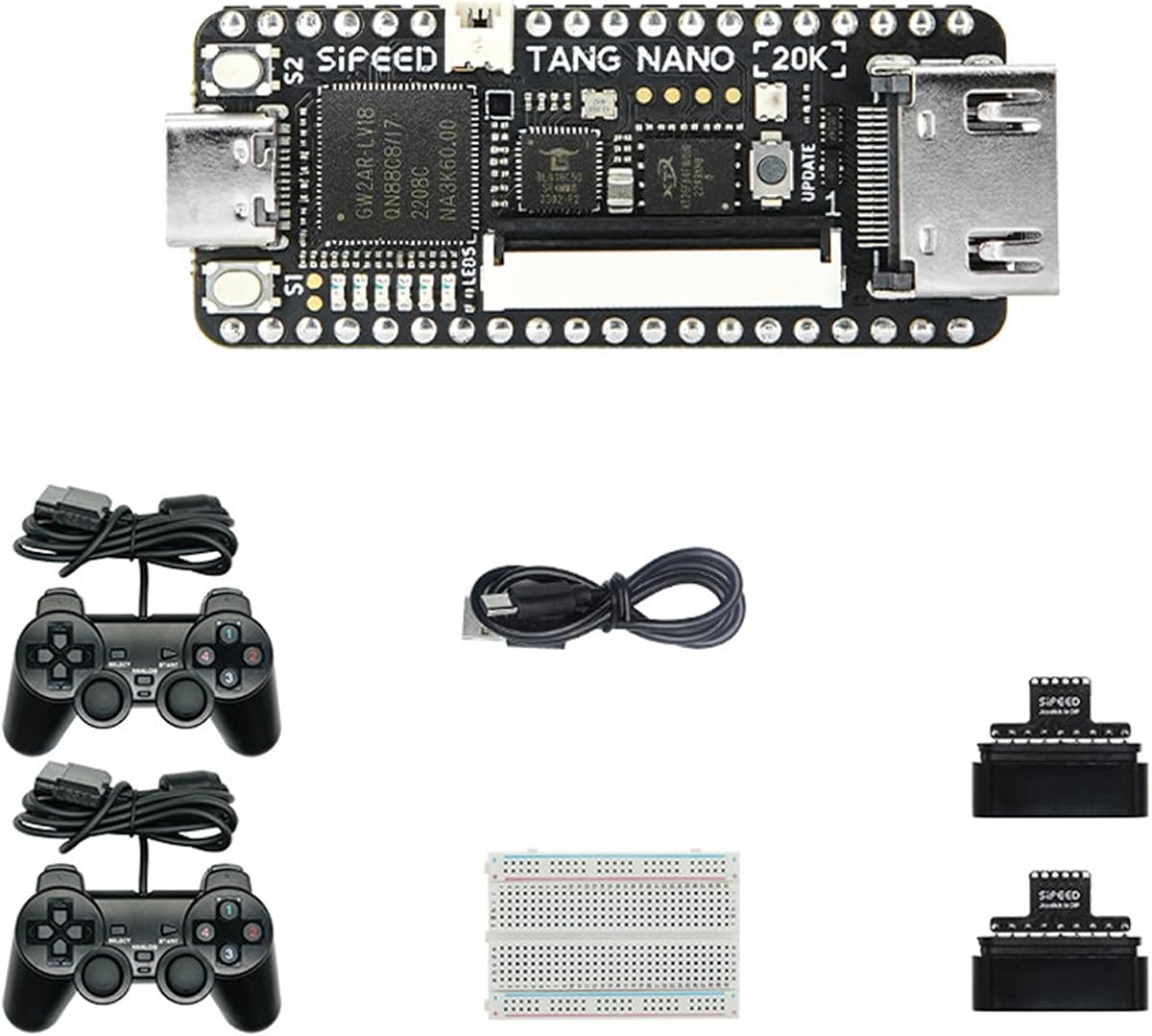
The Sipeed Tang Nano 20K is a budget-friendly FPGA board ideal for entry-level retro projects. With 20K LUT4 logic cells and 64Mbits SDRAM, it supports basic emulators and custom designs. Its Linux RISC-V platform provides a flexible environment for experimentation.
We may earn a commission when you buy through this link, at no additional cost to you.
Users appreciate its open-source nature, which encourages community contributions and custom firmware. The board includes a JTAG port for debugging and an RGB LCD connection for displays. Despite its lower price, it offers robust features for learning FPGA programming and game console development.
The main trade-off is its limited logic capacity compared to higher-end models. Complex cores may not run smoothly, and the setup process can be technical. However, for hobbyists and students, these constraints are manageable and do not outweigh the value it provides.
This board is perfect for those looking to start their FPGA journey without a large investment. It delivers solid performance for 8-bit and 16-bit consoles and supports micro SD storage. If you want a cost-effective development tool, this is the best budget pick available.
Active community support ensures easy access to firmware and projects.
Excellent for learning RISC-V and FPGA design principles.
We may earn a commission when you buy through this link, at no additional cost to you.
This Tang Nano 20K Kit is designed for users who want a ready-to-use retro game player. It runs Linux RISC-V and supports RGB LCD and HDMI outputs, allowing for versatile display connections. The kit includes necessary ports like microSD for storage expansion.
We may earn a commission when you buy through this link, at no additional cost to you.
It leverages the same GW2AR-18 QN88 chip as other Tang models, ensuring stable logic performance for retro cores. The inclusion of LED support adds customization options for lighting effects. This makes it a great choice for DIY retro gaming enclosures.
While versatile, it requires some setup to configure the Linux environment and install emulators. It does not come fully preloaded with games, so users need to prepare their libraries. This is acceptable for enthusiasts who enjoy customizing their gaming experience.
Choose this kit if you prefer a Linux-based approach to FPGA retro gaming with flexible display options. It is suitable for building custom handhelds or connecting to TVs. For a balance of price and features, this kit delivers strong value in the market.
Supports both HDMI and RGB LCD for various screen types.
Ideal for creating unique DIY handheld cases.
We may earn a commission when you buy through this link, at no additional cost to you.
This Tang Nano 20K model emphasizes Linux-based retro emulation with onboard debugging tools. It uses the BL616 chip to facilitate JTAG and UART communication for development. The support for multiple display outputs makes it adaptable for different gaming setups.
We may earn a commission when you buy through this link, at no additional cost to you.
Its open-source nature allows users to install custom emulators and tweak system settings. The board is well-suited for NES and similar consoles, providing accurate emulation through its FPGA logic. This flexibility makes it a favorite among Linux users in the FPGA community.
However, beginners might find the Linux setup challenging without prior experience. It lacks a plug-and-play experience compared to handheld consoles. Despite this, the debugging capabilities and display options offer significant advantages for advanced users who want full control.
This board is ideal for those seeking a Linux-focused development tool for retro gaming. It balances FPGA power with system flexibility for custom projects. If you prefer working within a Linux environment, this model provides the necessary features.
BL616 chip enables detailed firmware debugging for projects.
Supports HDMI and RGB connections for versatile setups.
We may earn a commission when you buy through this link, at no additional cost to you.
The Arduboy FX-C is a unique 8-bit handheld designed for both gaming and STEM learning. It comes preloaded with over 300 classic games and features a USB-C port for modern connectivity. Its credit card size makes it easy to carry anywhere.
We may earn a commission when you buy through this link, at no additional cost to you.
Users can create custom games using the Arduino IDE, making it a powerful educational tool. The multiplayer support via a custom cable allows for local battles between friends. This device bridges the gap between retro fun and modern coding skills.
While limited to 8-bit systems, this fits the device's original design and community ecosystem. It does not support higher-resolution cores like FPGA boards do. However, for retro purists and aspiring coders, this simplicity is a deliberate and charming feature.
This console is perfect for schools, gift-giving, or casual retro play on the go. Its community support ensures long-term relevance for software and games. If you want a handheld that teaches coding, the Arduboy FX-C is the top choice.
Learn C++ coding with free online tutorials and community resources.
Connect two units via I2C link cable for head-to-head play.
We may earn a commission when you buy through this link, at no additional cost to you.
The Trimui Brick Pro features a generous 3.95-inch IPS screen with sharp 1024×768 resolution. It uses an Allwinner A133P chip to run multiple emulators smoothly. The 5000mAh battery provides hours of playtime, perfect for long gaming sessions.
We may earn a commission when you buy through this link, at no additional cost to you.
Its dual Hall joysticks ensure precise, drift-free control, enhancing the overall experience. The device supports fast charging via USB Type-C. While it does not come with a memory card, its flexibility allows users to bring their own high-capacity SD.
The main consideration is that you need to purchase an SD card separately to store games. This adds to the initial cost. However, the superior display quality and battery life make it worth the extra step for serious handheld gamers.
This console is ideal for those who prioritize screen size and clarity in a portable device. It is well-built and offers a premium feel with its vibration motor and lighting. If you want a high-res handheld, the Trimui Brick Pro is a strong contender.
1024×768 screen delivers sharp visuals for classic games.
Hall joysticks prevent common stick drift issues.
We may earn a commission when you buy through this link, at no additional cost to you.
The RG40XXV is a Linux-based handheld that comes ready with games installed. It offers a straightforward solution for retro gaming without complex setup requirements. Users appreciate its stability and ease of use out of the box.
We may earn a commission when you buy through this link, at no additional cost to you.
Its Linux system provides flexibility for adding more games and customizing the experience. While it does not have the advanced specs of higher-end units, it delivers reliable performance for classic titles. This makes it accessible to a broader range of users.
The trade-off is that it lacks the advanced screen or control features of premium models. It is a basic but effective device for portable gaming. For those who want simplicity and immediate playability, this model is a practical choice.
This console is suitable for beginners or those seeking a backup device for travel. It offers good value for money with its included games and stable OS. If you want a hassle-free Linux handheld, the RG40XXV is worth considering.
Games come preloaded so you can start playing instantly.
System allows for easy ROM management and updates.
We may earn a commission when you buy through this link, at no additional cost to you.
The TRIMUI Brick PRO is the top pick for a modern retro handheld with premium features. It features a stunning 3.95-inch fully laminated display that reduces glare and improves contrast. Its open-source Linux system offers full control over your gaming library.
We may earn a commission when you buy through this link, at no additional cost to you.
The hall effect joysticks provide precise, smooth analog control without drift. A 5000mAh battery ensures long-lasting sessions, supported by fast charging via USB Type-C. The compact design fits easily in your pocket, making it highly portable for daily use.
While it does not include pre-installed games, this allows for complete customization of your ROM library. Adding games via a microSD card is straightforward and secure. This approach respects user freedom while maintaining high hardware standards.
This device is perfect for anyone wanting a premium handheld experience with advanced controls and display. It balances build quality with software flexibility for a versatile experience. For the best overall package in 2026, the TRIMUI Brick PRO is the recommendation.
Fully laminated display reduces glare for better outdoor visibility.
Open-source OS allows unlimited game library customization.
We may earn a commission when you buy through this link, at no additional cost to you.
Selecting the right FPGA retro console involves balancing performance, features, and ease of use. This guide breaks down the key factors you should consider to find a device that matches your specific gaming needs.
The logic capacity determines how complex game cores can run. Higher LUT counts like 138K support more advanced systems such as Amiga or Saturn. Lower counts like 20K are great for 8-bit and 16-bit systems but may struggle with complex graphics. Check the specs to ensure it fits your target game library.
Choose higher logic if you plan to run modern cores, otherwise standard capacity is sufficient for classic games.
Ports like HDMI, USB3.0, and SD slots dictate how you connect controllers and displays. HDMI ensures modern TV compatibility, while USB ports are vital for controllers. Expansion ports like PMOD allow for custom hardware tweaks if you are a developer. Verify the inputs match your peripheral setup.
Ensure HDMI and USB support are present for easy modern controller and screen integration.
Some devices run on Linux, offering flexibility for custom scripts and emulators. Others provide proprietary systems for simplicity. Linux units require more setup but offer deeper control. Proprietary systems are easier but may limit customization. Decide based on your technical comfort level.
Select Linux for control and proprietary systems for ease of use depending on your skills.
Display options vary from HDMI to RGB LCD support. If you plan to use a handheld screen, check resolution and size. Higher resolutions like 1024×768 provide clearer visuals. Handhelds with OLED or IPS panels offer better contrast for dark scenes.
Opt for high-resolution screens if visual clarity is a priority for your retro setup.
For portable use, battery life is crucial. Look for devices with at least 5000mAh capacity for long play sessions. Some FPGA boards require constant external power, which limits mobility. If you want handheld gaming, prioritize units with internal batteries.
Check battery capacity to ensure the console lasts throughout your gaming sessions.
If you plan to program, ensure the board supports JTAG and UART tools. Debugger features help you troubleshoot custom cores. Open-source boards encourage community tools and firmware updates. This factor is vital if you want to experiment with hardware design.
Look for JTAG and open-source support if you intend to do custom development work.
Active communities ensure long-term software support and firmware updates. Check if the device has a forum or wiki for troubleshooting. Products with strong community backing are easier to fix if issues arise. This protects your investment over the years.
Choose devices with active forums and wikis to ensure lasting support and updates.
Budget boards are cheaper but may lack ports or power. Premium models offer better build quality and features. Determine your spending limit and compare specs. Sometimes spending more saves trouble later by providing better components. Evaluate the cost per feature.
Balance your budget with the features you truly need to avoid overspending or under-specing.
Start by connecting the console to a power source and display. For HDMI models, use a quality cable to avoid signal drops. Once powered on, navigate the system menu to configure controllers. Ensure your controllers are mapped correctly before launching any game.
If you are using SD cards, format them to FAT32 and organize games in folders. This improves loading times and keeps your library organized. For Linux-based units, update the system first to ensure all drivers are current. Regular updates protect against bugs.
To maintain longevity, keep the device cool and dust-free. Avoid placing it near heat sources or direct sunlight. If using joysticks, handle them gently to prevent drift. Periodically clean vents and ports with compressed air to ensure smooth operation.
An FPGA retro console uses field-programmable gate arrays to mimic original hardware chips. This provides a more authentic experience than software emulation. It ensures low latency and accurate timing, which is crucial for playing classic games faithfully.
FPGA consoles offer hardware-level accuracy that emulation cannot match. They avoid the input lag common in software emulators. However, emulation is often more accessible and cheaper. The choice depends on whether you prioritize performance or convenience.
Basic consoles require minimal technical skills. However, development boards need some knowledge to set up. Linux systems are more flexible but have a steeper learning curve. If you want plug-and-play, choose a handheld unit.
You can play games if you own the ROMs legally. Most devices support standard formats like NSO or BIN. Avoid downloading copyrighted ROMs online. Always use backup copies of games you own for legal compliance.
Most units support standard USB controllers like Xbox or PlayStation. Some also have dedicated ports for classic controllers. Check the product specs for specific compatibility. Using compatible controllers ensures the best experience.
Games are stored on microSD cards or internal eMMC storage. Format the card to FAT32 for compatibility. Organize games into folders for easy navigation. Always back up your data regularly to prevent loss.
Choosing the right FPGA retro console depends on your specific needs and budget. The Sipeed Tang Console 138K offers premium power, while the Nano 20K provides great value for beginners. The TRIMUI Brick PRO stands out as the best handheld option for quality.
Prioritize factors like display quality, battery life, and FPGA capacity when making your decision. Consider how much you want to customize your setup versus plug-and-play ease. These features define the overall experience for each user.
Always check current pricing and availability before buying, as market conditions change frequently. Ensure you have compatible accessories ready for setup. With the right choice, you will enjoy years of high-quality retro gaming.