
Thrustmaster TFRP Precision Flight Sim Rudder Pedals
4.4Editor score
S.M.A.R.T rail system
Self-centering rudder axis
Compatible with PC and consoles
Explore the top flight sim rudder pedals for PC and consoles. Our guide compares precision, comfort, and features to help you choose the right setup.
Finding the right flight sim rudder pedals transforms your gaming setup into a realistic cockpit experience. Quality pedals offer precise control, comfort during long sessions, and compatibility with your favorite simulation software.
We evaluated ten top-rated models based on build quality, sensor technology, adjustability, and user feedback. Each product brings unique strengths to the table, whether you prioritize budget value or professional-grade performance.
Each selection below highlights key features, pros, and cons to guide your decision. Remember that pricing and availability can change, so always verify current details before purchasing your new aviation hardware.
4.4Editor score

4.5Editor score

4.7Editor score
This side-by-side comparison highlights the core specifications and unique selling points of each model. Use this table to quickly identify which pedals match your specific simulation needs and budget constraints.



The Thrustmaster TFRP pedals offer an accessible entry into realistic flight simulation. With a 4.4 rating from users, they deliver smooth control via a patented S.M.A.R.T rail system that ensures friction-free motion across the rudder axis.
We may earn a commission when you buy through this link, at no additional cost to you.
These pedals excel in stability and balance. The self-centering rudder axis provides accurate re-centering after turns, which is vital for coordinated flight. The aluminum rails enhance rigidity, giving you consistent inputs whether you are taxiing or maneuvering in the air.
While highly praised for value, the TFRP lacks advanced tension adjustments found in pricier models. The resistance is fixed, which might not suit pilots who prefer custom feel. However, for most simmers, the ergonomic design ensures comfort even during long sessions.
Buyers seeking reliable performance without breaking the bank will find these ideal. They are perfect for those upgrading from a keyboard or gamepad. The multi-platform support makes them a versatile choice for PC, Xbox, and PS5 setups alike.
The S.M.A.R.T sliding system uses four aluminum rails to deliver exceptionally smooth motion without mechanical friction.
Ergonomic footplates and secure mounting keep the pedals stable during intense maneuvers and long flight hours.
We may earn a commission when you buy through this link, at no additional cost to you.
The Logitech G Pro Flight Rudder Pedals stand out for their adjustable tension dial. This feature allows pilots to switch between light aircraft responses and heavy jet resistance effortlessly. A 4.5 user rating confirms their reliability and precision in real-world simulations.
We may earn a commission when you buy through this link, at no additional cost to you.
Control accuracy is paramount here. The differential toe brakes offer full control for stand operations, while the 9-bit rudder axis ensures smooth inputs. The self-centering mechanism is robust, making coordinated turns intuitive and reducing pilot fatigue.
However, these pedals are limited to Windows environments. Users on macOS or consoles will need to look elsewhere. Additionally, downloading software is optional but recommended for full calibration. These minor constraints do not diminish their overall quality for PC users.
Recommended for serious simmers needing flexibility. The ability to tweak tension means these pedals grow with your skills. Whether you fly general aviation or large airliners, the G Pro adapts to your preferred flying style seamlessly.
A simple twist of the dial changes pedal resistance, letting you match the feel of small planes or heavy jets.
Toe brakes allow independent control for precise runway management and landing approaches.
We may earn a commission when you buy through this link, at no additional cost to you.
For enthusiasts demanding realism, the Thrustmaster TPR pedals deliver a nearly unmatched experience. Their 4.7 rating reflects the unique Pendulum technology that mimics suspended aircraft mechanisms. This design ensures fluid, natural motion that closely replicates real-world pedal behavior.
We may earn a commission when you buy through this link, at no additional cost to you.
Precision is maintained through H.E.A.R.T Hall Effect magnetic sensor technology. These frictionless sensors guarantee accuracy over time without performance loss. The adjustable spring system lets you fine-tune resistance for combat, commercial, or general aviation scenarios.
The main drawback is the price and platform restriction. They are exclusively for PC and come at a premium cost. Yet, for those who view simulation as a serious hobby, the investment pays off in long-term reliability and immersion.
Choose these if you prioritize authenticity above all. The combination of magnetic sensors and suspended mechanics creates a tactile feedback loop that few rivals match. They are built for long-haul sessions and complex flight scenarios.
A suspended mechanism replicates the fluid motion of real aircraft pedals for a highly immersive feel.
H.E.A.R.T technology ensures consistent accuracy without friction or mechanical wear over time.
We may earn a commission when you buy through this link, at no additional cost to you.
The Honeycomb Charlie pedals combine durability with innovative engineering. Featuring a belt drive system and Hall Effect sensors, they offer precise coordination in flight. With a 4.3 rating, users appreciate the realistic feel and sturdy construction.
We may earn a commission when you buy through this link, at no additional cost to you.
Stability is enhanced by high-friction strips and deployable carpet spikes. These prevent unwanted slipping during intense maneuvers. The adjustable feet angles allow customization for different pilot sizes. The pedals also support multiple platforms and software packages like X-Plane.
A limitation is the need for an Xbox Hub for console play. The pedals do not allow manual tension changes like some competitors. Still, the overall quality and attention to detail make them a strong contender for PC and console users.
Ideal for those who value solid construction. The combination of magnetic sensors and a robust frame ensures long-term performance. They provide a balanced mix of realism and practicality for diverse flight simulation setups.
An innovative belt mechanism reduces friction and enhances the smoothness of pedal movement.
Feet angles are fully adjustable to accommodate different pilot needs and preferences.
We may earn a commission when you buy through this link, at no additional cost to you.
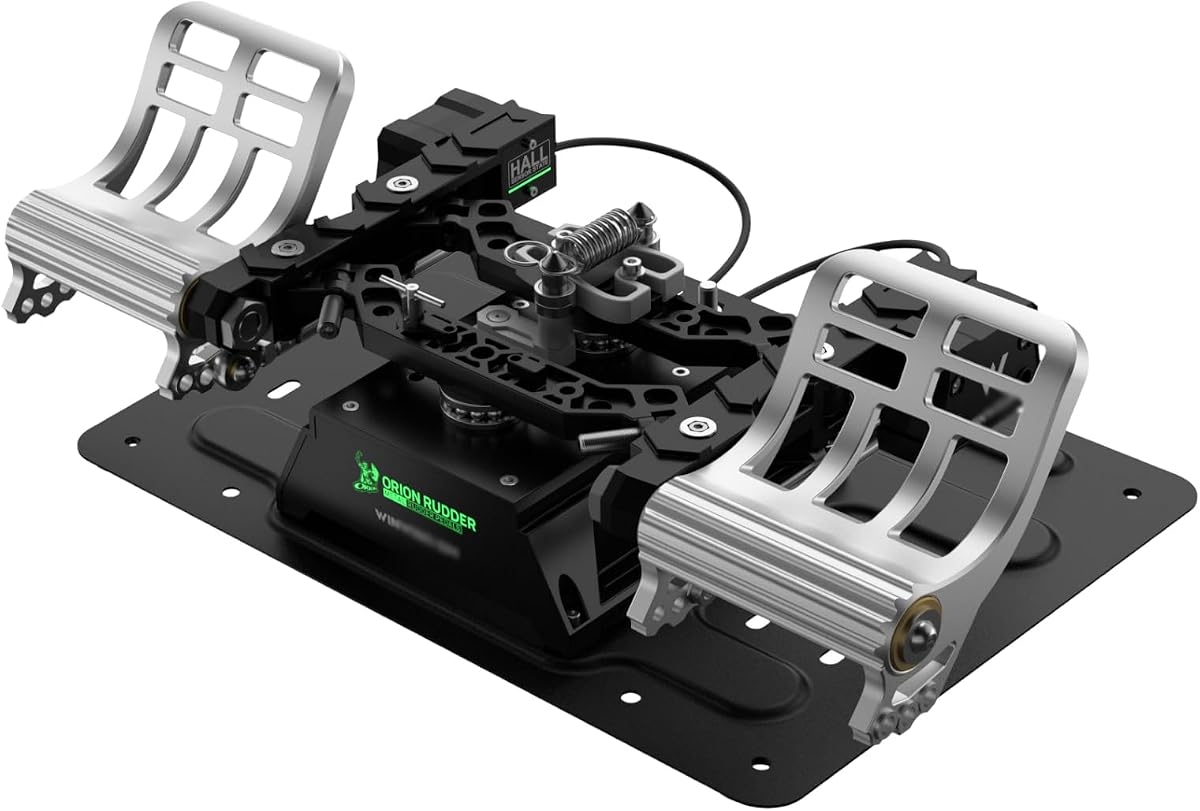
The WINCTRL Orion Standard brings industrial-grade materials to flight simulation. An all-metal frame made of aviation-grade aluminum alloy ensures durability. While ratings are not yet available, the design promises a robust and precise control experience.
We may earn a commission when you buy through this link, at no additional cost to you.
Features include a quick-disconnecting spring and spindle locking kit for switching modes. This allows users to adapt between high damping, self-centering, and vehicle modes rapidly. The parallelogram structure reduces space requirements and offers a unique rebound structure.
The lack of user feedback means potential buyers should proceed with caution. The complex switching mechanism may require some learning. However, the anti-slip pads and buffer design indicate a focus on user comfort and safety.
Consider these for a heavy-duty build. If you prefer metal over plastic and want modularity, the Orion Standard is a compelling choice. It caters to advanced users who want to customize their pedal behavior extensively.
High-precision die casting and stainless steel parts ensure lasting durability and a premium feel.
Change between different control modes in seconds using a tool-free single-handed switch.
We may earn a commission when you buy through this link, at no additional cost to you.
The WINCTRL Orion Damper Edition adds custom dampers for even greater realism. With a perfect 5.0 rating, users are highly satisfied with the control experience. The metal frame is complemented by a nonlinear rocker rebound structure for a unique stepping feel.
We may earn a commission when you buy through this link, at no additional cost to you.
Two different damping requirements are supported, allowing for rotor or fixed-wing configurations. This flexibility is rare at this price point. The oversized anti-slip pads ensure the pedals stay in place on various floor types.
The added damper feature increases the cost significantly. However, the feedback suggests the investment is worth it for those needing specific control nuances. The desktop-friendly design makes it accessible even without a full cockpit setup.
Buyers seeking top-tier customization will love this model. The ability to switch modes and adjust damping offers a tailored experience. It is a strong choice for advanced simmers who want professional-grade features.
Custom grinding grade dampers let you adapt the pedals to different flight modes seamlessly.
One-piece die-casting foot support allows flexible foot placement for long sessions.
We may earn a commission when you buy through this link, at no additional cost to you.
Another variant of the Honeycomb Charlie R pedals offers consistent quality. It features a durable aluminum construction and an innovative belt drive system. With a 4.5 rating, these pedals deliver precise coordination and a realistic flight experience.
We may earn a commission when you buy through this link, at no additional cost to you.
Key features include Hall Effect sensors and adjustable feet angles. The high-friction surface strips prevent slipping during critical phases of flight. Compatibility spans PC, MAC, and Xbox with the required hub. Software support includes major sims like MSFS and X-Plane 12.
Users should note the Xbox Hub requirement for console play. The lack of manual tension changes is a trade-off. Yet, the overall build quality and ease of setup make them a reliable choice for dedicated simmers.
Choose these for a balanced and realistic feel. The combination of magnetic sensors and aluminum construction ensures longevity. They are ideal for those who value precision and cross-platform support in their simulation setup.
Latest generation sensors ensure precise coordination and minimize correction needs in flight.
Compatible with PC, MAC, and Xbox setups for flexible integration into any cockpit.
We may earn a commission when you buy through this link, at no additional cost to you.
This full kit includes HOTAS controls alongside the TFRP pedals. It delivers a complete hands-on throttle and stick system. With a 4.3 rating, it offers high precision inputs across flight sim genres, transforming casual gaming into immersive simulation.
We may earn a commission when you buy through this link, at no additional cost to you.
The Xbox integration is a key strength. Dedicated buttons for guide and menus make navigation seamless. The TFRP pedals feature S.M.A.R.T slide rails for smooth steering. Heel rests are removable to support entire foot ergonomic comfort.
Managing a full kit can be complex. The setup requires more desk space. Yet, the included programmable buttons and hat switch provide total situational awareness from takeoff to landing. This bundle is best for dedicated players.
Buyers wanting an all-in-one solution will appreciate this kit. It simplifies the process of building a full control station. Whether fighting combat or cruising commercial, the T-Flight Kit delivers total flight control awareness.
Throttle quadrant and joystick combined with pedals for a full cockpit experience.
Xbox Series integration lets you navigate menus without switching controllers.
We may earn a commission when you buy through this link, at no additional cost to you.
This bundle pairs the TFRP pedals with the T16000M FCS HOTAS. With a 4.6 rating, users appreciate the ergonomic design and precision. The large differential brake pedals support all types of flight, from combat to civil aviation.
We may earn a commission when you buy through this link, at no additional cost to you.
The S.M.A.R.T slide rail system ensures smooth steering without jerky inputs. Hall Effect technology in the joystick provides accurate control. Heel rests are removable to allow for alternative ergonomic configurations during long flight hours.
Compatibility spans Windows PC and consoles. The twist rudder axis on the stick offers an alternative to pedals. While excellent, the bundled nature limits choices if you prefer separate components. Still, it is a great value for starters.
Buyers looking for a complete setup will find this bundle ideal. It combines comfort, precision, and versatility. Whether you fly dogfighters or airliners, this kit supports all genres effectively.
Industrial-grade aluminum rails deliver perfectly smooth sliding motion for accurate control.
3D magnetic sensors on the stick provide exclusive precision for accurate inputs.
We may earn a commission when you buy through this link, at no additional cost to you.
The Logitech G RS pedals are designed for racing but offer crossover potential. With a 4.8 rating, they deliver precise brake force. While not flight-specific, their durability and Hall Effect sensors make them an alternative for some pilots.
We may earn a commission when you buy through this link, at no additional cost to you.
The load cell brake provides registered force for consistent control. Adjustable positions allow customization for comfort. The steel frame and anti-tip design ensure stability. Users may need to map the pedals to rudder axes in software.
These pedals lack dedicated rudder and brake separation. They are not flight-native. However, their build quality is excellent. For those with a hybrid sim setup or limited space, they offer a robust option.
Consider these if you want multi-use hardware. The durability and adjustability are strengths. While not a direct rudder replacement, they serve well for users seeking a high-quality pedal base for simulation.
75 kg force load cell brake delivers precisely registered brake force.
Contactless sensors ensure precise throttle response and durability.
We may earn a commission when you buy through this link, at no additional cost to you.
Selecting the right rudder pedals involves evaluating several key factors. Use this guide to understand what makes a good pair for your specific simulation needs.
Durable materials like aluminum or metal frames ensure longevity and stability. Plastic models may be lighter but can wobble during intense maneuvers. Look for reinforced construction to handle years of use.
Prioritize solid materials if you plan to fly frequently. A sturdy base maintains accuracy and comfort over long sessions.
Hall Effect sensors provide frictionless operation without mechanical wear. Potentiometers are cheaper but may lose accuracy over time. Magnetic sensors ensure consistent inputs across all ranges of motion.
Choose pedals with Hall Effect sensors for precision. This technology maintains reliability regardless of how often you use them.
Adjustable tension dials allow you to match the feel of different aircraft. Customization options include heel rests, pedal angles, and footplate size. These features improve comfort for pilots of all sizes.
Look for adjustable settings if you fly diverse aircraft types. Flexibility ensures the pedals feel right whether you fly jets or gliders.
Ensure the pedals work with your operating system or console. Some models are PC-only, while others support Xbox or PlayStation. Check for required hubs or software downloads before purchasing.
Verify compatibility early to avoid setup issues. PC users have more options, but console gamers should check specific requirements.
Independent brake pedals offer realistic control for runway operations. Single-axis pedals may suffice for casual use but lack nuance. Differential braking is essential for advanced maneuvering and landing.
Prioritize pedals with separate brake axes if realism is a priority. This feature significantly enhances the landing experience.
Removable heel rests and large footplates prevent fatigue. Anti-slip pads keep your feet secure during intense sessions. Ergonomic design allows your entire foot to rest comfortably on the pedal.
Comfort features matter for long flights. Look for ample foot support to avoid strain after hours of flying.
Some pedals require optional software for full calibration. Others work out-of-the-box via USB. Check if mapping tools are included for compatibility with specific flight sims.
Choose a model with user-friendly software if customization is needed. Simple setup saves time and frustration.
Budget pedals offer solid entry points without advanced features. Premium models include magnetic sensors and custom adjustments. Determine your budget and compare features to find the best balance.
Invest wisely based on your usage. High-end pedals justify their cost with longevity and precision.
Connect your pedals to a USB port and allow the system to install drivers. Launch your flight simulation software and calibrate the axes via the settings menu. Ensure the rudder and brake axes map correctly to in-game controls.
Adjust the pedal tension or feet angles to fit your preferences. For long sessions, use removable heel rests to reduce foot fatigue. Periodically check the anti-slip pads to ensure stability on your floor.
Keep the surface clean from dust or debris that could affect motion. If using mechanical parts, inspect them occasionally for wear. Regular maintenance ensures consistent performance and extends the lifespan of your hardware.
While not strictly required, rudder pedals significantly enhance realism and control. They allow for coordinated turns and precise runway operations that joysticks alone cannot replicate. Most serious simmers find them essential for an immersive experience.
Yes, racing pedals can be mapped to rudder and brake axes in software. However, they may lack dedicated brake pedals or self-centering features. They work best for pilots seeking a hybrid setup or limited desk space.
Hall Effect sensors use magnetic fields for frictionless operation without wear. Potentiometers rely on physical contact and may degrade over time. Hall sensors are preferred for long-term precision and durability in sim setups.
Compatibility varies by model. Some pedals support Xbox Series X and S via USB, while others require a hub. PlayStation support is less common. Always verify the specific console requirements on the product page.
Drift is often caused by worn sensors or misalignment. Recalibrating via the software may help. If physical damage is suspected, contact the manufacturer. High-end models usually include better self-centering mechanisms to prevent drift.
Yes, several premium models feature independent toe brake pedals. These allow separate control for left and right brakes, mimicking real aircraft systems. They are vital for runway turns and landing realism.
The Thrustmaster TFRP, Logitech G Pro, and Thrustmaster TPR stand out for their reliability and features. Each offers a unique balance of precision, comfort, and customization. Your choice depends on whether you prioritize value or premium realism.
Focus on sensor technology and adjustability to match your flying style. High-end pedals justify their cost with durability and precision. Ensure your chosen model fits your platform and budget before making a final decision.
Prices and availability change frequently. Always verify current details before purchasing. With the right setup, your flight simulation experience will reach new levels of immersion and control.