
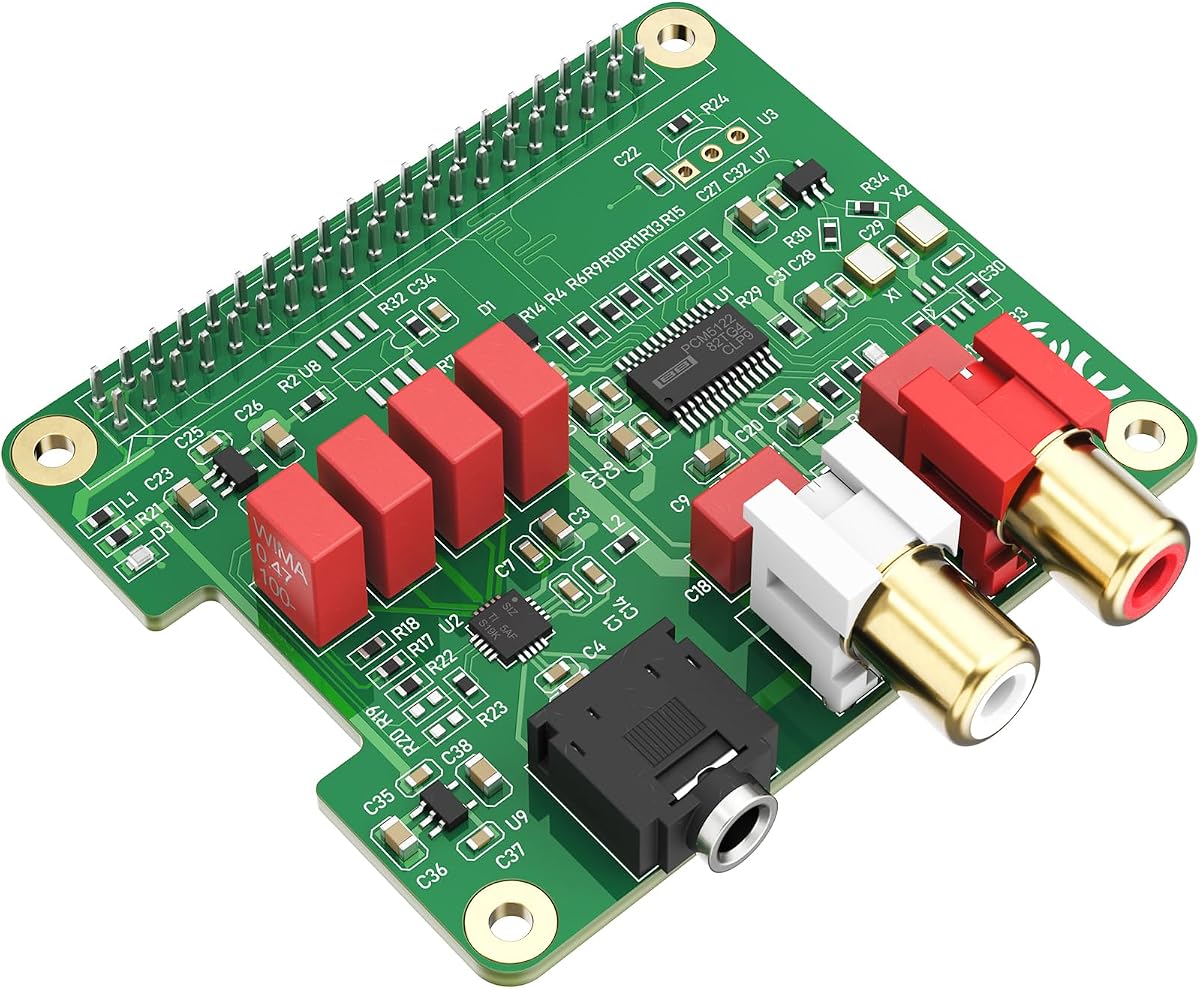
HiFi DAC Audio Sound Card Module PCM5122 I2S Interface 384KHz LED Indicator
4.8Editor score
Low cost high fidelity audio
I2S interface support
LED status indicators included
Compare the top DAC for Raspberry Pi options including HiFi DAC HAT and HiFiBerry Digi+ for high-resolution audio streaming and improved sound quality.
Enhancing your Raspberry Pi audio output requires a dedicated DAC for Raspberry Pi. These boards convert digital signals to analog sound with superior clarity compared to built-in ports. Choosing the right model ensures smooth playback and supports high-resolution formats effectively.
We evaluated ten top models based on audio fidelity, software compatibility, and build quality. Each entry features detailed specs and real-world performance notes. This list covers budget options and premium choices for various Pi models and use cases.
Each pick highlights key strengths and ideal user scenarios. Prices fluctuate often so check current listings before buying. Our goal is to help you find the perfect audio upgrade for your specific project needs without confusion or guesswork.
4.8Editor score
4.5Editor score

4.5Editor score
This table compares all ten selected models side by side. We highlight core specifications and key features to help you quickly identify the best fit for your needs.


The HiFi DAC HAT for Raspberry Pi 5/4/3B+/Zero stands out as a top performer in the category. It features a PCM5122 DAC delivering 112dB SNR and dual oscillators for stable clocking. Reviews praise its seamless integration with popular audio software.
We may earn a commission when you buy through this link, at no additional cost to you.
Its dual ultra-low jitter oscillators ensure precise timing which minimizes distortion during playback. The board supports DSD over PCM and offers both RCA and 3.5mm outputs. This flexibility makes it suitable for both home audio and portable projects.
While it costs more than basic modules the included features justify the price for serious users. Some may wish for balanced outputs at this price point. However the overall engineering is robust and the support is comprehensive.
Buy this if you want high fidelity audio with minimal setup. It fits most Pi models and works with Volumio and Moode. The plug and play EEPROM makes installation simple even for beginners.
Dual oscillators eliminate timing errors common with Pi internal clocks. This ensures stable playback across all sampling rates.
Tested with major music players like Volumio and Moode. Setup is easy with onboard EEPROM configuration.
We may earn a commission when you buy through this link, at no additional cost to you.
This PCM5122 based module offers exceptional value for hobbyists on a tight budget. It delivers 384kHz support and clear sound without complex wiring. Users report it outperforms the onboard audio significantly.
We may earn a commission when you buy through this link, at no additional cost to you.
The module supports I2S interface and includes helpful LED indicators for power and decode status. It connects easily to Pi B+ and 2/3 models. The low cost makes it ideal for testing DAC upgrades.
Limitations include fewer output options and no headphone amp. It lacks the refinement of higher priced boards but provides solid quality for the price. Ideal for simple streaming setups.
Choose this if you want to try DAC audio cheaply. It works well with Volumio and XBMC systems. Perfect for those who prioritize cost savings over advanced features.
At under twenty dollars this is one of the cheapest ways to upgrade Pi audio. Great for DIY experiments and basic projects.
LEDs show power and decoding status clearly. This helps troubleshoot connection issues quickly without extra tools.
We may earn a commission when you buy through this link, at no additional cost to you.
The HiFi DAC Pro Hat uses the flagship ES9038Q2M chip for top-tier audio. It supports DSD512 and offers a 129dB dynamic range. Balanced outputs make it suitable for professional monitoring setups.
We may earn a commission when you buy through this link, at no additional cost to you.
Three TI op-amps drive the audio paths ensuring low noise and high power. Independent clocks eliminate jitter effectively. The wiki support provides detailed configuration guides for advanced users.
At sixty five dollars it is the most expensive option here. Some users note it needs specific cases for full functionality. Still the audio fidelity is unmatched in this lineup.
Select this for critical listening and high-res files. It handles DSD512 smoothly. Best for audiophiles willing to pay for premium performance and balanced connections.
The ES9038Q2M chip delivers studio grade quality. Dynamic range reaches 129dB which is rare for Pi boards.
Balanced XLR connectors reduce noise interference. Ideal for connecting to high end amplifiers or monitors.
We may earn a commission when you buy through this link, at no additional cost to you.
The Digi One Hat provides a pure digital output solution. It features galvanic isolation which separates audio signals from Pi noise. This design ensures clean transmission to external DACs.
We may earn a commission when you buy through this link, at no additional cost to you.
It supports up to 192kHz and uses I2S master mode for accurate clocking. Dual external crystal oscillators further reduce jitter. Ideal for users with external audio equipment.
As a digital board it does not convert to analog. You need an external DAC to listen directly. This limitation suits advanced setups where you already own gear.
Buy this if you have an external amp or processor. The isolation improves sound quality significantly. Perfect for high-end digital audio chains.
Isolators separate power and digital signals from Pi. This eliminates ground loop noise for cleaner audio streams.
Optical TOSLINK and electric RCA outputs offer flexibility. Connect to any digital audio receiver easily.
We may earn a commission when you buy through this link, at no additional cost to you.
This module is a straightforward way to boost audio quality. It uses the reliable PCM5122 chip and supports I2S. Users note it works well with xbmc systems easily.
We may earn a commission when you buy through this link, at no additional cost to you.
LED indicators show power and decode status. It connects directly to GPIO headers without soldering. The package includes spacers for safe mounting on the board.
It lacks the advanced features of premium boards. Setup might require manual software tweaks compared to plug and play boards. Still a solid choice for beginners.
Choose for simple music streaming projects. The value is excellent for the price. Perfect for those wanting analog output without complexity.
Includes spacers for secure board installation. Prevents short circuits and keeps connections stable during use.
Compatible with various media players. Easy to configure with standard OS drivers and utilities.
We may earn a commission when you buy through this link, at no additional cost to you.
RASPIAUDIO Audio DAC Hat features an EEPROM for true plug and play. No driver installation is needed. Users praise its compatibility with Pi5 and Zero models equally.
We may earn a commission when you buy through this link, at no additional cost to you.
It delivers 112dB SNR with 32-bit 384kHz support. The PCB has colored aesthetic appeal. Stereo outputs include RCA and 3.5mm for flexibility.
Performance is good but not class leading. Some users find it comparable to similar budget options. The design and simplicity are its main selling points.
Buy this for quick projects needing simple setup. Ideal for those avoiding Linux driver configs. Works well with various media players.
EEPROM chip allows immediate use. No drivers to install for audio functionality on most OS.
Colored PCB adds visual appeal to projects. Great for visible cases or display builds.
We may earn a commission when you buy through this link, at no additional cost to you.
Argon BLSTR DAC offers excellent noise reduction with a ground loop isolator. It minimizes hum and unwanted noise. Perfect for environments with electrical interference.
We may earn a commission when you buy through this link, at no additional cost to you.
The board is designed specifically for Pi 5. It uses a PCM5122 codec for clear audio. Users report it enhances audio clarity significantly.
Limited to 3.5mm output it lacks RCA options. Not compatible with older Pi models. But for Pi 5 users it solves noise issues effectively.
Choose this to eliminate hum from Pi 5. The isolator works well. Best for setups with noisy electrical systems.
Includes isolator to prevent electrical hum. Critical for setups with external power supplies or amplifiers.
Designed to fit Pi 5 form factors. Ensures stable power and audio routing for this model.
We may earn a commission when you buy through this link, at no additional cost to you.
The HiFiBerry DAC+ DSP features a 300MHz chip for advanced processing. It handles room equalisation and sample rate conversion. Users value it for professional sound tuning.
We may earn a commission when you buy through this link, at no additional cost to you.
Digital inputs and outputs allow standalone use without Pi. It can mix and upsample sources. This flexibility suits complex audio installations.
It costs over one hundred dollars and requires specific enclosures. Setup is more complex than standard DACs. Still unique for DSP tasks.
Select this for custom DSP projects. Great for calibration and mixing. Best for advanced users needing control.
DSP allows real equalisation adjustments. Corrects room acoustic issues for better listening experience.
Can run without Pi via EEPROM. Useful for fixed installations or standalone devices.
We may earn a commission when you buy through this link, at no additional cost to you.
HiFiBerry Digi+ Standard Version offers Toslink and Coax outputs. It supports 192kHz 24bit resolution. A dedicated chip ensures bit-perfect streams to external DACs.
We may earn a commission when you buy through this link, at no additional cost to you.
Digital output keeps audio clean from Pi noise. Good for older Pi models like 2 or B+. Works with many software players easily.
As a digital only board it needs external analog gear. It is older and may lack modern features. Still reliable for basic digital tasks.
Buy this for reliable digital output on Pi. Ideal for legacy systems. Perfect for simple digital audio needs.
Ensures audio data stream is unmodified. Critical for high fidelity listening chains.
Both optical and electrical outputs provided. Connect to various audio systems with ease.
We may earn a commission when you buy through this link, at no additional cost to you.
The HiLetgo PCM5102 module is one of the cheapest options available. It uses I2S for digital audio conversion. Users report it sounds better than Pi onboard audio.
We may earn a commission when you buy through this link, at no additional cost to you.
A stereo jack comes soldered onto the board. It works with Pi and Arduino. Simple for small voice or music projects.
It has minimal features and basic build. Not for high-end audio. But for under ten dollars it is a great starter tool.
Choose for experimental projects. Great for voice output. Best for those needing cheap DAC functionality.
One of the cheapest DAC modules. Ideal for prototyping and small budgets.
Stereo jack pre-soldered saves wiring. Convenient for quick testing and integration.
We may earn a commission when you buy through this link, at no additional cost to you.
Choosing the right DAC for Raspberry Pi depends on your audio needs and budget. Key factors include chip quality, output types, and software support.
The DAC chip determines sound fidelity and resolution. Higher end chips like ES9038Q2M provide dynamic range and clarity. Entry level PCM5122 chips offer solid performance for the price.
Look for chips that support your target resolution formats. Prioritize chips with low distortion specs for best sound.
Outputs vary from 3.5mm to RCA and balanced XLR. RCA suits home audio. 3.5mm works for portable speakers. Balanced outputs reduce noise for professional use.
Choose output types that match your speakers or amp. Ensure connectors are gold-plated for durability.
Ensure the board works with your music player. Popular options include Volumio and Moode. Some boards offer EEPROM for plug and play without manual configs.
Check for community support and driver availability. Compatibility saves hours of setup time and frustration.
Clocking stability affects sound precision. Boards with external oscillators reduce jitter. Pi internal clocks often cause timing errors.
Prefer models with independent clocks for best audio. Dual oscillators offer superior timing accuracy.
Power noise can degrade audio quality. Galvanic isolation separates audio from Pi power. Good regulation minimizes hum and noise.
Look for boards with power isolators or clean regulators. This ensures stable power for better sound.
Some boards fit Zero models without overhang. Others fit larger Pi 5 or 4 models. Check pinouts to ensure GPIO compatibility.
Choose a board that fits your case and model. Mounting hardware should be included for secure fit.
Analog boards convert digital to analog for direct output. Digital boards output bit-perfect streams to external DACs. Choose based on your setup needs.
Use digital boards if you have an external DAC. Analog boards suit direct speaker connections.
Price ranges from under ten to over one hundred dollars. Higher cost brings better chips and features. Determine if premium features justify the cost.
Budget boards work well for casual listening. Premium boards suit audiophile setups.
Connect the DAC board to the GPIO header carefully. Align pins correctly to avoid damage. Secure with included spacers for stability.
Install the required drivers or configure software like Volumio. Use the provided manual for settings. Enable high-res audio in player settings.
Keep the board dry and free from dust. Check connections periodically. Use quality cables to maintain audio quality.
A DAC converts digital signals to analog audio. Raspberry Pi DAC boards improve sound quality beyond the onboard port. They connect via GPIO headers directly.
Many boards use EEPROM for plug and play without drivers. Others may require manual setup. Check product details for compatibility.
Volumio and Moode Audio are top choices. They support high-res formats and DAC configuration. LibreELEC also works well with many boards.
Yes if the board fits the GPIO pins. Some models like Mini Hat avoid overhang. Ensure the layout matches your Pi version.
Analog is direct for speakers. Digital is best for external DACs. Choose based on your audio equipment setup.
They reduce timing jitter for stable playback. This minimizes distortion and improves clarity. Dual oscillators provide precise clocking.
The HiFi DAC HAT offers the best overall balance. The HiFi DAC Audio Sound Card provides great budget value. Premium buyers may prefer the HiFi DAC Pro Hat.
Focus on chip quality and output types first. Ensure software compatibility with your player. External clocks add value for stable audio.
Prices change so check current listings before buying. Verify availability and warranty. This guide helps you find the best fit.