
ESP32-S3-Nano Microcontroller
5.0Editor score
8MB PSRAM and 16MB Flash
Arduino and MicroPython compatible
Integrated Wi-Fi and Bluetooth
This guide compares the top Arduino Nano ESP32 boards and compatible alternatives for IoT and embedded projects featuring Wi-Fi, Bluetooth, and MicroPython
The Arduino Nano ESP32 represents a significant leap forward in compact microcontroller design, merging powerful processing with seamless wireless connectivity for modern embedded projects.
We evaluated ten leading boards based on performance, connectivity, ease of use, and community support to help you find the right fit for your specific application needs.
Each selection highlights unique strengths and trade-offs, ensuring you can make an informed decision while keeping in mind that availability and costs may shift over time.
5.0Editor score

4.6Editor score

4.7Editor score
Below is a detailed side-by-side comparison of all ten boards to help you quickly identify which features matter most for your development workflow and project goals.
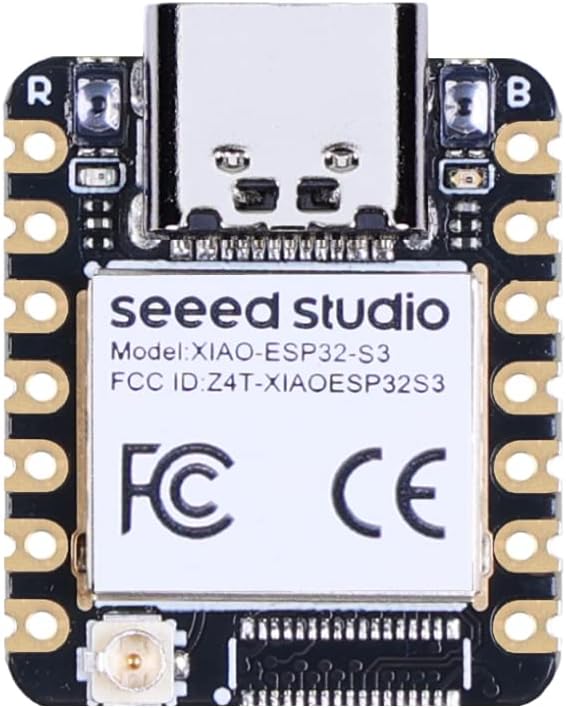


This board stands out as the top choice for developers seeking a robust Arduino Nano ESP32 solution with official support and advanced features like MicroPython compatibility.
We may earn a commission when you buy through this link, at no additional cost to you.
Its dual-core ESP32-S3 processor delivers exceptional speed for real-time data processing while the integrated Wi-Fi and Bluetooth 5.0 ensure reliable wireless communication.
While the cost is higher than third-party alternatives, the quality, documentation, and community support make it worth the investment for serious projects.
Ideal for smart home systems and wearable tech, this board offers the reliability and features needed to bring complex embedded applications to life.
The dual-core Xtensa processor handles complex tasks efficiently, making it suitable for machine learning at the edge.
With both Wi-Fi and Bluetooth support, you can connect to various networks and devices without additional modules.
We may earn a commission when you buy through this link, at no additional cost to you.
This budget-friendly option delivers nearly the same performance as premium boards while maintaining a perfect rating for value and functionality.
We may earn a commission when you buy through this link, at no additional cost to you.
It features 8MB PSRAM and 16MB Flash, which is rare at this price point, allowing for larger projects and more complex applications.
Users appreciate the flexibility to switch between Arduino and MicroPython environments, making it accessible for both beginners and experienced developers.
For hobbyists and students looking to maximize their budget without sacrificing capabilities, this board is an outstanding choice for learning and prototyping.
At a fraction of the cost of branded boards, it offers similar specs for DIY projects and educational use.
Seamlessly switch between C++ and Python, giving you the freedom to choose your preferred development language.
We may earn a commission when you buy through this link, at no additional cost to you.
While technically a UNO size, it offers the advanced connectivity and dual-core power of the Nano ESP32 ecosystem with industrial-grade features.
We may earn a commission when you buy through this link, at no additional cost to you.
The combination of a Renesas ARM chip and the ESP32-S3 provides a unique setup for handling both logic and communication tasks simultaneously.
Features like CAN bus and high-precision DAC make it ideal for automotive or audio projects that standard Nano boards cannot support.
For advanced users needing robust industrial connectivity and analog precision, this board represents the top tier of the Arduino family in 2026.
CAN bus support allows reliable communication in automotive and industrial environments where noise resistance is critical.
The integrated OP-AMP and 12-bit DAC enable precise signal processing for high-quality audio and sensor applications.
We may earn a commission when you buy through this link, at no additional cost to you.
This board redefines what the Arduino Nano ESP32 category can achieve by shrinking the size while keeping full wireless functionality and power management.
We may earn a commission when you buy through this link, at no additional cost to you.
Its thumb-sized design makes it perfect for wearable tech and space-constrained projects where every millimeter counts in the final product.
With dedicated battery charging circuitry and deep sleep modes, it ensures long operational times for portable devices powered by coin cells.
If your project requires a discreet, efficient solution that can be embedded into clothing or accessories, this is the ideal pick for portability.
Engineered for minimal power draw, it extends battery life significantly compared to standard development boards in wearable setups.
Its tiny form factor allows for seamless integration into small enclosures without needing bulky connectors or wires.
We may earn a commission when you buy through this link, at no additional cost to you.
This board brings advanced visual processing capabilities to the Nano ESP32 form factor, targeting applications that require cameras or displays.
We may earn a commission when you buy through this link, at no additional cost to you.
The inclusion of MIPI-CSI and DSI interfaces allows direct connection to cameras and screens without extra breakout boards or complex wiring.
With hardware security and dedicated accelerators for JPEG and H264, it handles multimedia tasks that standard microcontrollers struggle to manage.
Developers building smart cameras or industrial HMI systems will find the specialized interfaces and processing power invaluable for their work.
Dedicated ports for displays and cameras simplify the hardware design for projects involving user interfaces or machine vision.
The RISC-V architecture provides a modern alternative to ARM, offering flexibility and efficiency for complex computational tasks.
We may earn a commission when you buy through this link, at no additional cost to you.
Getting three boards in a single purchase offers exceptional value for teams or multiple projects, ensuring you have backups or devices for distributed networks.
We may earn a commission when you buy through this link, at no additional cost to you.
The castellated module design allows for direct soldering onto carrier boards, which is perfect for integrating into custom PCBs without bulky connectors.
These boards support full wireless functionality and power management, making them versatile for a wide range of IoT deployments and prototypes.
For makers who need multiple units for testing or distributed sensor networks, buying this kit saves time and money compared to single-unit purchases.
Purchasing in a pack reduces the per-unit cost significantly, making it easier to scale your projects without breaking the budget.
Castellated pads enable direct soldering to custom PCBs, simplifying the assembly process for production-ready designs.
We may earn a commission when you buy through this link, at no additional cost to you.
While it uses the classic ESP32 rather than the specific Nano ESP32 chip, this kit provides the most complete learning path for wireless embedded development.
We may earn a commission when you buy through this link, at no additional cost to you.
It includes over 35 electronic components and detailed step-by-step tutorials that guide you through building real-world projects like weather stations.
For students and beginners, having all the necessary sensors, displays, and motors in one box removes the guesswork of sourcing individual parts.
If your goal is to learn the fundamentals of IoT and electronics thoroughly, this bundle offers the best educational value and hands-on experience available.
The included tutorials walk you through basic circuits to advanced IoT applications, ensuring a structured and supported learning journey.
Access to motors, displays, and sensors allows you to build a diverse range of projects without needing extra purchases later.
We may earn a commission when you buy through this link, at no additional cost to you.
This board prioritizes security above raw processing speed, making it ideal for projects where data privacy and secure cloud connections are critical.
We may earn a commission when you buy through this link, at no additional cost to you.
It includes a dedicated secure element that provides hardware-level encryption, ensuring that sensitive data remains protected during transmission.
While it lacks the latest Bluetooth 5.0 speeds, it offers reliable connectivity for standard IoT applications where stability is more important than bandwidth.
For enterprise or privacy-focused projects requiring certified security protocols, this board remains a trusted and robust choice in the Arduino family.
The hardware secure element protects cryptographic keys, making it resistant to physical tampering and common cyber attacks.
Stable connectivity and built-in sensors ensure consistent performance for monitoring and control applications without external add-ons.
We may earn a commission when you buy through this link, at no additional cost to you.
This classic ESP32 board offers a proven track record of reliability with extensive community support and compatibility with the vast majority of libraries.
We may earn a commission when you buy through this link, at no additional cost to you.
It includes three units in a pack, making it perfect for testing multiple nodes or maintaining inventory for ongoing projects without frequent reordering.
While it uses the older Bluetooth version, it still provides robust dual-mode connectivity suitable for most home automation and sensor applications.
For developers who prefer a stable, well-documented platform without worrying about new feature compatibility, this classic board remains a solid choice.
Years of development mean thousands of tutorials, libraries, and community forums are available to solve any coding challenge quickly.
Support for deep sleep modes and dynamic clock scaling helps optimize battery life for remote sensor applications effectively.
We may earn a commission when you buy through this link, at no additional cost to you.
This board updates the classic ESP32 design with a modern USB-C port and supports OTA updates, blending legacy performance with convenience features.
We may earn a commission when you buy through this link, at no additional cost to you.
The inclusion of three boards allows you to deploy sensor networks or keep spares for critical systems, ensuring you are never stuck waiting for a replacement.
Support for OTA updates means you can maintain your deployed devices wirelessly, saving the hassle of physical access for every firmware revision.
For those needing a reliable and modernized classic board with easy updates, this pack offers the best balance of features and availability in 2026.
The switch to USB-C makes connecting to modern computers effortless without the need for outdated micro-USB adapters.
Over-the-Air update support simplifies maintenance, allowing you to push fixes and new features remotely without physical access.
We may earn a commission when you buy through this link, at no additional cost to you.
Selecting the right board involves balancing processing power, memory, connectivity, and physical size to match your project requirements effectively.
The processor determines how fast your board can execute code. Look for dual-core chips like the ESP32-S3 or RISC-V variants for better multitasking.
Prioritize dual-core options to ensure smooth performance when handling both wireless communication and sensor data simultaneously.
RAM and Flash size are critical for storing larger libraries and variables. Boards with 8MB PSRAM can handle more complex applications.
Choose a board with ample Flash and RAM if you plan to store images, large datasets, or complex logic on the device.
Ensure the board supports the latest Wi-Fi and Bluetooth standards like Bluetooth 5.0 for better range and lower power consumption.
Check for additional interfaces like Ethernet or CAN bus if your project requires industrial or automotive-grade communication.
Nano boards are ideal for compact projects, while larger boards offer more pin headers and easier soldering for prototyping.
Select a form factor that fits within your enclosure and allows for comfortable access to pins during development.
Battery-powered projects require boards with deep sleep modes and low active current consumption to extend runtime.
Look for boards with integrated battery charging if your project will rely on rechargeable power sources for portability.
Confirm that the board works well with your preferred IDE such as Arduino IDE or MicroPython for faster development cycles.
Choose boards with strong library support to reduce the time spent writing custom drivers for common sensors and modules.
Official boards usually have more tutorials and community examples, which speeds up problem-solving and learning curves.
Prefer options with active forums and extensive documentation if you are new to embedded development or IoT.
Consider purchasing multi-pack kits for better long-term value if you need multiple devices for distributed sensor networks.
Balance the cost of features against your needs, opting for premium boards only when specific advanced capabilities are required.
Always connect the board via USB-C or a stable power source before running code to prevent damage from voltage spikes during startup.
Store boards in a dry, static-free environment and avoid bending the pins when plugging into breadboards to ensure long-term connectivity.
Regularly update your firmware and libraries to patch security vulnerabilities and take advantage of new features released by the community.
Yes, most Arduino projects work seamlessly, but you may need to install additional board support packages. The hardware is pin compatible enough for easy migration.
Many of these boards support MicroPython, including the official Nano ESP32. This allows for easier scripting without needing C++ compilation tools.
Bluetooth 5.0 boards typically offer a range of up to 100 meters in open space. Walls and interference can reduce this, so testing is recommended.
Most boards come with onboard antennas that work well indoors. For long-range outdoor use, you might need to attach an external U.FL antenna for better signal.
Yes, especially boards with deep sleep modes. Models like the XIAO offer dedicated power management for extended battery life in portable devices.
Connect via USB and use the Arduino IDE or MicroPython firmware tools. Ensure you back up your code before flashing new versions to avoid data loss.
Any standard sensors supporting I2C or SPI will work well. Popular choices include DHT sensors for weather and accelerometers for motion detection.
Yes, but you must obtain a manufacturing license for official Arduino boards. Third-party clones may require custom compliance checks for production.
The Arduino Nano ESP32 leads the pack for official support, while budget boards like the ESP32-S3-Nano offer incredible value for learning and prototypes.
Prioritize processing speed and memory capacity if your projects involve complex data handling, or choose compact options for wearable and portable designs.
Always verify current pricing and stock levels before purchasing since these factors can fluctuate quickly with changes in demand and supply chains.