
10 Pack 3 Pins AMS1117-3.3 DC 4.75V-12V to 3.3V Voltage Regulator
4.1Editor score
Simple 3-pin design for easy connection
Fixed 3.3V output voltage
Overheat protection included
This guide compares the top 5V to 3V voltage regulator options available in October 2026 to help you find the stable power supply for your electronics.
Finding a reliable 5V to 3V voltage regulator is essential for powering microcontrollers and sensors safely. A good unit ensures stable output without overheating or causing damage to your sensitive components during operation.
We compared ten top-rated models based on efficiency, size, and current output capabilities. Our analysis focuses on buck converters and linear regulators that deliver consistent 3.3V power from various input sources.
Each pick below highlights key features and ideal use cases for makers and professionals. Please note that product availability and pricing may change frequently so always check current listings before purchasing.
4.1Editor score

4.6Editor score

5.0Editor score
The following table provides a side-by-side comparison of all ten products to help you quickly identify the right regulator for your specific project requirements and budget constraints.


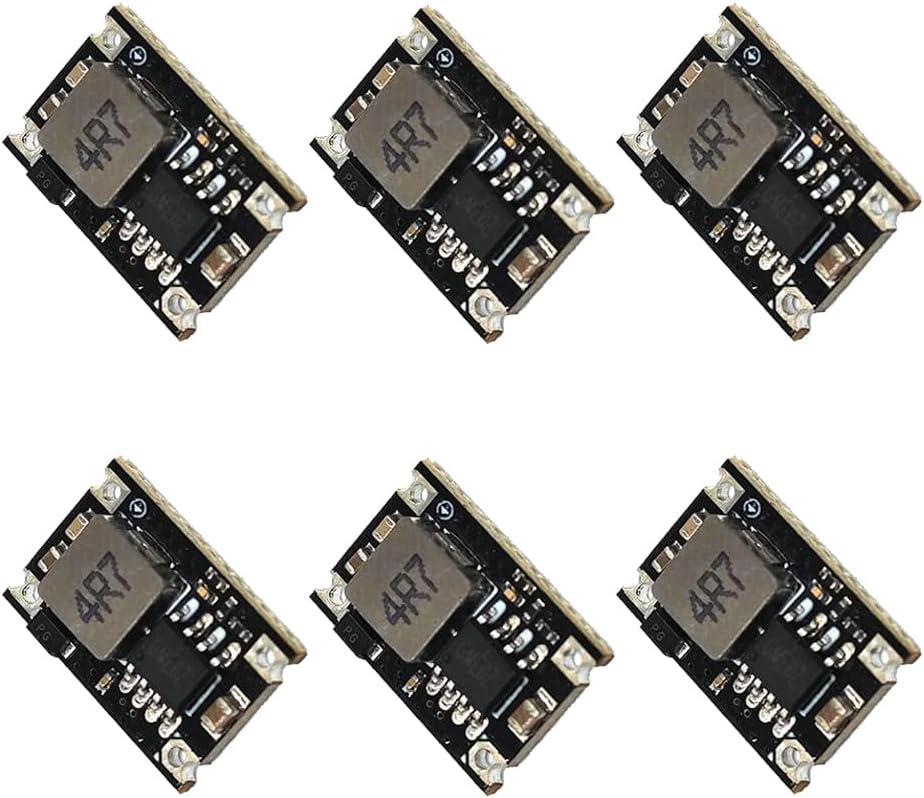
This buck converter module is the top choice for its versatility and robust performance. It delivers a stable 3.3V output from inputs ranging from 4.5V to 24V making it suitable for diverse power sources.
We may earn a commission when you buy through this link, at no additional cost to you.
Its compact size of 17.5mm allows for easy integration into tight spaces without sacrificing current capacity. The low ripple ensures clean power for sensitive microcontrollers and sensors.
While it requires protection diodes for inductive loads like motors this is a standard practice for such regulators. The pack of five provides excellent value for multiple projects.
Makers and professionals alike will benefit from its reliable performance and ease of use. We recommend this module for any project needing efficient voltage step down.
Works with 5V 9V 12V and 24V supplies for maximum flexibility.
Fits easily into narrow spaces for embedded or portable projects.
We may earn a commission when you buy through this link, at no additional cost to you.
This pack offers an excellent budget-friendly option for basic 3.3V regulation needs. The AMS1117-3.3 is a well-known linear regulator that simplifies power supply design significantly.
We may earn a commission when you buy through this link, at no additional cost to you.
It supports inputs up to 12V and delivers a fixed 3.3V output ideal for many development boards. The 3-pin layout makes wiring straightforward for beginners.
Note that linear regulators dissipate more heat than buck converters especially at higher currents. It also includes overheat protection to prevent damage during overloads.
Perfect for projects with lower power requirements like simple sensors. We suggest this for hobbyists needing reliable power without complex circuitry.
Dual-panel design with single row pins for easy MCU connection.
Overheat shutdown circuit protects against abnormal working conditions.
We may earn a commission when you buy through this link, at no additional cost to you.
This premium mini reducer stands out with its flawless five-star user rating. It combines high current capacity with a very small size making it ideal for compact electronics.
We may earn a commission when you buy through this link, at no additional cost to you.
The switching frequency is optimized for efficiency and low noise. This ensures clean power for sensitive chips even under higher load conditions.
Like other switching regulators it requires external protection for motors. The included capacitor recommendations help mitigate ripple issues effectively.
For demanding portable projects this module offers top-tier performance. We recommend it for those prioritizing size and efficiency equally.
Delivers up to 1.8A output for demanding components and motors.
Fits into tight PCB layouts due to minimal physical dimensions.
We may earn a commission when you buy through this link, at no additional cost to you.
This unique converter works as both a buck and boost regulator allowing it to step up from low voltages like 1.8V. It is perfect for battery powered devices where input drops below output.
We may earn a commission when you buy through this link, at no additional cost to you.
The 5-star rating indicates consistent performance in low current applications. It supports inputs from 1.8V to 5V ensuring versatility.
Note the maximum current is limited to 100mA which restricts its use to low power sensors. It is not suitable for motors or high draw components.
Ideal for portable battery projects needing stable power despite voltage drops. We suggest this for microcontrollers with very low current needs.
Steps up voltage from 1.8V to 3.3V for battery applications.
Designed for sensors and low power microcontrollers only.
We may earn a commission when you buy through this link, at no additional cost to you.
This pack provides seven linear regulators perfect for bulk projects on a budget. The AMS1117 chip is a reliable choice for simple voltage stepping tasks.
We may earn a commission when you buy through this link, at no additional cost to you.
It supports inputs up to 12V and delivers 800mA which is sufficient for many boards. The 3-pin design simplifies soldering significantly.
Users should manage heat if currents approach the limit due to linear operation. Protection features are built-in to prevent thermal damage.
A practical choice for those needing multiple regulators for prototyping. We recommend it for stationary projects where heat can dissipate.
Seven units included for multiple circuit builds at once.
Three pins make connection quick and easy.
We may earn a commission when you buy through this link, at no additional cost to you.
This option offers a massive pack of fifteen units which is great for large scale needs. It maintains a perfect five-star rating for reliability and performance.
We may earn a commission when you buy through this link, at no additional cost to you.
Dynamic voltage difference control helps reduce power consumption significantly. This is particularly useful for battery powered scenarios needing efficiency.
It includes protection against overheating and overcurrent for safety. The dropout voltage is low enough to work with minimal headroom.
Ideal for industrial or automotive electronics needing consistent supply. We suggest this for projects requiring many identical regulators.
Adjusts impedance to reduce voltage difference and save power.
Operates reliably across a wide temperature range.
We may earn a commission when you buy through this link, at no additional cost to you.
This module supports a wide input range up to 30V which is higher than many competitors. It includes reverse polarity protection to safeguard connected circuits effectively.
We may earn a commission when you buy through this link, at no additional cost to you.
It delivers 1.8A output with minimal ripple for clean power. The PCB layout includes marks for correct orientation and safety.
Some users note voltage variance at higher currents which is a trade-off. The rating suggests mixed experiences with quality control.
Good for high voltage sources needing step down. We recommend checking voltage stability for sensitive components before use.
Reverse polarity mark on PCB protects circuits from accidental wiring.
Accepts inputs up to 30V for versatile power sources.
We may earn a commission when you buy through this link, at no additional cost to you.
This buck converter is ideal for solar or vehicle power systems with wide voltage swings. It maintains a stable 3.3V output across varying inputs effectively.
We may earn a commission when you buy through this link, at no additional cost to you.
Each unit is tested before shipping to ensure functional quality. The compact size fits wearables and IoT devices perfectly.
With high peak current output it supports demanding loads well. Clean power is critical for microcontrollers and sensors.
Great for automotive or solar applications needing stability. We suggest this for users needing verified working units.
Works well with panels and batteries offering wide input ranges.
Every module is tested prior to shipping for reliability.
We may earn a commission when you buy through this link, at no additional cost to you.
This ten pack offers excellent value for basic voltage regulation tasks. The 5-star rating indicates satisfaction among buyers regarding functionality.
We may earn a commission when you buy through this link, at no additional cost to you.
Input voltage is restricted to 7V which suits USB sources well. It provides a stable 3.3V output up to 800mA.
Exceeding the operating voltage can damage the unit so caution is needed. It is designed for simple power step down.
Ideal for USB powered prototypes needing reliable supply. We suggest this for beginners needing simple and safe power solutions.
Input range matches standard USB power sources perfectly.
Ten units provide cost-effective bulk supply for projects.
We may earn a commission when you buy through this link, at no additional cost to you.
This module features the MP1584EN chip which is known for high efficiency. Its 4.9-star rating reflects consistent and reliable performance.
We may earn a commission when you buy through this link, at no additional cost to you.
It supports high current draw up to 1.8A efficiently. The small dimensions fit well in aircraft models and tight enclosures.
Users should add Zener diodes when driving motors. This is standard practice for switching regulators handling inductive loads.
Excellent for high performance applications needing compact size. We recommend this for models and portable electronics requiring power.
Uses MP1584EN chip for high efficiency and stability.
Very small dimensions fit easily into tight spaces.
We may earn a commission when you buy through this link, at no additional cost to you.
Selecting the right regulator involves considering input ranges and efficiency. Below are key factors to evaluate.
Ensure the regulator accepts your source voltage such as 5V or 12V. A wider range adds flexibility for different power supplies.
Always check minimum and maximum input limits before buying.
Match the output current to your device needs. Buck modules often support higher amps than linear regulators.
Choose units exceeding your load to prevent overheating.
Buck converters are more efficient and generate less heat. Linear regulators are simpler but waste energy as heat.
Use buck for high current and linear for low current.
Look for low ripple specs to keep microcontrollers stable. Clean power prevents unexpected resets.
Check reviews for performance under load.
Mini modules save space on crowded boards. Compact units help in portable projects.
Verify dimensions match your enclosure.
Overheat and overcurrent protection extend component life. Always check for built-in safety features.
External protection is needed for motors.
Three pin layouts simplify wiring for beginners. Solder kits are useful for prototyping.
Select packages with clear pin labels.
Buying packs of five or ten offers better value. Ensure you have spares for testing.
Check pack counts for project needs.
Connect the input to your power source ensuring correct polarity to avoid damage. Use thick wires for high current to reduce resistance.
Add capacitors near input and output for stability. Inductive loads like motors need diodes to prevent voltage spikes.
Monitor heat during use and add a heatsink if the module gets too hot. Store unused units in anti-static bags for longevity.
Buck converters switch rapidly to step down voltage efficiently while linear regulators drop voltage across a transistor. Buck modules are better for high current due to lower heat.
Linear regulators need heatsinks if output current exceeds 500mA. Buck converters usually do not due to higher efficiency but monitor heat.
Ensure the regulator outputs 3.3V specifically. Using a 5V regulator will damage 3.3V components requiring correct selection.
This suggests high ripple or insufficient current. Check for capacitor placement and verify load current does not exceed regulator limits.
Switching noise can interfere. Choose regulators with low ripple and add extra filters or linear regulators for audio.
No, this adds complexity and noise. Use one regulator for the entire load to ensure stable power.
Measure output with a multimeter at load. Verify stability when turning loads on and off.
The top picks balance efficiency and size with the buck module leading overall. The AMS1117 pack offers great budget options for low current needs.
Prioritize current capacity and input range to match your power source. Efficiency matters for battery projects while stability matters for sensors.
Always verify current availability and specs before ordering. Prices fluctuate so check listings for the most up to date offers.