
AIMILER Level 2 Electric Vehicle Charger
4.6Editor score
NEMA 14-50 plug-in
Adjustable 16A to 32A
Smart WiFi app control
This guide compares the top Ev DC Chargers for home and commercial use, analyzing speed, connectivity, safety features, and durability to help you choose.
Electric vehicle ownership continues to grow rapidly across North America and Europe, driving demand for reliable home charging solutions. Selecting the right Ev DC Chargers requires understanding amperage options, connectivity features, and safety certifications to ensure safe and efficient daily charging for your vehicle.
We have evaluated ten leading Ev DC Chargers based on real-world performance data, user reviews, and technical specifications. Our comparison covers hardwired and plug-in models, smart app capabilities, weather resistance ratings, and compatibility with various electric vehicle brands available in the current market.
Each product pick includes detailed analysis of installation requirements, charging speeds, and warranty coverage to help you make an informed decision. Please note that product availability and pricing may change frequently, so verify current details with the manufacturer before purchasing your chosen charging station today.
4.6Editor score
4.7Editor score

4.3Editor score
The following comparison table outlines key technical specifications for each Ev DC Charger model to help you quickly identify the best fit for your electrical setup and vehicle requirements.




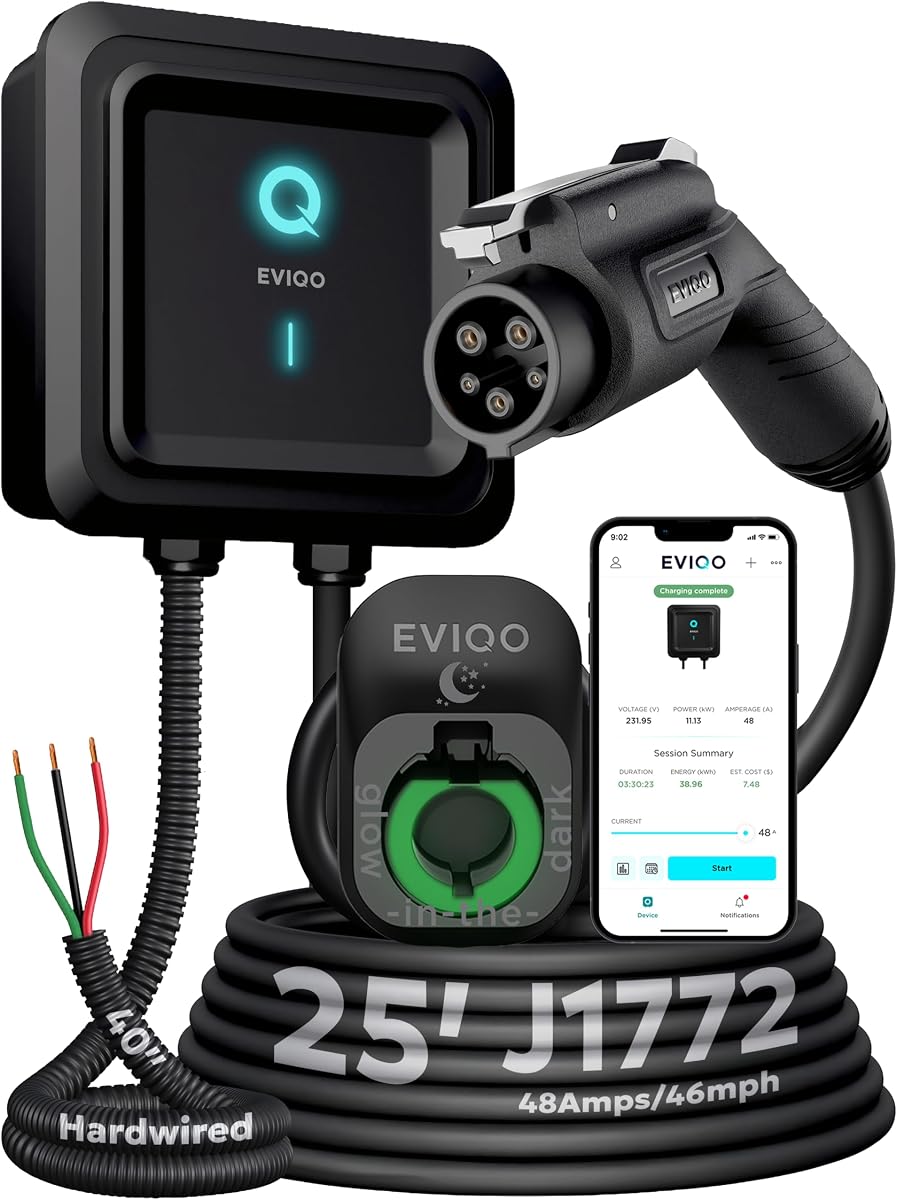
The EVIQO Level 2 EV Charger stands out as a top performer in the Ev DC Chargers market with its reliable 48A hardwired connection and robust smart features. It offers exceptional speed and connectivity for daily home charging needs.
We may earn a commission when you buy through this link, at no additional cost to you.
This model delivers up to 48A on a dedicated circuit, ensuring most electric vehicles charge fully overnight. The built-in antenna maintains strong WiFi signal even in garages, allowing seamless control via the free smartphone app for scheduling and monitoring.
While hardwired installation is required which may increase upfront costs compared to plug-in models, the performance stability and permanent setup justify the investment for most homeowners seeking long-term reliability and speed.
Ideal for Tesla owners and other non-Tesla EV drivers who need dependable fast charging at home. Its weatherproof design makes it suitable for outdoor mounting while maintaining consistent performance across seasons.
The companion app enables scheduling off-peak charging to save money and track energy usage with detailed historical data insights.
UL and ETL certified with internal steel shielding ensures safe operation and protection against electrical hazards in various environments.
We may earn a commission when you buy through this link, at no additional cost to you.
The EMPORIA Level 2 EV Charger offers exceptional flexibility with both plug-in and hardwired installation options to suit different electrical setups and user preferences easily. It supports fast charging speeds and smart control.
We may earn a commission when you buy through this link, at no additional cost to you.
You can configure it for NEMA 14-50 plug-in at 40A or convert to hardwired for full 48A speed. The mobile app provides real-time energy data and session scheduling to optimize utility rates and performance seamlessly.
While the plug-in option provides convenience, switching to hardwired requires professional work and may complicate future relocation. Ensure your electrical panel supports the chosen circuit before installation to avoid complications later.
Best for homeowners wanting install options without sacrificing speed. The broad safety certifications and universal connector ensure compatibility with nearly all EVs available in North America today.
ENERGY STAR certification means reduced energy waste and lower operating costs over the lifetime of daily charging sessions at home.
Meets multiple UL standards ensuring reliable protection against electrical hazards and consistent performance during long-term daily use.
We may earn a commission when you buy through this link, at no additional cost to you.
The AIMILER Level 2 EV Charger provides excellent value for budget-conscious buyers seeking reliable home charging with smart app control and adjustable power settings. It balances cost and features effectively.
We may earn a commission when you buy through this link, at no additional cost to you.
It supports up to 32A output which offers six times faster charging than standard outlets. The LED touch screen and app allow adjustment of charging speed and scheduling to match off-peak electricity rates easily.
WiFi connectivity can be finicky if your network isn't 2.4GHz and may require reset procedures. For many users however the plug-and-play convenience and low price outweigh occasional connectivity challenges.
Ideal for owners of vehicles with smaller batteries who prioritize cost over maximum charging speed. The included NEMA 14-50 plug makes installation straightforward for those with compatible outlets.
Adjust current from 16A to 32A via app or screen to match circuit capacity and reduce electrical load during peak usage times.
Military-grade cable withstands over 10000 plug cycles ensuring longevity even with frequent daily use in various environmental conditions.
We may earn a commission when you buy through this link, at no additional cost to you.
The ChargePoint HomeFlex EV Charger stands out for its integration with a vast public charging network offering seamless management across home and public stations. It provides reliable power delivery with strong app support.
We may earn a commission when you buy through this link, at no additional cost to you.
It supports up to 50A charging speeds and works with most EVs via J1772 connector. The mobile app offers data tracking and smart home device integration to automate charging schedules and monitor energy usage effectively.
The higher price point compared to basic models may be a barrier for budget buyers. However users who travel often benefit from the extensive public station network and unified account management features.
Best for drivers who want consistent charging experience at home and on the road. The durable cable and support options provide peace of mind for long-term daily use and reliability.
Access hundreds of thousands of North American stations with one account for convenient public charging when away from home.
Connect to smart home systems to automate charging based on electricity rates or energy usage patterns for optimized costs.
We may earn a commission when you buy through this link, at no additional cost to you.
The Autel Level 2 EV Charger delivers consistent charging power in extreme conditions thanks to its flexible cable and robust weatherproof housing. It combines speed with smart connectivity for reliable home charging.
We may earn a commission when you buy through this link, at no additional cost to you.
Designed to remain flexible even at minus forty degrees Celsius this charger ensures operation during winter months. The NEMA Type 4 enclosure protects against snow rain and hail while maintaining efficiency in varied climates.
While hardwired installation is mandatory and may add cost the reliability and speed justify the setup for northern users. The app allows schedule management and OTA updates keep features current over time.
Ideal for those in cold regions needing dependable charging without cable stiffness. The dual connectivity options ensure you stay connected even if one network mode encounters interference.
Cable remains flexible down to extreme temperatures ensuring easy handling and connection during harsh winter charging sessions.
Both Bluetooth and WiFi support ensure seamless app connection for monitoring and control regardless of network availability.
We may earn a commission when you buy through this link, at no additional cost to you.
The IYILO Level 2 EV Charger supports local utility charging programs that can reduce electricity costs significantly for eligible users in participating regions. It balances smart features with essential safety protections effectively.
We may earn a commission when you buy through this link, at no additional cost to you.
Its built-in NTC sensor tracks connector temperature and stops charging if it exceeds 221 degrees Fahrenheit protecting your vehicle from heat damage during long sessions. The app shows real-time temperature alongside other metrics.
While the 40A output is slower than top tier hardwired units it offers sufficient speed for most overnight needs. The power sharing feature enables two chargers on one circuit which is ideal for expanding capacity.
Best for households wanting to participate in incentive programs without high-end costs. The overheat protection and shared load capabilities make it a safe and efficient option for daily charging.
Overheat protection automatically stops charging if the connector gets too hot preventing damage to your vehicle charging port.
Power sharing allows two chargers to share one circuit safely maximizing capacity without requiring panel upgrades for multiple EVs.
We may earn a commission when you buy through this link, at no additional cost to you.
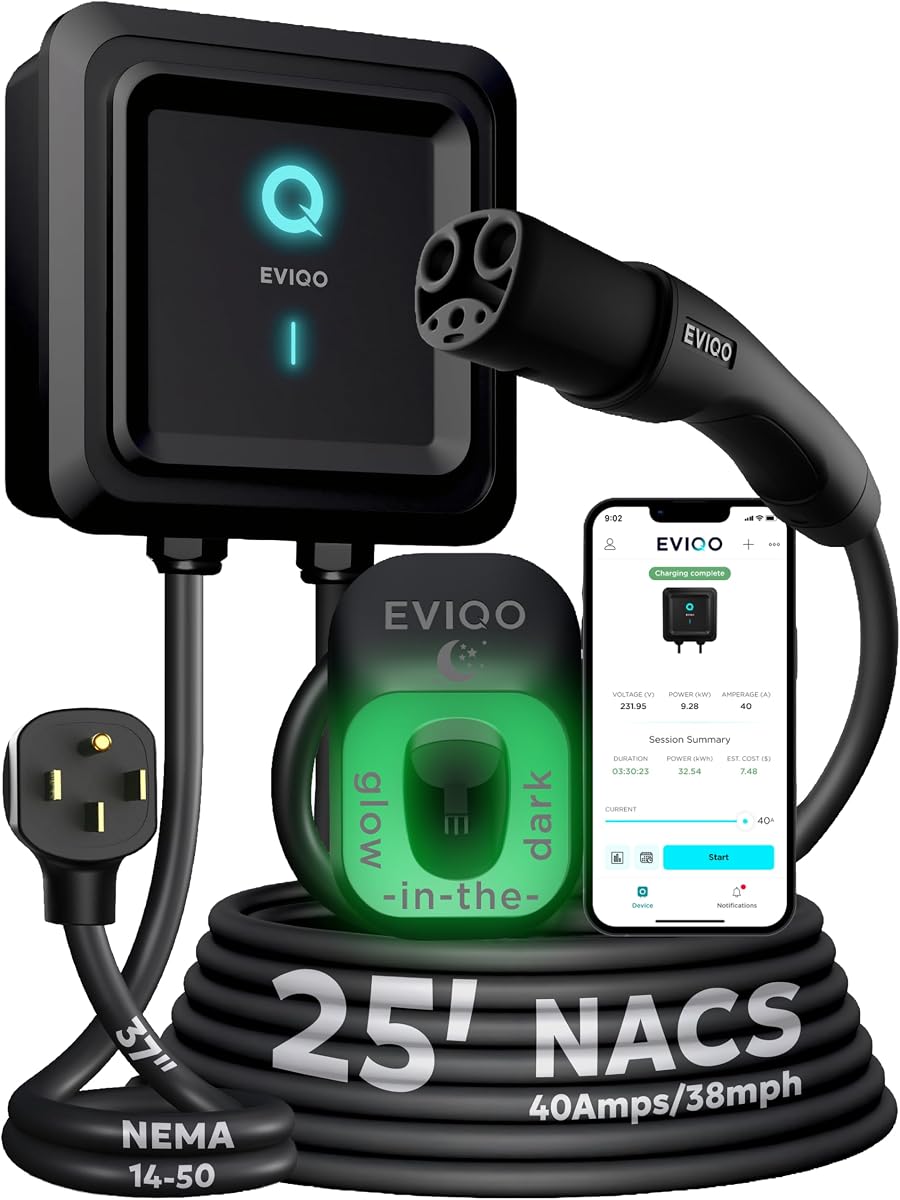
The NACS Level 2 EV Charger offers built-in support for Teslas with its native NACS connector eliminating the need for additional adapters. It provides reliable speed and smart control for modern electric vehicles.
We may earn a commission when you buy through this link, at no additional cost to you.
With up to 40A charging it delivers overnight speed for most models. The app allows scheduling and tracking while the built-in antenna keeps the unit connected even in garages with limited signal strength.
Non-Tesla drivers require a separate adapter which adds cost and steps. The price point is higher than generic models but direct compatibility makes it worth the investment for Tesla owners.
Ideal for Tesla users wanting seamless integration without extra adapters. The plug-in design simplifies installation compared to hardwired units while maintaining solid performance and safety features.
Built-in NACS port connects directly to Teslas without requiring extra adapters for convenient daily home charging.
NEMA 14-50 plug allows easy installation and portability if you move homes or need to change setup locations.
We may earn a commission when you buy through this link, at no additional cost to you.
The Autel MaxiCharger 80A delivers unmatched speed with 80A output adding seventy miles of range per hour for rapid charging. It uses AI to optimize schedules and manage energy for large batteries or busy households.
We may earn a commission when you buy through this link, at no additional cost to you.
Built for ten years of daily use it includes internal monitoring and a flame-retardant enclosure. Dual network connections ensure nearly continuous online status allowing remote management and alerts for maximum reliability and convenience.
The required 100A electrical circuit and high cost limit this unit to serious EV owners or commercial installations. For typical home use it may be overkill but future-proofs high-capacity charging needs effectively.
Best for users with large batteries or multiple vehicles needing maximum power. The smart features and durable build justify the investment for those prioritizing speed and long-term reliability.
AI-integrated app manages charging times around utility rates to minimize bills while maximizing vehicle battery efficiency.
Dual-network connections ensure 99.9% uptime so you always stay connected to your charger for remote control and monitoring.
We may earn a commission when you buy through this link, at no additional cost to you.
The Autel Level 2 EV Charger offers strong charging speeds and comprehensive smart features suitable for busy households needing reliable daily home charging. It combines speed with durability and easy app management.
We may earn a commission when you buy through this link, at no additional cost to you.
Delivering 12kW output it charges vehicles quickly overnight while the app handles scheduling and energy tracking. Dual connectivity options ensure you remain connected for remote management and alerts.
While hardwired installation is required the setup provides permanent stability. The five-year warranty adds peace of mind for long-term daily use and reliability during heavy household traffic.
Ideal for families with one or two EVs needing consistent charging. Its balance of speed connectivity and durability makes it a solid choice for regular use.
Smart app allows scheduling sessions during off-peak hours to save on electricity bills while tracking real-time energy consumption.
Five-year warranty provides strong support for any hardware issues ensuring long-term reliability for your investment.
We may earn a commission when you buy through this link, at no additional cost to you.
The AIMILER Level 2 EV Charger delivers high-speed 48A charging in a plug-in format offering strong value for users wanting power without hardwiring. It balances cost with solid performance features.
We may earn a commission when you buy through this link, at no additional cost to you.
With up to 11.5kW output it adds over forty-five miles of range per hour. The touch screen lets you adjust amperage and set charging times directly without relying solely on the app.
A 60A circuit is required for full 48A output which may complicate installation for older homes. For those with proper wiring it offers excellent speed at a lower price point than hardwired units.
Ideal for users who want fast charging with outlet flexibility. The plug-in design simplifies removal if needed while maintaining high output for rapid daily charging.
Plug-in NEMA 14-50 connection delivers 48A charging power without requiring permanent hardwired installation by an electrician.
Touch screen allows immediate adjustment of charging settings without needing to use a smartphone app for basic control.
We may earn a commission when you buy through this link, at no additional cost to you.
Selecting the right Ev DC Charger involves balancing speed, installation type, smart features, and safety certifications to match your electrical capacity and vehicle needs.
Higher amperage means faster charging speeds but requires a larger dedicated circuit breaker. Units range from 16A to 80A with most home chargers offering 32A to 48A for overnight charging. Ensure your electrical panel can support the required circuit before purchasing.
Choose 40A or higher for large batteries and multiple vehicles while 32A suffices for smaller daily needs.
Hardwired models connect directly to your breaker panel offering permanent reliability and maximum power. Plug-in models use a NEMA 14-50 outlet providing flexibility if you move homes but require a matching outlet installed.
Select hardwired for speed and plug-in for flexibility depending on your electrical setup and future plans.
Smart chargers connect to WiFi or Bluetooth allowing app control of schedules and monitoring. Look for OTA updates to keep features current. Ensure your network supports 2.4GHz as most units do not support 5GHz.
Prioritize units with intuitive apps and strong signal antennas for reliable control during daily charging sessions.
Look for UL, ETL, or CSA certifications ensuring tested safety against electrical hazards. Overheat protection and proper weatherproofing prevent damage to your vehicle and home. Avoid uncertified units to ensure safety and compliance.
Always verify certification labels on the box to guarantee the charger meets national safety standards for residential use.
Outdoor units should have at least NEMA 4 or IP66 rating to resist rain snow and dust. Indoor units may have lighter protection but check local codes for garage installations. Ensure proper mounting for outdoor safety.
Match the unit rating to your installation location to prevent weather-related damage and maintain consistent performance.
Longer warranties indicate manufacturer confidence and protect your investment. Look for US-based support hours to resolve issues quickly. Read reviews about customer service responsiveness before finalizing your purchase.
Choose brands offering at least three years warranty and accessible support to protect against defects or malfunctions.
Cables typically range from 18 to 25 feet. Longer cables offer more parking flexibility but add weight. Look for flexible cables that remain pliable in cold weather to avoid cracking or stiffness.
Ensure the cable reaches your vehicle parking spot comfortably without stretching to prevent wear and tear on the connector.
Prices vary widely by features and brand. Budget units offer essential charging while premium units include smart scheduling and higher speeds. Consider installation costs as hardwired setups may require electrician fees.
Set a total budget including installation to choose a charger that fits your financial constraints without compromising safety.
Install your Ev DC Chargers according to local electrical codes. If hardwired hire a licensed electrician. For plug-in models ensure your outlet matches the charger plug rating. Always test the circuit before daily use.
Connect your vehicle securely to the charging port and monitor initial sessions via the app. Use scheduling features to charge during off-peak hours for savings. Keep the connector and cable dry when not in use.
Inspect cables and connectors monthly for cracks or corrosion. Clean gently with a dry cloth if dirty. Perform factory resets if the unit fails to connect to WiFi. Ensure ventilation around the unit to prevent overheating.
Check your vehicle manual for maximum input rate. Most EVs accept up to 32A. Higher amperage units allow faster charging if your car supports it. Ensure your electrical panel can handle the load before installing.
Standard outlets provide Level 1 charging which is slow. Ev DC Chargers require 240V circuits either hardwired or via NEMA 14-50. Do not attempt to connect to standard outlets as it may damage the unit.
Most Ev DC Chargers stop immediately when power is lost. They resume where they left off once power returns if scheduling features allow. Ensure your circuit has a backup plan for critical charging.
Most use J1772 connectors which require a Tesla adapter. Some units include built-in NACS connectors. Verify connector type before purchasing. adapters are separate items and not always included.
Automatic updates are common on smart models. Check for notifications in the app. Manual updates ensure features and security patches are applied. Follow manufacturer instructions for update procedures.
Yes if it has NEMA 4 or IP66 rating. Cold temperatures may affect flexibility. Choose units with cold-resistant cables. Ensure the unit is sheltered if possible to reduce weather stress.
Top picks include the EVIQO for overall reliability, the AIMILER for budget-friendly speed, and the Autel 80A for premium power. Each option suits different needs and electrical setups.
Prioritize safety certifications and proper circuit capacity before purchase. Ensure the unit matches your vehicle connector type and installation preferences to avoid complications.
Prices and availability change frequently. Check current listings and read recent reviews before finalizing your decision to ensure the best fit for your home charging needs.