
Seagate IronWolf 4TB
4.5Editor score
Up to 8 Bays
5400 RPM Speed
Rescue Services Included
Network attached storage systems require reliable internal hard drives designed for continuous operation. Choosing the right drive ensures data integrity and smooth performance across multiple users.
We evaluated ten top models based on capacity, reliability ratings, and specific NAS features like vibration control. This list covers both budget and premium options for various needs.
Each pick highlights key strengths and ideal use cases to help you decide quickly. Note that pricing fluctuates frequently, so verify current costs before purchasing your drive.
4.5Editor score

4.7Editor score
3.9Editor score
As an Amazon Associate we earn from qualifying purchases.
This side-by-side comparison highlights the key specifications and features of each drive to help you find the perfect match for your NAS setup.



This drive offers high performance for demanding NAS setups with a 10TB capacity and 7200 RPM speed. Users rate it highly for reliability and consistent throughput in 24×7 environments.
We may earn a commission when you buy through this link, at no additional cost to you.
The 256MB cache and AgileArray technology optimize performance for RAID arrays and reduce error recovery times significantly. It supports up to 180TB annual workload making it robust for active sharing.
While it costs more, the investment is justified by the high MTBF and inclusion of data recovery services which add significant value for critical storage arrays.
Choose this if you need fast access times for multiple users and want the peace of mind that comes with built-in recovery tools and advanced monitoring features.
Dual-plane balancing and error recovery optimization ensure smoother RAID operations compared to standard drives.
Integrated IronWolf Health Management lets you track drive metrics directly through compatible NAS operating systems.
We may earn a commission when you buy through this link, at no additional cost to you.
Ideal for smaller setups, this 4TB drive provides essential CMR reliability at a lower cost. It features a 5400 RPM spindle to balance performance and efficiency for light workloads.
We may earn a commission when you buy through this link, at no additional cost to you.
The drive is built for up to eight bays and includes a three-year rescue data recovery service plan. This ensures you have a safety net even when using a budget model.
While it cannot match the speed of 7200 RPM models, the noise and vibration levels are minimized for home office use. It is perfect for media streaming or backup tasks.
Buy this if you need reliable storage for a small NAS without spending too much. The included recovery services make it a safe choice for important files.
Lower RPM and capacity options significantly reduce the upfront cost for basic home storage needs.
Three-year data recovery protection is included to safeguard your critical files against unexpected hardware failures.
We may earn a commission when you buy through this link, at no additional cost to you.
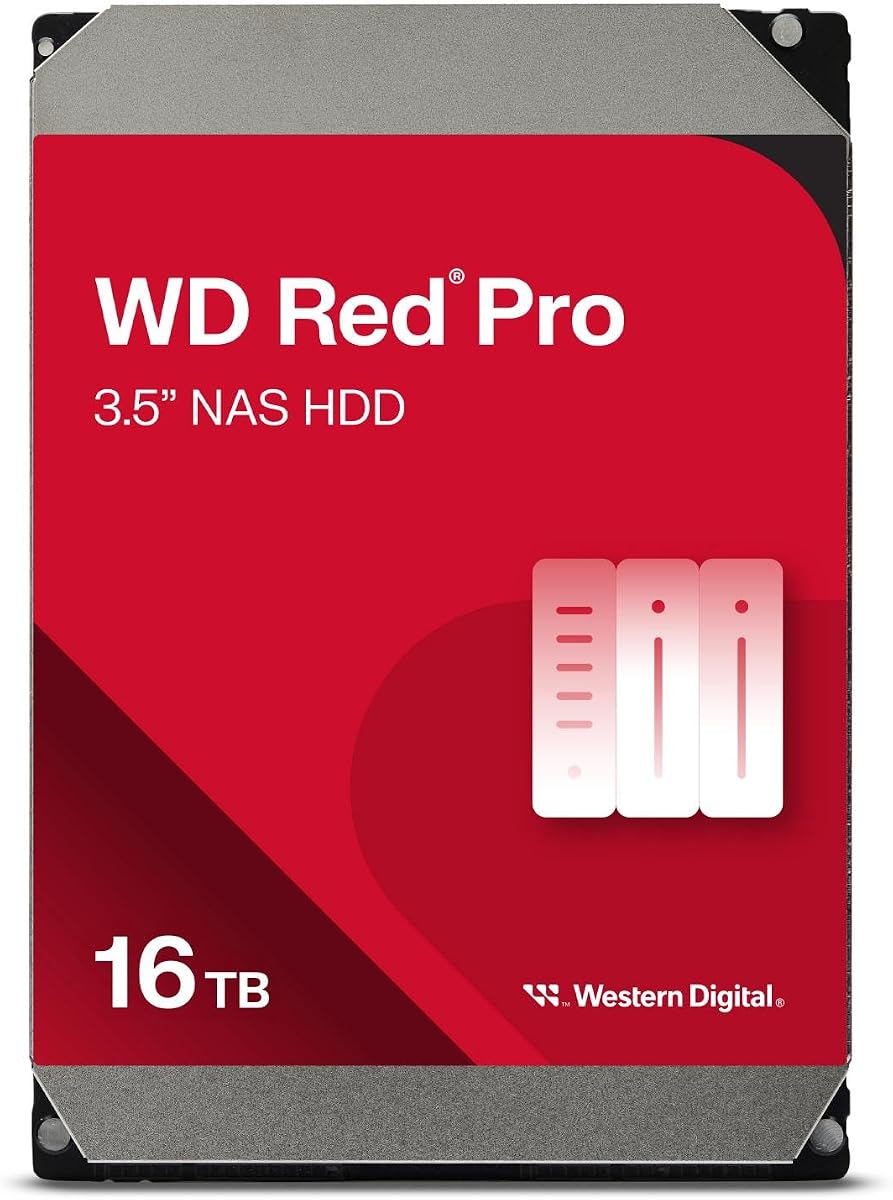
Designed for the most demanding environments, this 16TB drive supports unlimited bays and a massive 550TB annual workload. It is built for high-intensity multi-user NAS tasks.
We may earn a commission when you buy through this link, at no additional cost to you.
The drive features a large 512MB cache and 7200 RPM speed to handle simultaneous access requests smoothly. Western Digital partners with vendors to ensure compatibility with most enclosures.
While the price is high, the capacity and workload tolerance are unmatched. It is suitable for businesses that need extensive storage without compromising on performance reliability.
Select this for large-scale deployments where storage density and throughput are priorities. The unlimited bay support offers future-proofing for expanding systems.
The high workload rate ensures the drive can sustain heavy data transfers throughout the year without degradation.
A 512MB buffer helps manage large file transfers and complex operations efficiently in busy network environments.
We may earn a commission when you buy through this link, at no additional cost to you.
This model delivers reliable performance for multi-user environments with a focus on reducing wear and tear. It supports 10TB of storage and is optimized for RAID configurations.
We may earn a commission when you buy through this link, at no additional cost to you.
The integrated IronWolf Health Management system allows easy monitoring of drive status. It is designed for up to eight bays and offers increased file-sharing performance.
The 256MB cache ensures smooth data handling during peak usage times. While expensive, the reliability and warranty coverage make it a strong choice for long-term storage.
Consider this for home offices or small businesses needing consistent access to large data sets. The rescue service adds significant security to your investment.
Designed to minimize noise and vibration, this drive ensures longevity in multi-bay enclosures.
The CMR technology ensures stable write speeds which are essential for RAID integrity and speed.
We may earn a commission when you buy through this link, at no additional cost to you.
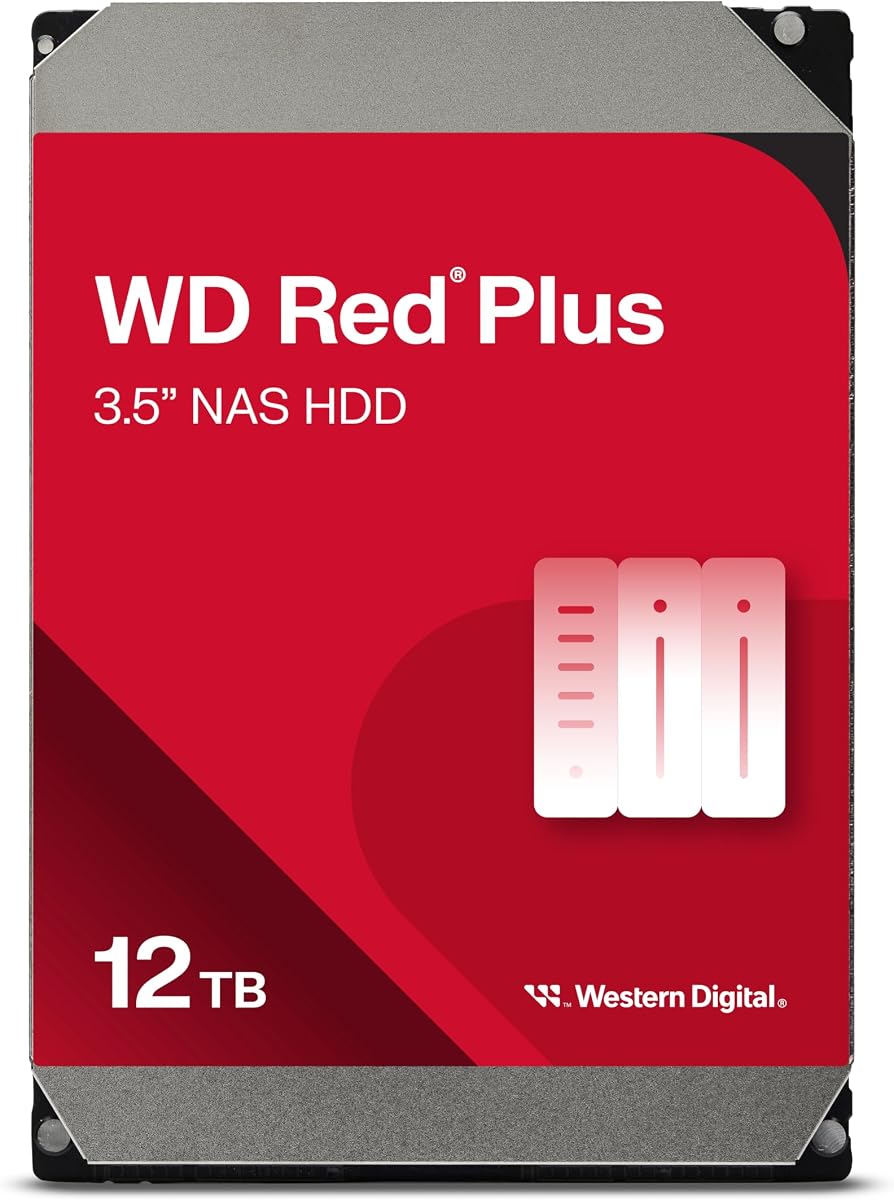
WD Red Plus drives are tested for NAS compatibility and feature CMR technology for better performance. This 12TB model handles up to 180TB of data transfer annually.
We may earn a commission when you buy through this link, at no additional cost to you.
The drive includes NASware firmware to ensure compatibility with various NAS systems. It is designed for small or medium business systems in a 24×7 environment.
With a 512MB cache and 7200 RPM speed, it offers solid throughput for file access and backups. The 3-year limited warranty provides reasonable protection for your data.
Buy this if you need a balanced drive that supports higher workloads without needing the Pro tier. It is reliable for growing business storage needs.
Extensive testing ensures the drive works seamlessly with major NAS operating systems out of the box.
Proprietary firmware adjusts drive behavior to suit NAS power management and error correction needs.
We may earn a commission when you buy through this link, at no additional cost to you.
WD Blue drives are designed for everyday computing tasks. This 12TB version offers high capacity and reliability for general storage needs rather than specialized NAS environments.
We may earn a commission when you buy through this link, at no additional cost to you.
It comes with free Acronis True Image WD Edition cloning software for easy setup. The drive supports up to 12TB and offers solid performance for standard tasks.
While not specifically tested for NAS reliability, it can work in single-bay setups for personal backups. The high rating suggests consistent quality for home PC or NAS use.
Choose this for personal data storage if you already own the drive or need a simple general-purpose option. Verify warranty terms carefully for NAS usage.
Free Acronis software simplifies migration from old drives to this new high-capacity model easily.
Optimized for desktop computing, this drive offers good value for non-specialized storage requirements.
We may earn a commission when you buy through this link, at no additional cost to you.
This renewed drive offers a large 14TB capacity at a lower price point. It is designed for hyperscale applications and fast data access via SATA 6Gb/s.
We may earn a commission when you buy through this link, at no additional cost to you.
The drive comes with a 5-year warranty which is rare for renewed units. It is suitable for desktop, RAID, and NAS network storage systems.
Please note that the drive is bare and requires formatting on your system. It is an excellent option for users seeking high capacity without breaking the bank.
Buy this if you want maximum storage per dollar and trust renewed hardware. Always check the return policy before using it for critical data.
A 5-year warranty provides strong peace of mind for a renewed product in a NAS environment.
Ensure the drive is properly formatted on your NAS system to avoid detection issues after installation.
We may earn a commission when you buy through this link, at no additional cost to you.
The IronWolf Pro line supports up to 24 bays and offers higher reliability. This 4TB version provides 7200 RPM speed and is built for multi-user server environments.
We may earn a commission when you buy through this link, at no additional cost to you.
It includes a five-year limited product warranty and three-year Rescue Data Recovery Services. The drive minimizes wear and tear with low noise and vibration.
The integrated Health Management system helps track drive status efficiently. While 4TB is small for Pro tier, the support options are valuable for enterprise setups.
Choose this for small servers needing Pro-tier support but limited storage per drive. It ensures critical data remains protected even in complex RAID arrays.
A five-year warranty provides stronger protection than standard consumer drives for active storage systems.
This model is tested to handle the heat and vibration of larger chassis with up to 24 bays.
We may earn a commission when you buy through this link, at no additional cost to you.
This drive features a rotational vibration sensor to maintain performance in multi-drive enclosures. It is rated for 180TB annual workload and 210MB/s sustained transfer rates.
We may earn a commission when you buy through this link, at no additional cost to you.
The multi-user technology supports up to 180TB/year transfer volume making it ideal for home servers and small businesses. It is halogen free for better environmental impact.
The 256MB cache and 7200 RPM speed ensure responsive file access. Its design reduces wear and tear for long-term reliability in NAS systems.
Select this for reliable home server use where vibration resistance is key. It offers the balance of capacity and speed for frequent file access needs.
Rotational vibration sensors help protect data integrity when multiple drives spin simultaneously in a single enclosure.
Halogen-free materials reduce the environmental impact of manufacturing and disposal without sacrificing durability.
We may earn a commission when you buy through this link, at no additional cost to you.
This WD Red Plus model uses 5400 RPM for quieter and cooler operation while maintaining CMR reliability. It supports up to 180TB of annual workload rate.
We may earn a commission when you buy through this link, at no additional cost to you.
The drive is optimized for compatibility with NAS systems via NASware firmware. It supports up to eight bays and offers a 3-year limited warranty for peace of mind.
CMR technology ensures stable write performance which is essential for RAID arrays. The 256MB cache helps smooth out data handling during transfers.
Choose this if you want quiet performance for a home NAS. It is a solid choice for storing large media libraries without constant noise.
Lower RPM reduces noise levels making it suitable for NAS units placed in living rooms or offices.
Red Plus uses CMR technology instead of SMR which prevents performance drops in multi-user environments.
We may earn a commission when you buy through this link, at no additional cost to you.
Choosing the right drive requires balancing capacity, speed, and reliability. Use these factors to find the perfect fit for your storage needs.
Capacity dictates how much data you can store. Consider future growth and whether your NAS supports larger drives to avoid frequent replacements.
Aim for drives that offer room to grow while matching your current storage budget and enclosure limits.
CMR technology provides stable write speeds which are essential for RAID arrays. SMR drives may slow down significantly under heavy load in NAS environments.
Always choose CMR drives for any NAS system to ensure data integrity and consistent performance during transfers.
Higher RPM like 7200 offers faster data access but generates more heat and noise. 5400 RPM drives are quieter and consume less power.
Select higher speeds for performance needs or lower speeds for quiet home environments.
Workload rating measures how much data the drive can handle annually. NAS drives typically support 180TB or more per year.
Choose a drive that meets your expected data transfer volume to prevent premature failure.
Vibration sensors protect performance in multi-drive bays. They reduce noise and prevent data errors when drives spin simultaneously.
Prioritize drives with vibration sensors if you plan to use four or more bays.
Warranty terms vary between standard and Pro drives. Data recovery services add significant value for critical storage setups.
Invest in longer warranties and recovery plans for professional use to mitigate hardware risks.
Most NAS systems use SATA interfaces. Ensure your drive is compatible with your system's backplane and power connectors.
Verify compatibility with your specific NAS model to avoid installation issues.
Established brands like Seagate and WD offer proven reliability and better firmware support. This minimizes risks in continuous operation environments.
Stick with well-supported manufacturers for easier troubleshooting and better community resources.
Install the drive carefully into the tray ensuring no physical shock or static discharge during handling. Secure the screws to prevent vibration issues inside the enclosure.
After physical installation, format the drive using your NAS operating system tools to set up the correct RAID or volume configuration.
Regularly check drive health using the NAS management dashboard and keep firmware up to date to ensure consistent performance and safety.
Yes NAS drives are worth the cost because they are designed for 24/7 operation. They offer better reliability and vibration resistance which standard drives lack.
While possible it is not recommended. Desktop drives lack the durability and vibration control needed for multi-drive enclosures leading to higher failure rates.
WD Red Plus uses CMR technology while some standard Red drives use SMR. CMR ensures better performance in RAID arrays making Plus more suitable for NAS.
On average NAS drives can last five to seven years depending on workload. Higher quality models with better cooling can even exceed this lifespan significantly.
No special software is needed beyond the NAS operating system. However some brands include tools for monitoring drive health and managing updates.
Price differences often reflect higher RPM speed larger cache or longer warranties. Pro drives include recovery services which add significant value to the cost.
The Seagate IronWolf 10TB and WD Red Pro offer top performance for different needs. Choose based on your capacity and speed requirements.
Prioritize CMR technology and warranty support to ensure long-term reliability for your storage setup.
Check current pricing and stock before buying to get the best deal on your new drive.