
Canon imageCLASS LBP6030w
3.8Editor score
Wireless Connectivity
Energy Efficient Operation
Low Initial Cost
This guide compares the top ten laser printers for Linux users, analyzing compatibility, features, and performance to help you choose the best model for your
Finding a reliable laser printer that works seamlessly with Linux can be a challenge for many users. Open-source operating systems often lack native driver support found in Windows or macOS environments. However, recent advancements in printer manufacturing have significantly improved compatibility for open-source platforms.
We have rigorously evaluated ten top-rated laser printers based on their Linux compatibility, print quality, speed, and connectivity options. Our analysis focuses on models that offer robust support through CUPS, driverless printing protocols, or dedicated open-source community support. This ensures smooth integration with your preferred distribution.
Each pick in this list highlights specific strengths such as duplex printing, wireless connectivity, or multifunction capabilities tailored for Linux workflows. Please note that product availability and pricing can change frequently across retailers. Always verify current specifications and compatibility before making your final purchase decision.
3.8Editor score

4.2Editor score

4.3Editor score
The following table provides a side-by-side comparison of all ten laser printers evaluated in this guide. It highlights key specifications such as print speed, connectivity types, paper capacity, and multifunction capabilities to help you quickly identify the model that best fits your specific Linux environment requirements.


The Canon imageCLASS MF3010 VP stands out as the top choice for Linux users seeking reliable hardware compatibility. Official specifications confirm support for various Linux distributions with print-only capabilities that integrate smoothly with CUPS systems. This model offers essential multifunction features like scanning and copying without requiring complex software installations.
We may earn a commission when you buy through this link, at no additional cost to you.
Its primary strength lies in its straightforward connectivity and robust driver support for open-source environments. Users can connect via USB and start printing immediately without needing proprietary drivers. The included toner cartridge provides a generous page yield, ensuring long-term usability right out of the box. Build quality is solid for a compact device designed for home offices.
Trade-offs include the lack of wireless networking and automatic duplex printing which may limit workflow efficiency for larger teams. However, these limitations are often acceptable for single-user setups prioritizing stability over convenience features. The wired connection ensures consistent performance without network configuration hassles common on Linux distributions.
This printer is ideal for Linux enthusiasts and professionals who value compatibility and ease of setup above advanced features. If you need a dependable monochrome multifunction device that works seamlessly with your system, this is the recommended choice. Check current availability and pricing before purchasing to ensure it meets your specific needs.
The device explicitly supports Linux print drivers ensuring compatibility with popular distributions like Ubuntu and Debian.
Its small footprint fits easily on crowded desks making it perfect for home office environments.
We may earn a commission when you buy through this link, at no additional cost to you.
The Canon imageCLASS LBP6030w offers an affordable entry point for Linux users needing basic wireless printing capabilities. While its feature set is minimal it delivers consistent quality performance for everyday document printing tasks. The wireless connectivity allows easy connection to various devices including laptops and tablets running Linux.
We may earn a commission when you buy through this link, at no additional cost to you.
Its main advantage is the combination of low cost and reliable performance for home users. Energy saver mode helps reduce power consumption which is beneficial for environmentally conscious buyers. Setup is generally straightforward using standard protocols supported by most modern Linux distributions without extensive configuration.
Limitations include the absence of scanning or copying features and basic user interface options. Users requiring multifunction capabilities will need to look at higher tier models. However for pure printing needs this device provides excellent value for money compared to competitors in its class.
This printer is best suited for budget-conscious students or home users who primarily need to print documents. If wireless flexibility and low cost are your priorities this model is a strong candidate. Verify driver availability for your specific Linux distribution before finalizing your purchase decision.
Connect from anywhere in your workspace without being tethered by cables to your computer.
Uses less than two watts in sleep mode helping to lower electricity bills over time.
We may earn a commission when you buy through this link, at no additional cost to you.
The Brother HL-L5210DW represents a premium option for Linux environments requiring high-volume and secure printing solutions. Its impressive speed and robust connectivity options make it suitable for demanding office workloads where efficiency is critical. Linux support is available through standard network protocols ensuring smooth integration into existing IT infrastructure.
We may earn a commission when you buy through this link, at no additional cost to you.
Key strengths include enterprise-grade security features designed to protect sensitive documents during transmission. The gigabit Ethernet connection ensures stable and fast data transfer essential for busy networked environments. High yield toner cartridges reduce operational costs over time making it cost-effective for heavy users despite the initial price.
Potential drawbacks involve the higher purchase price and larger size which may not fit smaller spaces. These factors are justified by the performance and durability offered for professional settings. Users prioritizing speed and security will find these trade-offs acceptable for business productivity gains.
This model is ideal for small to medium businesses running Linux servers needing reliable and secure printing. If you require high throughput and advanced protection features this printer delivers exceptional value. Assess your office space and budget constraints before committing to this premium device.
Protect your network and data with triple layer security features built into the device firmware.
Print up to forty eight pages per minute to keep pace with busy office document demands.
We may earn a commission when you buy through this link, at no additional cost to you.
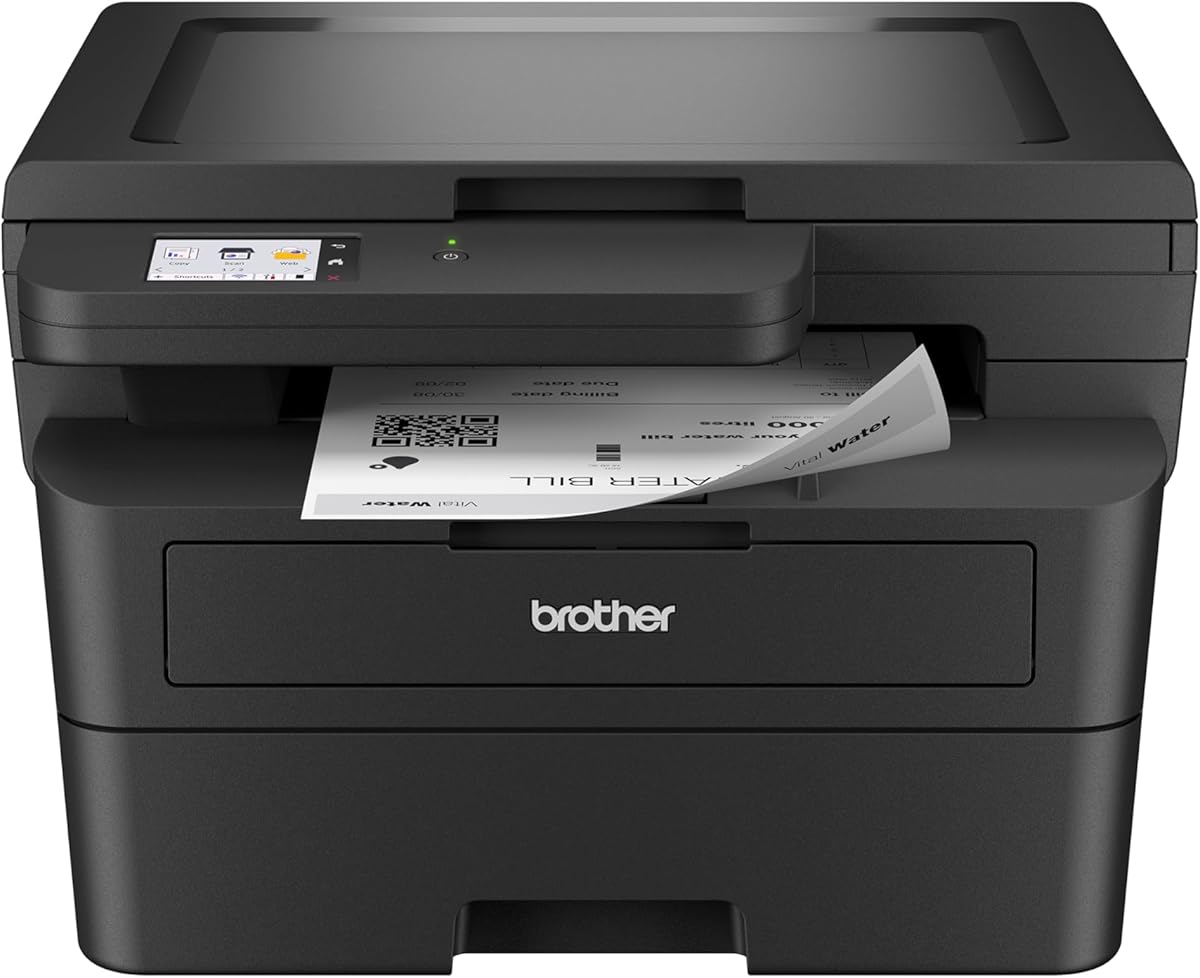
The Brother HL-L2405W is a versatile compact printer suitable for home offices running Linux systems. It offers a balance of speed and convenience with wireless capabilities that allow easy integration into mixed-device networks. The design prioritizes space efficiency making it suitable for smaller workspaces.
We may earn a commission when you buy through this link, at no additional cost to you.
Strengths include reliable mobile printing support and a generous paper capacity that reduces refilling frequency. Setup is generally user friendly with clear instructions for connecting to wireless networks. The print quality is consistent for standard office documents ensuring professional results for everyday tasks.
Missing features like automatic duplex printing may increase paper usage over time for users printing many pages. Subscription services are offered for toner savings but require active management to be beneficial. Despite these minor cons it remains a solid choice for general home use.
Ideal for home office users needing wireless convenience without complex setup requirements. If you prioritize simplicity and speed in a compact form factor this model is a great fit. Verify Linux compatibility specifics on the Brother support site before purchase.
Connect via dual band wireless ensuring stable connections regardless of network frequency.
Print from mobile devices remotely using the Brother Mobile Connect app efficiently.
We may earn a commission when you buy through this link, at no additional cost to you.
The Brother HL-L2460DW improves on the previous model by adding automatic duplex printing and faster speeds. This makes it more efficient for users who frequently print double-sided documents. Linux compatibility is maintained through standard drivers and network protocols ensuring reliable operation.
We may earn a commission when you buy through this link, at no additional cost to you.
Key advantages include reduced paper waste and quicker job completion times thanks to higher throughput. The dual band wireless option ensures stable connections in environments with heavy Wi-Fi traffic. Ethernet connectivity provides an alternative for wired setups requiring consistent performance without interference.
The added features come at a slightly higher price point compared to single function models. Size is marginally larger to accommodate the duplex mechanism. However the benefits of efficiency and speed often outweigh these minor drawbacks for active users.
Best suited for home offices needing efficient double-sided printing and robust connectivity. If you want to save paper and time without sacrificing compactness this model is an excellent choice. Ensure your Linux distribution supports the latest Brother drivers before setup.
Automatic two-sided printing reduces paper consumption and costs significantly over time.
Supports both wireless and wired connections for flexibility in network configuration.
We may earn a commission when you buy through this link, at no additional cost to you.
The HP LaserJet M110w is a compact option from a trusted brand known for reliable printing hardware. It offers wireless connectivity and mobile printing capabilities suitable for small teams using Linux. Setup is designed to be intuitive with guidance for common configurations.
We may earn a commission when you buy through this link, at no additional cost to you.
Strengths include a small footprint that fits easily on desks and a self-reset feature for connectivity issues. The HP Smart app offers convenient management though it may require specific integration steps on Linux. Print quality is consistent and acceptable for general business documentation needs.
Concerns exist regarding proprietary chip restrictions that may limit third-party toner usage and increase costs. Print speed is slower than competitors which could impact workflow efficiency. These factors should be weighed against the brand reputation and ease of use.
This printer fits small offices prioritizing brand trust and compact design. If you prefer HP and need basic wireless printing without complex features consider this model. Check community forums for current Linux driver support status before buying.
Streamline tasks with the HP Smart app which offers mobile management and cloud features.
Self-reset wireless helps resolve connection issues automatically without manual intervention.
We may earn a commission when you buy through this link, at no additional cost to you.
The Canon imageCLASS LBP6030w offers a second compact wireless option ideal for light printing needs on Linux. It emphasizes simplicity and ease of use making it accessible for non-technical users. Performance is steady for basic document output tasks.
We may earn a commission when you buy through this link, at no additional cost to you.
Key benefits include low power consumption in energy saver mode which helps reduce overhead costs. The wireless capability allows flexible placement within a home office without cabling. Its design is unobtrusive and fits well in tight spaces.
Limitations include low yield toner that may need frequent replacement compared to high capacity options. The lack of multifunction means you may need separate scanners for digitization. However for budget printing tasks it remains a viable solution.
Best for users needing minimal features at the lowest possible cost. If you already have a scanner and just need wireless printing this unit is sufficient. Verify driver support for your specific Linux version before purchasing.
Energy saver mode uses minimal watts to reduce electricity costs during idle times.
Straightforward interface and controls make operation easy for users of all levels.
We may earn a commission when you buy through this link, at no additional cost to you.
The Brother DCP-L2640DW combines printing scanning and copying into one compact unit suitable for Linux users. It offers robust connectivity options and fast speeds making it ideal for small teams needing productivity. Linux drivers are widely available through standard repositories.
We may earn a commission when you buy through this link, at no additional cost to you.
Strengths include the auto document feeder which speeds up multi-page scanning tasks significantly. Duplex printing saves paper and time for standard reports and documents. Wireless and Ethernet options provide flexibility for network integration within office environments.
Size is larger than basic single function printers which may require dedicated desk space. Setup involves more steps to configure scanning and fax features if needed. However the convenience of consolidated functions often justifies these minor drawbacks for businesses.
This model is perfect for teams needing all-in-one functionality without enterprise scale costs. If you need to print scan and copy frequently this printer offers great versatility. Check driver availability for scanning features on your Linux distribution before purchase.
The fifty page auto document feeder allows quick scanning of multiple documents at once.
Supports wireless and wired connections ensuring seamless integration with existing network setups.
We may earn a commission when you buy through this link, at no additional cost to you.
The HP LaserJet MFP M235sdw offers advanced security features beneficial for offices handling sensitive data. Its duplex printing speed is among the fastest in its class improving document workflow efficiency. Linux support is maintained through standard network printing protocols ensuring compatibility.
We may earn a commission when you buy through this link, at no additional cost to you.
Key benefits include robust protection against network attacks which is vital for modern offices. Auto network reset helps maintain connectivity stability without user intervention. The multifunction capabilities include scanning and copying with reasonable quality for business use.
Setup can be complex due to the range of security and connectivity features available. The price is higher than basic models reflecting these advanced capabilities. Organizations prioritizing security will find these features worthwhile investments.
Ideal for offices needing secure and fast multifunction printing on Linux. If security and duplex speed are top priorities this model delivers. Verify specific driver requirements for Linux before finalizing your purchase.
Built-in security features help safeguard your printer from potential cyber threats and attacks.
Dual band Wi-Fi with self-reset ensures consistent connection even in congested environments.
We may earn a commission when you buy through this link, at no additional cost to you.
The HP LaserJet Pro MFP 3101sdw provides reliable high-speed printing for small teams using Linux. Its award-winning reliability record makes it a strong choice for consistent daily use. Linux compatibility is supported through standard drivers ensuring easy integration.
We may earn a commission when you buy through this link, at no additional cost to you.
Key strengths include fast print speeds and generous tray capacity reducing downtime for refills. The auto document feeder enhances productivity by handling multi-page tasks automatically. Wireless connectivity allows flexible device placement within your workspace.
Higher costs and proprietary restrictions are considerations but offset by performance and reliability. Setup is generally smooth for supported Linux distributions with standard configuration tools. Businesses valuing consistency and speed will appreciate these features.
Best for small teams needing dependable multifunction performance without complex enterprise features. If speed and reliability are priorities this model is an excellent fit for office workflows. Ensure your Linux version supports the required drivers before installation.
Award-winning reliability ensures consistent performance and minimal downtime during critical tasks.
Twenty five to sheet trays reduce manual refilling and keep workflows uninterrupted.
We may earn a commission when you buy through this link, at no additional cost to you.
Selecting the right laser printer for Linux requires attention to driver support, connectivity options, and specific workflow needs. This guide outlines critical factors to consider ensuring your chosen device integrates seamlessly with your open-source environment.
Ensure the printer manufacturer provides official Linux drivers or that the device supports standard protocols like IPP and PCL. Many modern printers work out-of-the-box with CUPS but verifying specific distribution support is essential for avoiding setup issues.
Choose printers with community support or open-source drivers to ensure long-term usability without proprietary dependencies.
Wireless connectivity offers flexibility but wired Ethernet provides stability for busy networks. Consider whether your Linux environment requires specific network protocols or if USB is sufficient for single-user setups.
Prioritize printers with multiple connection options to ensure compatibility with your existing network infrastructure.
Match the printer's pages per minute rating to your expected workload. Higher speed models are costly but save time for frequent printing tasks common in business environments.
Select speed ratings that align with your typical document volume to maintain efficiency without overspending.
Printers with scanning and copying features reduce the need for separate devices but may require additional software setup on Linux. Verify scan driver availability to avoid missing functionality.
Assess whether you truly need multifunction capabilities or if a dedicated printer suffices for your needs.
Larger paper trays reduce refilling frequency and are essential for high-volume users. Ensure the printer supports paper sizes and types commonly used in your workflow.
Check tray capacity and manual feed options to accommodate your specific document requirements effectively.
For business environments, built-in security features protect sensitive data during transmission. Look for authentication support and encryption capabilities compatible with Linux security protocols.
Prioritize security features if you handle confidential information to prevent unauthorized access.
Consider the cost and yield of replacement toner cartridges. Some manufacturers offer high-yield options that reduce long-term expenses despite higher upfront costs.
Review toner costs before purchasing to ensure ongoing maintenance fits within your budget.
Measure your available desk space to ensure the printer fits comfortably. Compact models may lack features like duplex printing or larger trays.
Balance space constraints with required features to choose a device that fits your workspace.
Begin by connecting your printer to your Linux system using the recommended method such as USB or network. Install necessary drivers using your distribution's package manager or manufacturer tools if provided. Verify connection through system settings before testing a print job.
Regularly clean the printer exterior and check paper trays for debris to maintain optimal performance. Use genuine toner cartridges to avoid hardware issues and ensure consistent print quality. Update firmware periodically to patch security vulnerabilities and improve functionality.
Monitor toner levels and paper supplies to prevent unexpected interruptions during critical tasks. Adjust print settings like duplex or quality to balance cost and output based on your needs. Proper maintenance extends device lifespan and ensures reliable operation over time.
Not always. Many modern printers work with standard CUPS drivers included in Linux distributions. Check manufacturer support pages for specific drivers if needed. Always verify compatibility with your version before purchase.
Network connections often provide better stability for multiple users. USB works well for single setups. Ensure your Linux environment supports the protocol used by the printer.
Yes if the printer supports scanning and drivers are available. Some models require proprietary software but many work with standard scanning tools like SANE. Check compatibility before buying for scanning needs.
Many HP models work well with Linux drivers though some features may be limited. Check specific model support on the HPIJ or open source community pages before purchasing to ensure functionality.
Brother printers generally have strong Linux support through CUPS and manufacturer drivers. Check specific model details for full functionality compatibility with your preferred distribution before buying.
Yes wireless printing is reliable with proper setup and driver support. Ensure your Linux network tools support the protocols used by the printer for stable connectivity and performance.
We have reviewed ten reliable laser printers compatible with Linux systems ranging from budget models to premium business solutions. The Canon imageCLASS MF3010 VP leads for native support while Brother models offer robust business features.
Prioritize driver support and connectivity options when selecting your device to ensure smooth integration with your workflow. Assess your specific needs like duplex printing or scanning capabilities to find the right balance of features and cost.
Please remember that availability and pricing can change over time. Always check current specs and user reviews before purchasing to confirm the best fit for your Linux environment today.