
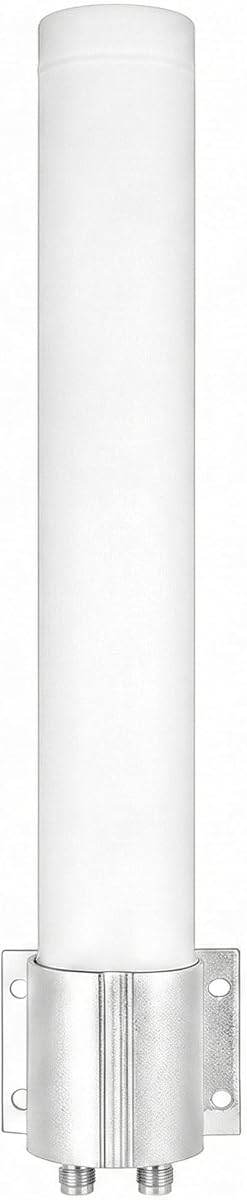
Eifagur 9dBi Long Range Dual Band
4.7Editor score
9dBi high gain design
Outdoor ready construction
Compatible with many devices
This guide compares the top marine WiFi antennas for boats, covering gain, durability, and compatibility to help you choose the right wireless solution for
Connecting to the internet while on the water requires specialized hardware designed to withstand harsh environments. A marine WiFi antenna extends your network range far beyond standard routers, ensuring reliable access for communication and entertainment.
We evaluated ten top-rated options based on gain, weather resistance, and connector types. Our analysis focuses on real-world performance in saltwater conditions and compatibility with common marine networking equipment.
Each pick highlights key strengths and limitations to match your specific setup needs. Please note that product availability and pricing can fluctuate frequently across major online retailers.
4.7Editor score

5.0Editor score
4.8Editor score
The following table provides a side-by-side comparison of all ten products featured in this guide. Review the specifications and key features to find the model that best fits your marine connectivity requirements.


The Poynting Omni-496 stands out as the premier choice for marine connectivity. With a perfect 5.0 rating, this antenna delivers exceptional performance designed specifically for coastal and marine applications.
We may earn a commission when you buy through this link, at no additional cost to you.
Its dual-band capability supports Wi-Fi, Wi-Fi6e, Wi-Fi7, and 5G frequencies up to 7.2 GHz. The IP68 rating ensures it withstands harsh saltwater environments without degradation.
While the cost is higher than basic models, the durability and gain justify the investment. The N-Type connector requires appropriate cabling for optimal signal transmission.
Boaters seeking reliable long-range internet access should prioritize this model. It offers the best balance of weatherproofing and performance for serious marine use.
The IP68 rating and salt spray compliance ensure the antenna survives prolonged exposure to ocean spray and UV radiation.
Support for Wi-Fi7 and 5G frequencies means this antenna remains relevant as wireless standards evolve over the years.
We may earn a commission when you buy through this link, at no additional cost to you.
This antenna is engineered for challenging environments where standard signals fail. It supports up to ten devices simultaneously, making it ideal for family boats with multiple users.
We may earn a commission when you buy through this link, at no additional cost to you.
The VSWR specification minimizes signal reflection loss, allowing better navigation through dense obstacles. Its omni-directional pattern ensures stable connections without constant realignment.
Construction from architectural fiberglass offers enterprise-grade durability against extreme weather conditions. Users should pair it with high-quality cables to unlock full potential.
Ideal for long-distance cruising or remote anchoring where reliable telemetry and video conferencing are essential. The professional-grade features support industrial and field applications effectively.
Constructed from UV-resistant architectural fiberglass, the antenna operates reliably from -40°F to 150°F without degradation.
Dual N-Female integrated connectors maximize data throughput, reducing multi-path interference for stable broadband operations.
We may earn a commission when you buy through this link, at no additional cost to you.
This model offers similar performance to the premium version at a more accessible price point. It supports Wi-Fi, WiMAX, and LTE frequencies efficiently for general marine use.
We may earn a commission when you buy through this link, at no additional cost to you.
The feed-through mount simplifies installation through standard 1-inch holes on boats. Its all-weather proof construction ensures longevity in temperuous coastal conditions.
Note that cables are not included, requiring separate purchase for connection. This allows flexibility in choosing cable length based on specific vessel needs.
A reliable choice for boaters needing dependable connectivity without the highest cost. Perfect for coastal cruising where extreme remote capabilities are not primary requirements.
The feed-through 1-inch marine standard mount allows for straightforward integration into existing vessel structures.
UV and saltwater protection guard the antenna against damage from sun exposure and ocean spray over time.
We may earn a commission when you buy through this link, at no additional cost to you.
This antenna combines 4G, WiFi, and GPS into a single unit for simplified installation. The puck design is low profile, reducing wind resistance on smaller vessels.
We may earn a commission when you buy through this link, at no additional cost to you.
Through hole mounting allows clean integration without external brackets. It serves well for basic connectivity needs where multiple signal types are required in one spot.
The 24-inch leads provide immediate connection without extra cable purchases. However, performance is limited compared to dedicated high-gain marine antennas.
Best for small boats needing essential navigation and internet access without complex setups. It balances convenience and functionality for casual marine users.
Combines 4G, WiFi, and GPS signals into one unit to reduce clutter and simplify wiring on board.
The puck shape minimizes wind resistance, making it suitable for smaller boats where aerodynamics matter.
We may earn a commission when you buy through this link, at no additional cost to you.
The ALFA antenna delivers strong 9 dBi gain at a competitive price point. Its lightweight fiberglass construction makes installation straightforward for most boaters.
We may earn a commission when you buy through this link, at no additional cost to you.
It supports both 2.4 GHz and 5 GHz bands effectively. The N-Female connector allows quick connection to compatible routers via coaxial cables.
While it lacks specialized marine mounting hardware, it provides solid weatherproofing for exterior use. Users must supply the necessary cables for operation.
A cost-effective solution for extending network range on medium-sized vessels. Ideal for budget-conscious users needing reliable dual-band coverage.
The 9 dBi gain boosts signal strength significantly, extending coverage beyond standard internal router capabilities.
Fiberglass construction keeps the antenna light, reducing load on mounting points and simplifying handling during installation.
We may earn a commission when you buy through this link, at no additional cost to you.
Designed for demanding enterprise applications, this antenna supports multiple technologies including LTE and 5G. It is approved by federal and local agencies for reliable public safety use.
We may earn a commission when you buy through this link, at no additional cost to you.
The high-density injection molded ABS housing offers robust protection against physical impacts and harsh conditions. It works well in all climates including extreme temperature variations.
While not explicitly marine branded, its durability and L-bracket mount make it suitable for mobile installations. It focuses on cellular and IoT connectivity rather than pure WiFi.
Ideal for vessels requiring strong cellular backhaul or industrial IoT connections. The compliance and multi-carrier support ensure broad network access.
Approved and purchased by federal, state, and local agencies, ensuring high reliability for critical applications.
Compliant with Multi-Carrier and Multi-Technology standards, supporting both 4G LTE and CBRS 5G NR signals.
We may earn a commission when you buy through this link, at no additional cost to you.
This budget option provides a simple way to upgrade existing routers with dual-band antennas. The 2-Pack offer allows redundancy or multiple connection points.
We may earn a commission when you buy through this link, at no additional cost to you.
With 3dBi gain and RP-SMA connectors, it fits standard networking gear. It is compatible with wireless routers and security cameras.
Performance is limited compared to dedicated outdoor units. It may struggle in open water environments where higher gain is essential.
Best for small boats with close proximity to shore networks. Ideal for basic setups requiring inexpensive replacements or short-range extensions.
Provides an inexpensive solution for users needing to replace damaged antennas or add basic range extension to existing hardware.
The RP-SMA Male connector ensures compatibility with many standard wireless routers and network cards.
We may earn a commission when you buy through this link, at no additional cost to you.
This antenna combines two 4G LTE and one dual-band WiFi antenna into one unit. It is designed for enhancing cellular signals and extending WiFi coverage on vehicles.
We may earn a commission when you buy through this link, at no additional cost to you.
The IP67 waterproof rating ensures it performs reliably in harsh outdoor environments. It works with most global 4G LTE frequencies for international use.
Cables are limited to 40cm, requiring extensions for some mounting locations. Integration depends heavily on router compatibility with multiple antenna ports.
Good for RVs and small boats needing both cellular data and local WiFi. It simplifies wiring by combining antennas but sacrifices individual performance.
Works in most countries with frequency ranges covering 698-960MHz and 1710-2690MHz for international connectivity.
Rated IP67 waterproof with an operating temperature range of -40°C to +85°C for harsh outdoor environments.
We may earn a commission when you buy through this link, at no additional cost to you.
This antenna focuses on boosting signal strength with a 9dBi gain design. It supports both 2.4GHz and 5GHz frequencies for versatile wireless connectivity.
We may earn a commission when you buy through this link, at no additional cost to you.
The outdoor ready build ensures it withstands environmental conditions better than indoor models. Installation is simple, enhancing existing setups without complex equipment.
Users should verify connector types match their router ports. This model is particularly useful for extending coverage to exterior security cameras or access points.
An excellent choice for users needing a straightforward performance boost. It balances high gain with ease of use for general outdoor applications.
The 9dBi high gain design significantly boosts wireless signal strength, extending coverage for routers and access points effectively.
Built to withstand outdoor conditions, making it ideal for exterior security cameras and outdoor wireless networks.
We may earn a commission when you buy through this link, at no additional cost to you.
While primarily a VHF radio antenna, it supports NOAA weather channels essential for marine safety. It covers the complete VHF marine band and NOAA frequencies.
We may earn a commission when you buy through this link, at no additional cost to you.
The fiberglass radome resists UV degradation and saltwater corrosion effectively. It includes a nylon ratchet mount for convenient storage and transport.
This model serves vessels prioritizing safety communications over internet connectivity. The PL259 connector is standard for marine VHF transceivers.
Best for boats requiring reliable distress and weather communication. It is not a WiFi antenna but essential for maritime safety standards.
Receives all 7 NOAA weather radio channels for real-time alerts and marine forecasts essential for safety on water.
High-quality fiberglass radome with anti-corrosion finish resists UV degradation and saltwater corrosion in harsh marine environments.
We may earn a commission when you buy through this link, at no additional cost to you.
Selecting the right marine WiFi antenna requires understanding your vessel's specific connectivity needs and environmental challenges. This guide outlines critical factors to consider before purchasing.
Ensure the antenna supports the frequency bands used by your router or modem. Modern marine setups often require dual-band support for 2.4GHz and 5GHz Wi-Fi networks.
Check your device specifications to confirm compatibility before purchasing any antenna to avoid connectivity issues.
Gain measured in dBi indicates how much signal strength the antenna adds. Higher gain typically results in better range and penetration through obstacles.
Select a gain level that matches your typical operating distance from shore access points or hotspots.
Marine environments expose equipment to salt spray, UV rays, and rain. Look for antennas with IP ratings like IP67 or IP68 for full water and dust protection.
Materials such as UV-resistant fiberglass or coated plastics prevent corrosion and prolong the antenna's lifespan.
Verify the connector type on your router or modem. Common standards include N-Type, SMA, RP-SMA, and PL259. Mismatched connectors require adapters that may degrade signal quality.
Always confirm the connector gender and type match your existing hardware setup.
Consider where you will install the antenna on your vessel. Options include rail mounts, mast brackets, or through-hole installations. Ensure the mounting bracket fits your deck or mast size.
A secure and stable mount is crucial to prevent vibration damage or signal disruption during rough waters.
Signal loss increases with cable length. Choose a cable length that reaches your device without unnecessary slack. High-quality coaxial cables like LMR400 minimize signal attenuation.
Invest in low-loss cables to maintain the full gain provided by the antenna.
Multi-band antennas offer greater flexibility by supporting multiple wireless standards. This future-proofs your setup against network upgrades.
If you rely on specific bands, a single-band antenna may suffice but limits versatility.
Choose brands known for quality marine electronics. A good warranty protects against manufacturing defects and ensures support availability.
Reading verified customer reviews provides insight into real-world performance and longevity.
Install the antenna at the highest possible point on your vessel to maximize line-of-sight to signal sources. Use the provided mounting brackets securely to prevent vibration issues.
Connect the antenna to your router using high-quality coaxial cables. Ensure all connections are tight and waterproofed with silicone or specialized tape to prevent corrosion.
Regularly inspect the antenna for physical damage or corrosion. Rinse it with fresh water after exposure to saltwater to maintain the protective coating and prolong its life.
For typical marine use, a gain between 8dBi and 9dBi offers excellent range without creating narrow beam patterns. Higher gains are beneficial for long distances but may require precise alignment.
Standard outdoor antennas often lack the corrosion resistance needed for saltwater environments. Always choose antennas rated for marine use to ensure longevity and performance.
Some specialized marine antennas support 5G frequencies. Verify the supported frequency range in the product specifications to ensure compatibility with 5G cellular networks.
Waterproofing prevents moisture from entering the antenna components which can cause signal degradation or permanent damage. IP67 and IP68 ratings ensure protection against immersion and splashes.
Use an N-Type to SMA adapter or a matching coaxial cable. Ensure the connector gender matches your router port to avoid damage or poor connectivity.
Installing a lightning arrestor is highly recommended for safety. It protects your electronics from voltage surges caused by lightning strikes, especially in exposed maritime environments.
The Poynting Omni-496 remains the top recommendation for serious boaters due to its exceptional weatherproofing and performance. It is the ideal choice for those needing reliable connectivity in challenging coastal conditions.
Budget-conscious users should consider the Eifagur 9dBi or Poynting OMNI-496 for balanced performance. Prioritize durability and connector compatibility when evaluating your specific vessel requirements.
Always verify current availability and pricing before purchasing as marine technology evolves rapidly. Regular maintenance will ensure your chosen antenna performs well for years to come.