
2inch LCD Module Mini LCD Screen,240×320 Resolution IPS LCD Display
4.3Editor score
240×320 IPS resolution
SPI interface minimal GPIO
3.3V or 5V operation
LCD graphic displays are essential components for modern electronics projects, offering vivid visuals and interactive touch capabilities for everything from Arduino kits to industrial panels.
We evaluated ten leading models based on resolution, driver compatibility, touch responsiveness, and build quality to ensure you find the right screen for your specific application needs.
Each pick highlights unique strengths like high pixel counts or wireless integration, but remember that availability and pricing may change frequently, so check current listings before purchasing.
4.3Editor score

4.2Editor score

3.8Editor score
As an Amazon Associate we earn from qualifying purchases.
Below is a detailed side-by-side comparison of all ten reviewed products to help you quickly identify the best fit for your hardware interface requirements.


The ELECROW 7 Inch ESP32 Display stands out as a top contender in the LCD graphic displays market, earning its Editor's Choice badge through robust performance and versatile connectivity.
We may earn a commission when you buy through this link, at no additional cost to you.
Its 800×480 resolution provides sharp visuals for complex interfaces, while the integrated ESP32-S3 controller ensures smooth operation for both WiFi and Bluetooth enabled projects.
While the module is larger and consumes more power than basic screens, these trade-offs are justified by its rich feature set including TF card slots and multiple peripheral ports.
Developers building smart home systems or industrial HMI units should prioritize this module for its seamless blend of hardware capability and software flexibility.
The built-in WiFi and Bluetooth modules eliminate the need for external transceivers, streamlining your project design and reducing overall component costs.
With support for TF card slots, USB interfaces, and battery connections, this display offers exceptional expandability for long-term professional applications.
We may earn a commission when you buy through this link, at no additional cost to you.
The 2inch LCD Module Mini LCD Screen is an ideal choice for hobbyists seeking a balance between affordability and performance, making it our Best Budget pick.
We may earn a commission when you buy through this link, at no additional cost to you.
Despite its small size, the IPS panel delivers vibrant 262K colors at 240×320 resolution, ensuring readable text and graphics even in challenging environments.
The main limitations are the lack of touch input and the compact size, which may not suit applications requiring detailed data visualization or user interaction.
If you are building portable gadgets or simple indicators where space is tight, this module provides the best value for money without sacrificing visual clarity.
Its minimal footprint allows integration into tight enclosures, making it perfect for wearable devices or space-constrained electronics projects.
The SPI interface requires minimal GPIO pins, freeing up microcontroller resources for other sensors or functions within your project.
We may earn a commission when you buy through this link, at no additional cost to you.
The Thermalright Trofeo Vision LCD Black Edition distinguishes itself with a high-resolution 6.86-inch screen specifically designed for advanced PC system monitoring and case aesthetics.
We may earn a commission when you buy through this link, at no additional cost to you.
Its 1280×480 resolution allows for detailed visualization of system metrics and dynamic images, supported by the TRCC software that offers extensive customization options.
Installation requires careful wiring and adherence to software setup steps, which can be a hurdle for beginners but pays off in flexibility once configured.
PC enthusiasts looking for a premium way to display GPU stats or custom animations will find this display offers unmatched visual quality and mounting versatility.
Users can upload static or dynamic images to the screen via TRCC software, allowing for personalized themes that react to system status changes.
The magnetic panel design allows you to move the display freely within your chassis, offering unique aesthetic possibilities compared to fixed mounting options.
We may earn a commission when you buy through this link, at no additional cost to you.
The waveshare 2.4inch LCD Display Module is a reliable choice for developers working with Raspberry Pi or STM32 boards, offering clear visuals without complex wiring.
We may earn a commission when you buy through this link, at no additional cost to you.
Its ILI9341 driver is widely supported by various libraries, making it easy to integrate into existing projects with just a few lines of code.
While it lacks touch capabilities and has a smaller resolution compared to modern IPS panels, its simplicity and availability of development resources make it highly accessible.
If you need a straightforward graphical interface for status displays or basic menus, this module offers excellent reliability and ease of use.
The ILI9341 controller is one of the most documented drivers in the maker community, ensuring you find help easily online if issues arise.
The SPI interface minimizes the number of pins needed, leaving more GPIO available for additional sensors or peripherals in your setup.
We may earn a commission when you buy through this link, at no additional cost to you.
The HiLetgo 3.5 TFT LCD Display is optimized for the Arduino Mega2560, offering a high pixel count that makes it perfect for detailed graphical interfaces.
We may earn a commission when you buy through this link, at no additional cost to you.
Its onboard level conversion chip simplifies power requirements by supporting both 3.3V and 5V MCUs without external components, reducing setup complexity.
The lack of touch functionality limits interactivity, but for read-only displays or menu systems, its resolution is significantly higher than many budget alternatives.
If you are using a Mega2560 board, this display is the most convenient upgrade path available on the market for graphical output.
The direct insertion feature means you do not need cables to connect the display to the Mega board, reducing the risk of loose connections.
The level conversion chip handles voltage differences automatically, making it safe to use with various microcontroller voltage standards.
We may earn a commission when you buy through this link, at no additional cost to you.
This FSTN graphic module is a staple in industrial applications where reliability and visibility under various lighting conditions are paramount over color fidelity.
We may earn a commission when you buy through this link, at no additional cost to you.
The transflective technology allows the screen to be readable in bright sunlight without backlight power, making it energy efficient for battery operated devices.
Its resolution is lower than modern TFT panels, but the high contrast and stability in extreme environments make it a top choice for critical monitoring systems.
For industrial control panels where durability matters more than vibrant graphics, this module delivers consistent performance and longevity over years of use.
Because it can be read without a backlight in bright environments, this display saves significant power compared to traditional LCD modules.
Designed for industrial settings, these modules are built to withstand vibrations and temperature fluctuations that might fail consumer grade screens.
We may earn a commission when you buy through this link, at no additional cost to you.
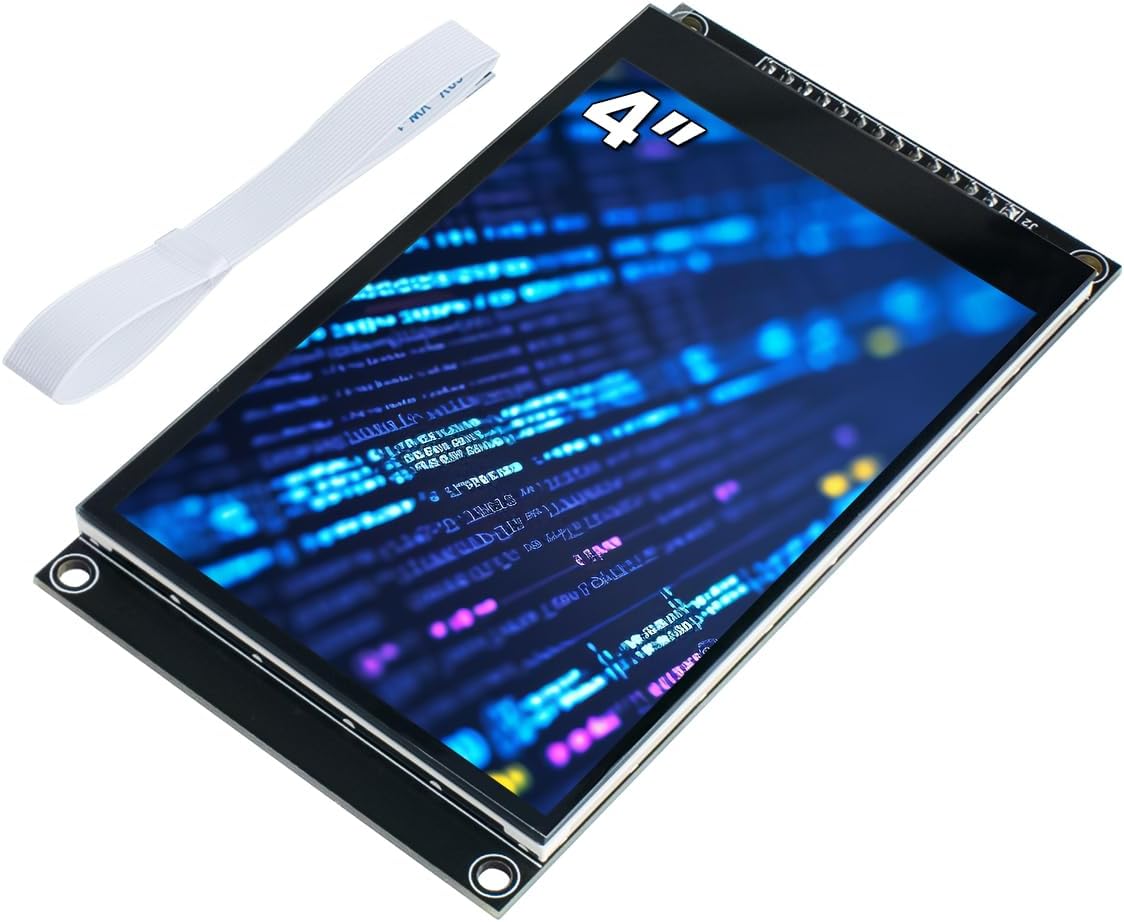
The Hosyond 4.0 Inch TN Capacitive Touch Screen offers an accessible entry point for touch-enabled projects, combining a decent resolution with modern capacitive technology.
We may earn a commission when you buy through this link, at no additional cost to you.
Its 320×480 resolution provides clear text and images, while the capacitive touch feels responsive compared to older resistive alternatives found in budget models.
The TN panel technology means viewing angles are narrower than IPS, but for direct interaction scenarios where viewing from the front is guaranteed, this is less critical.
If you need a touch screen for a kiosk or interactive menu on a budget, this module provides the necessary responsiveness and storage expansion options.
Upgrading to a capacitive touch panel improves user experience significantly by allowing smoother and more accurate finger tracking on the screen.
The built-in micro TF card slot allows you to store images or data directly on the module, reducing the load on your main microcontroller.
We may earn a commission when you buy through this link, at no additional cost to you.
The ESP32 Display 5 Inch HMI Basic offers a complete solution for makers needing a ready-to-use interface, including a protective acrylic case right out of the box.
We may earn a commission when you buy through this link, at no additional cost to you.
With an 800×480 resolution and ESP32-S3 core, it supports advanced graphics libraries like LVGL, making it capable of rendering complex dashboards and animations.
The included acrylic case protects the screen and simplifies mounting, though it may limit custom enclosure designs if you plan to build a bespoke housing.
This product is ideal for rapid prototyping where a professional look and touch functionality are required without spending time designing and printing a custom enclosure.
The inclusion of an acrylic case means you can mount and protect your display immediately without needing to source extra materials or tools.
Built-in WiFi and Bluetooth allow you to create networked displays that update data wirelessly, opening up smart home and IoT applications.
We may earn a commission when you buy through this link, at no additional cost to you.
The Hosyond 4.0 Inches TFT Touch Screen combines a high resolution of 480×320 with touch functionality, making it a strong contender for detailed interactive projects.
We may earn a commission when you buy through this link, at no additional cost to you.
Its SPI serial bus design ensures efficient data transfer with minimal IO pin usage, which is crucial when working with microcontrollers that have limited resources.
The inclusion of an SD card slot allows for local storage of graphical assets, enabling more complex interfaces without relying heavily on the main controller.
If you need a balance between screen real estate and interactivity, this module provides the necessary hardware support for building engaging user interfaces.
The SPI interface ensures fast rendering speeds and reduces the number of pins needed, keeping your wiring clean and manageable.
With an SD card slot, you can store larger images or logs directly on the display module, freeing up memory on your microcontroller.
We may earn a commission when you buy through this link, at no additional cost to you.
This OLED display package offers exceptional value with two units of high contrast screens that stand out for their brightness and clarity in low light conditions.
We may earn a commission when you buy through this link, at no additional cost to you.
The 256×64 resolution is ideal for data logging, status indicators, or scrolling text, utilizing the SSD1322 driver to support multiple communication protocols including SPI.
While the resolution is not suitable for full graphical interfaces, the vivid display capabilities and the two-pack deal make it a smart choice for monitoring applications.
If you need multiple displays for a distributed system or want to experiment with OLED technology without a high cost, these modules offer the best value.
OLED displays provide true blacks and high contrast ratios, making them superior to LCDs for applications where visibility is critical.
Support for parallel and SPI modes gives you flexibility in how you connect the module to your microcontroller based on available pins.
We may earn a commission when you buy through this link, at no additional cost to you.
Selecting the right LCD graphic display involves balancing resolution, interface type, and application requirements to ensure optimal performance.
Resolution determines how sharp and detailed your visuals will be. Higher resolutions like 800×480 are great for maps or dashboards, while 240×320 is sufficient for simple menus.
Choose a size that fits your project enclosure while providing enough pixels for readable text and clear graphics without overloading your processor.
Most modern modules use SPI to minimize GPIO usage, which is crucial for microcontrollers with limited pins. Some industrial displays use parallel interfaces for faster refresh rates.
Ensure the interface type matches your development board capabilities to avoid complex wiring or additional hardware requirements.
Touch screens add interactivity but consume more resources. Capacitive touch offers better precision and feel than resistive, though it can be costlier.
Only select a touch-enabled model if your application requires direct user input rather than just visual output.
Different displays require different voltage levels. Some operate at 3.3V while others need 5V. Using the wrong voltage can damage the module or cause flickering.
Check the operating voltage of your microcontroller and ensure the display supports it or includes a level converter.
IPS panels provide wider viewing angles and better color accuracy than TN or OLED screens. OLED offers deep blacks but can be sensitive to sunlight.
Select a panel type based on whether users will view the screen from the side or directly in front.
Popular drivers like ILI9341 or ST7796S have extensive community support and library availability. Rare drivers may require custom code and take longer to debug.
Stick to well-documented controllers to save time on software development and ensure long-term stability.
Some modules include SD card slots or USB ports for expanded storage and connectivity. This is helpful for applications needing to store logs or large images.
Consider if your project requires local data storage or peripheral connections beyond basic display output.
Industrial grade modules often withstand heat and vibration better than consumer electronics. Enclosed cases or rugged screens last longer in harsh environments.
Prioritize build quality if the device will be used in outdoor or industrial settings where reliability is critical.
Always power on the microcontroller before connecting the display to avoid voltage spikes that could damage the screen components.
Keep the display screen clean by using a soft, dry cloth to avoid scratches and maintain optimal visual clarity over time.
Install the recommended software drivers and libraries specific to your display model to ensure all touch and graphics features work correctly.
A 2.4-inch to 3.5-inch display is ideal for standard Arduino boards as it provides enough room for menus without consuming excessive pins. If using a Mega, you might fit a larger screen.
Many modern modules have onboard level shifters for 3.3V and 5V compatibility. Check the product details; if not present, you will need a shifter to protect the display from high voltage.
Connect the touch controller pins to the GPIO pins as per the wiring diagram. Most use SPI and require specific drivers in the OS settings to function correctly.
Yes, most SPI based displays work well with ESP32 due to its speed and pin availability. Ensure the library supports ESP32 architecture for seamless integration.
IPS is a type of TFT that offers better color accuracy and wider viewing angles. Standard TFT may have narrower viewing angles and less vibrant colors.
Power consumption varies by size and backlight usage. Small modules use about 50mA to 100mA, while larger ones can draw 200mA or more depending on brightness settings.
We explored ten versatile options ranging from compact IPS screens to high-resolution IoT touch panels to suit various maker needs.
Prioritize resolution and driver compatibility to ensure smooth integration and long-term support for your specific hardware.
Prices and stock vary frequently so verify current availability and pricing on Amazon before finalizing your purchase.