
Revopoint INSPIRE 2
4.5Editor score
Wireless scanning with Wi-Fi 6
0.05 mm accuracy precision
Dual scanning modules included
Discover the top 3D scanners for reverse engineering this month. We compare precision, speed, and features to help you choose the right tool.
Reverse engineering requires tools that capture complex geometries with high accuracy and reliability. Choosing the right scanner means balancing speed, portability, and surface handling capabilities for your specific industrial needs.
We evaluated ten leading models based on laser technology, scanning modes, software integration, and real-world performance. This list covers handheld, portable, and wireless options designed for engineers and designers.
Each pick highlights unique strengths for different budgets and workflows. Prices and availability change frequently, so check current listings before purchasing to ensure you get the best value for your project.
4.5Editor score

4.8Editor score

4.7Editor score
This side-by-side comparison highlights the key technical specifications and features across all ten selected models to help you make an informed decision for your reverse engineering projects.


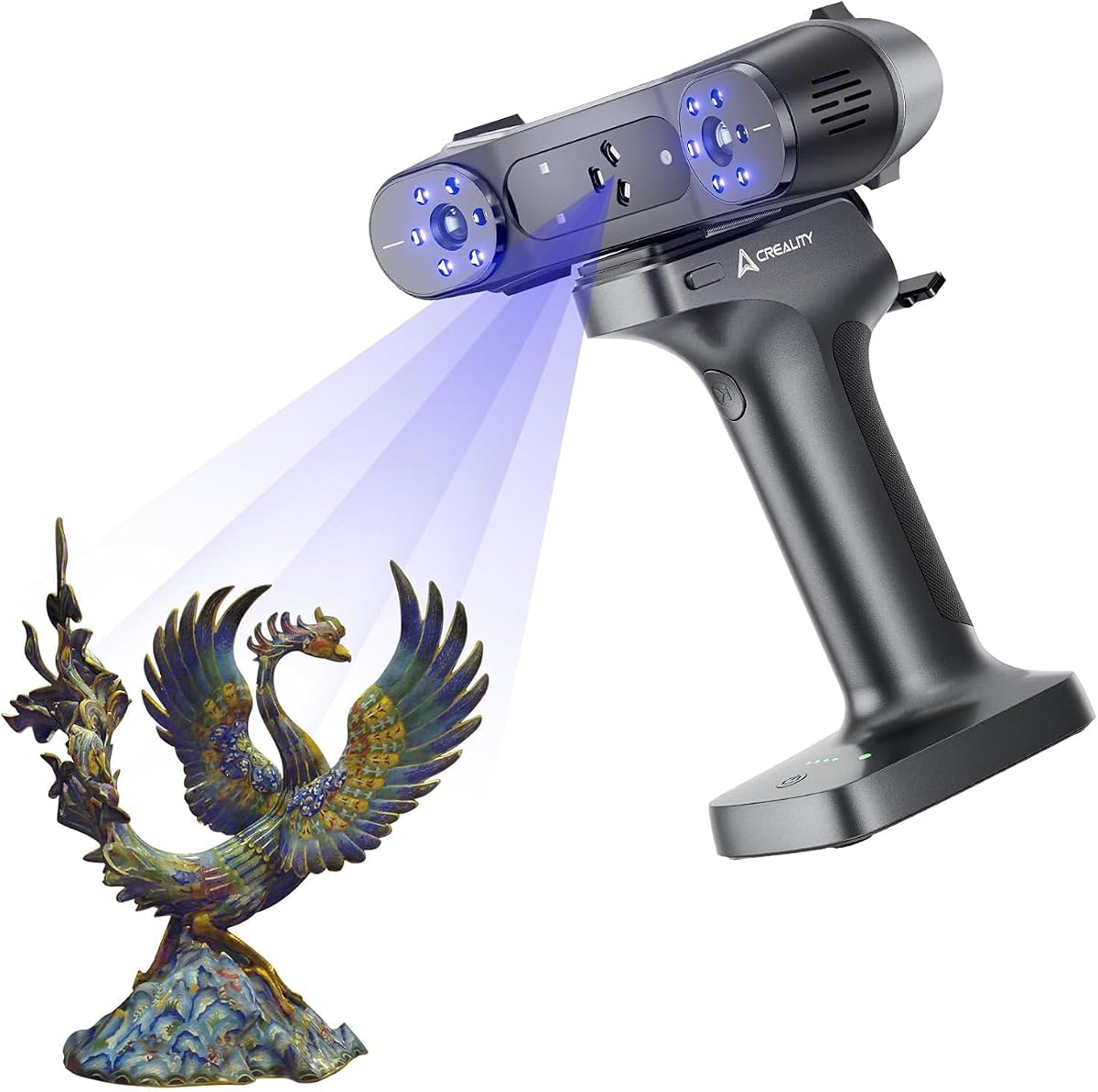

The Revopoint MetroX Pro stands out as an industrial-grade tool designed for high-precision reverse engineering. It captures complex geometries with single-frame accuracy up to 0.02 mm, making it ideal for detailed modeling and measurement tasks.
We may earn a commission when you buy through this link, at no additional cost to you.
Its blue laser technology and multiple scanning modes ensure you can capture flat, shiny, or dark surfaces without needing spray. Real-time streaming to mobile devices allows for efficient workflow management and instant data verification.
While the Revo Design software is sold separately, the included Revo Metro interface is intuitive and supports seamless data export to major CAD platforms. This flexibility makes it a strong choice for professionals.
If you need a reliable scanner for industrial inspection or detailed prototyping, the MetroX Pro delivers accuracy and speed. It balances performance with usability effectively for engineering teams.
Blue laser technology offers higher contrast and stability compared to standard light, reducing noise and improving edge capture on reflective surfaces.
Streaming to mobile allows immediate quality checks and data gap detection during scans, speeding up iterations without waiting for PC transfers.
We may earn a commission when you buy through this link, at no additional cost to you.
The MetroY Ultra is designed for engineers who need speed and reliability even in challenging environments. With up to 90 fps scanning and robust outdoor capabilities, it handles large objects and high-sunlight conditions efficiently.
We may earn a commission when you buy through this link, at no additional cost to you.
Its versatile scanning modes and no-spray technology allow you to work directly on industrial components like metal parts or automotive surfaces. The included battery grip supports extended field work without power interruptions.
Wi-Fi 6 ensures smooth wireless data transfer and real-time monitoring. This freedom is crucial when working away from a fixed workstation or in large industrial settings.
If you prioritize high-speed data acquisition and outdoor versatility, the MetroY Ultra is a top-tier investment. It combines power with portability for demanding reverse engineering projects.
Capable of handling up to 100,000 lux, this scanner remains accurate even in direct sunlight, making it perfect for on-site inspections.
The ergonomic battery grip provides about 2.5 hours of stable power, allowing you to move freely without being tethered to outlets.
We may earn a commission when you buy through this link, at no additional cost to you.
The EinScan Rigil offers a unique all-in-one approach with onboard computing, eliminating the need for a connected PC during scans. Its hybrid laser system ensures high precision across diverse materials and lighting conditions.
We may earn a commission when you buy through this link, at no additional cost to you.
With 32GB DDR5 RAM and a 1TB SSD, the Rigil processes data quickly on device. This makes it ideal for field work where network or laptop connectivity might be unreliable.
The hybrid laser source allows scanning of dark or reflective surfaces without spray. The large touchscreen provides direct control and feedback, enhancing usability for complex tasks.
For teams that require maximum mobility and independence from external hardware, the Rigil is unmatched. It delivers professional results in a self-contained package.
Onboard 2.4GHz CPU and DDR5 RAM mean you can complete full scanning workflows without needing a separate workstation.
Combining blue laser and IR VCSEL provides both high detail and depth accuracy, reducing errors on challenging industrial surfaces.
We may earn a commission when you buy through this link, at no additional cost to you.
The Raptor Pro handles massive objects with ease, from small details to items up to 4000mm. Its hybrid laser and structured light system ensures consistent results across varying surface types and sizes.
We may earn a commission when you buy through this link, at no additional cost to you.
With speeds up to 660,000 dots per second, data acquisition is fast. The true-color camera captures textures for realistic digital models, useful for prototyping and archival purposes.
It works outdoors and on metal surfaces without spray, making it versatile for automotive and industrial applications. The anti-shock algorithm minimizes interruptions during handheld use.
If you need to scan large assemblies or vehicles while maintaining detail, the Raptor Pro is a reliable tool. It bridges the gap between consumer and professional grade effectively.
Supporting objects from 5mm to 4000mm means this scanner adapts to small components and large machinery without needing multiple devices.
24-bit full-color scanning restores vivid textures, enhancing visual fidelity for presentations and detailed design reviews.
We may earn a commission when you buy through this link, at no additional cost to you.
The INSPIRE 2 offers exceptional value for small studios or educators needing reliable reverse engineering tools. Weighing only 190g, it combines lightweight design with dual scanning modules for flexible use.
We may earn a commission when you buy through this link, at no additional cost to you.
Its Wi-Fi 6 streaming and up to 20,000 lux outdoor capability make it adaptable for various environments. The accuracy of 0.05 mm suits most prototyping and educational projects well.
The software is user-friendly and supports direct import to CAD tools. For teams on a budget, this provides a smooth workflow without high costs.
If you need an entry-level yet capable scanner for everyday tasks, the INSPIRE 2 delivers. It balances cost with performance effectively.
Weighing just 190g, it fits easily into a backpack for travel or field use without sacrificing scanning quality.
Using both structured light and laser modes allows you to adapt quickly to different object sizes and textures.
We may earn a commission when you buy through this link, at no additional cost to you.
The Otter Lite Basic is an ideal entry point for students or hobbyists learning reverse engineering basics. Its simple setup and portable form factor encourage exploration without technical barriers.
We may earn a commission when you buy through this link, at no additional cost to you.
It supports both close and long-range modes, capturing fine details up to 0.05 mm. Color mapping ensures realistic digital copies of objects for prototyping or archival.
The included kit covers all essentials, reducing additional costs. It connects easily to Windows and Mac for quick project completion.
For those starting with 3D scanning or needing a simple tool for small parts, this model offers reliable performance. It is perfect for educational settings.
Setup requires minimal configuration, letting users start scanning within minutes of unboxing.
Markers calibration board and case are included, ensuring you have everything needed right out of the box.
We may earn a commission when you buy through this link, at no additional cost to you.
The standard MetroX Pro offers similar capabilities to the Advanced version at a lower price point. It provides industrial-grade accuracy with versatile tracking and streaming options for efficient workflows.
We may earn a commission when you buy through this link, at no additional cost to you.
Its ability to capture shiny or dark surfaces without spray saves time. Automatic turntable scanning simplifies complex object handling, reducing manual adjustments.
Revo Metro software allows easy data merging and editing. This model is suitable for engineering teams needing reliable measurement without extra costs.
If you seek a balance of precision and cost for industrial inspection, the MetroX Pro Standard delivers. It meets most reverse engineering needs effectively.
One-click automated scans reduce manual effort and increase consistency for complex objects with detailed geometry.
Mobile streaming allows instant feedback, ensuring high quality data capture during live scans.
We may earn a commission when you buy through this link, at no additional cost to you.
The Creality Raptor Pro delivers robust performance for industrial applications requiring high accuracy and speed. Its outdoor readiness and wireless features make it suitable for field work and large assemblies.
We may earn a commission when you buy through this link, at no additional cost to you.
It handles challenging surfaces without spray and achieves metrology-grade accuracy. This is crucial for ensuring parts meet tolerance requirements in manufacturing settings.
The software provides efficient processing and export options. With strong hardware requirements, it ensures stable performance during complex scans.
For teams needing reliable outdoor and indoor performance, this model is a strong choice. It supports a wide range of engineering tasks.
Wireless handling ensures freedom to move across large parts or environments without being tied to a single spot.
0.02 mm accuracy guarantees consistent results suitable for quality inspection and verification.
We may earn a commission when you buy through this link, at no additional cost to you.
The Raptor X is designed for professionals requiring rapid data capture with high accuracy. Its wireless handle and Wi-Fi 6 enable smooth, uninterrupted scanning for large or complex parts.
We may earn a commission when you buy through this link, at no additional cost to you.
34 cross laser lines provide wide coverage reducing scan time. Anti-shake technology ensures stability even during dynamic movements.
Fast charging and high capacity battery support all-day use. This tool is ideal for teams focused on speed and efficiency.
If you need top-tier performance for industrial or automotive reverse engineering, the Raptor X stands out. It balances speed with precision.
Lossless compression and Wi-Fi 6 allow fast data transfer without cables, streamlining your workflow significantly.
With 34 laser lines and 60fps scanning, large objects are captured quickly with consistent accuracy.
We may earn a commission when you buy through this link, at no additional cost to you.
The Raptor Pro offers metrology-grade accuracy at a competitive price. Its dual blue laser upgrade enhances coverage for large objects, ensuring precise captures for industrial and automotive use.
We may earn a commission when you buy through this link, at no additional cost to you.
Professional software integration allows smooth data transfer for CAD workflows. Wireless support adds flexibility for field inspections and assembly checks.
It handles objects from 5mm to 4000mm efficiently. This model is ideal for teams seeking high-end features without premium costs.
For reverse engineering requiring reliable measurements and professional results, this scanner meets expectations. It balances performance and cost well.
Compatible with major platforms, ensuring seamless data transfer and reducing compatibility issues.
Supporting objects from 5mm to 4000mm allows flexibility for parts ranging from small details to entire assemblies.
We may earn a commission when you buy through this link, at no additional cost to you.
Selecting the right scanner involves balancing precision, speed, portability, and compatibility with your existing CAD workflow.
For reverse engineering, accuracy determines how closely your digital model matches the physical object. Look for scanners with sub-millimeter or single-digit millimeter accuracy to ensure tolerance compliance.
Prioritize models with volumetric accuracy specifications suited to your project scale.
Higher frame rates reduce total capture time and improve usability for dynamic or complex objects. A fast scanner minimizes manual adjustments and data gaps.
Select scanners with sufficient points per second for your object size.
Laser scanners handle dark or reflective surfaces better without spray, while structured light captures fine details on matte objects. Hybrid solutions offer flexibility.
Match technology to your typical material types.
Handheld or wireless models allow scanning in field or large industrial settings. Battery life and Wi-Fi connectivity impact workflow efficiency.
Ensure the device supports stable wireless data transfer.
The scanner should integrate smoothly with your CAD or modeling software. Check supported file formats and any additional licensing costs.
Look for intuitive interfaces and robust export options.
Outdoor work requires resistance to sunlight and variable lighting. Some models include filters or specific modes for high-lux environments.
Ensure outdoor specs match your work conditions.
Consider upfront cost and any required software or hardware. Higher accuracy may mean higher total investment but better long-term value.
Balance initial expenses with project needs.
Ensure the scanner supports your smallest and largest target dimensions. Range flexibility allows scanning both small details and large assemblies.
Verify object size limits before purchasing.
Before scanning, clean the object and place it on a stable surface. For shiny or dark surfaces, apply appropriate matte spray if your scanner requires it.
Use the provided markers and calibration boards to ensure accuracy. Start with the recommended scanning distance and angle to avoid gaps.
Store the scanner in a cool dry place away from direct sunlight. Keep firmware and software updated to maintain performance and compatibility.
For most industrial reverse engineering tasks, accuracy between 0.02 mm and 0.05 mm is ideal. This level captures fine details and surface features without excessive noise. For smaller components, consider models with higher resolution specifications.
Modern blue laser or hybrid scanners often scan metals without spray. If your device supports reflective surfaces, you can skip spray. For older models, a light matte coat is usually recommended.
Most professional scanners export STL, OBJ, PLY, and ASC formats. Always check compatibility with your specific CAD software to ensure smooth data transfer and editing workflows.
Yes, many models support outdoor use with specific modes or filters. Check lux ratings and ensure your scanner includes outdoor compatibility for reliable performance under sunlight.
High-speed or high-resolution scans typically require a PC with a dedicated GPU and enough RAM. Entry-level models may work with standard computers, but professional ones benefit from stronger specs.
Wireless scanning is reliable if the device supports fast Wi-Fi 6 or lossless compression. Always test data transfer stability before critical field work to avoid data loss.
Choosing the right scanner depends on your specific balance of precision, speed, and budget. The models covered offer various solutions from entry-level to industrial-grade performance.
Prioritize features like surface handling, software compatibility, and mobility to match your workflow. A well-matched scanner improves accuracy and speeds up the reverse engineering process.
Prices change frequently, so verify current listings and availability before purchasing. Investing in the correct tool ensures consistent quality and efficient project results.