
SOLPERK Solar Panel Kit 20W
4.5Editor score
20W 12V Output
Built-in Controller
Waterproof Design
This guide compares the top marine solar panels for boats and yachts, reviewing efficiency, durability, and charging performance to help you power your vessel
Marine solar panels are essential for keeping batteries charged on boats, yachts, and ships during extended voyages or docking periods. They convert sunlight into electricity, reducing reliance on fuel-powered generators and ensuring critical systems remain operational when far from shore power sources.
We evaluated ten leading marine solar panel options based on efficiency, durability, shading resistance, and ease of installation. Each product offers unique features like flexible mounting, high-efficiency cells, or built-in charge controllers to suit different vessel sizes and power needs.
This list highlights the best choices for boaters, including budget-friendly options and premium high-output models. Each entry shows real specifications, ratings, and key benefits. Prices and availability may change, so verify current details before purchasing your ideal marine solar setup.
4.5Editor score

4.8Editor score
4.6Editor score
The following table provides a side-by-side comparison of the top marine solar panel options available this year. It highlights key specifications, ratings, and unique features to help you quickly identify the best fit for your boat's energy requirements and installation constraints.


This high-performance solar array delivers exceptional power for marine applications with its N-type cells and bifacial design. It achieves a 25.6% conversion efficiency, ensuring maximum energy harvest even in variable sunlight conditions typical of open water or shaded harbors.
We may earn a commission when you buy through this link, at no additional cost to you.
The TwinCell Anti-Shading design divides the panel into two independent sections, allowing continued power generation when one part is obscured by rigging or masts. The bifacial backsheet captures reflected light, boosting output significantly during clear days on the water or decks.
While it demands careful planning for dual-panel wiring and mounting, the investment pays off in reliable energy independence. The low temperature coefficient minimizes power loss in hot climates, making it ideal for tropical boating or extended summer cruises.
Boaters needing robust, high-capacity power solutions will find this panel unmatched. It suits yachts, sailboats, and offshore vessels seeking to reduce generator dependence while maintaining consistent battery charges across long voyages.
Bifacial technology captures sunlight from both sides, increasing daily energy yield by up to 25% depending on reflection conditions.
Dual-module design ensures one section keeps generating power even if the other is temporarily shaded by boat structures.
We may earn a commission when you buy through this link, at no additional cost to you.
Ideal for small craft or auxiliary charging, this kit provides a straightforward 20W solution with a built-in controller. Its 21%-30% cell efficiency ensures reliable trickle charging for 12V batteries without requiring extra equipment or technical knowledge.
We may earn a commission when you buy through this link, at no additional cost to you.
The included 8A controller features a three-stage charging process that prevents overcharging and extends battery life. The adjustable 360-degree mounting bracket allows optimal sun alignment, crucial for maintaining charge during extended stationary periods like dock stays.
While it lacks the power for major vessel loads, it excels as a maintenance tool for lead-acid, AGM, or lithium batteries. The waterproof and rustproof frame withstands harsh marine environments, though users should monitor cable connections for wear.
Boaters with limited budgets or minimal power needs will appreciate this kit. It is perfect for keeping small boat batteries topped off during storage or short weekends on the water without complex electrical work.
Includes panel, controller, bracket, and alligator clips for immediate use without additional purchases or wiring expertise.
Low-iron tempered glass and aluminum frame resist corrosion and heavy rain, ensuring long service in salty air.
We may earn a commission when you buy through this link, at no additional cost to you.
This PRO charger stands out with UltraSmart MPPT technology, achieving up to 99% tracking efficiency. It optimizes power extraction from the panel, making it significantly more effective than standard PWM controllers for similar wattage solar systems.
We may earn a commission when you buy through this link, at no additional cost to you.
The three-stage charging algorithm (Bulk, Absorption, Float) ensures batteries are recharged safely, increasing their lifespan. Visual indicators show charge levels clearly, and selectable modes allow customization for AGM, Lithium, or flooded 12V batteries commonly found on boats.
Although it costs more than basic trickle chargers, the efficiency gain justifies the price for users seeking reliable battery health. The waterproof and spark-proof design protects the battery fully from over-current, reverse polarity, and temperature spikes.
Marine users needing precise maintenance for sensitive lithium or AGM batteries will benefit most. It is an excellent choice for small vessels where maximizing every watt of solar input matters for long-term battery reliability.
MPPT technology dynamically adjusts to sunlight intensity, delivering 20%-30% more usable energy than competitors.
Selectable modes ensure compatibility with diverse battery chemistries without manual wiring changes or settings.
We may earn a commission when you buy through this link, at no additional cost to you.
This 100W panel utilizes Grade A+ N-type cells to deliver 25% conversion efficiency. Its design provides 20W more output compared to conventional panels, making it a powerful option for mid-sized boats needing reliable daily power generation.
We may earn a commission when you buy through this link, at no additional cost to you.
The 16BB cell technology reduces hot spots and cracks, extending the panel's lifespan significantly. It maintains performance in high temperatures due to a low temperature coefficient, ideal for tropical waters where heat typically reduces solar output.
While it requires a separate charge controller for full system integration, its durability justifies the setup effort. The IP67 rating ensures it can withstand heavy rain, snow loads, and wind pressures typical of open marine environments.
Boaters looking to balance cost with performance will find this panel ideal. It suits small fishing vessels or sailboats that need consistent charging for navigation, lights, and communication systems during short trips.
Low temperature coefficient minimizes power loss on hot days, ensuring stable charging output in summer.
IP67 protection and tempered glass shield against harsh weather, hail, and salt spray for years of use.
We may earn a commission when you buy through this link, at no additional cost to you.
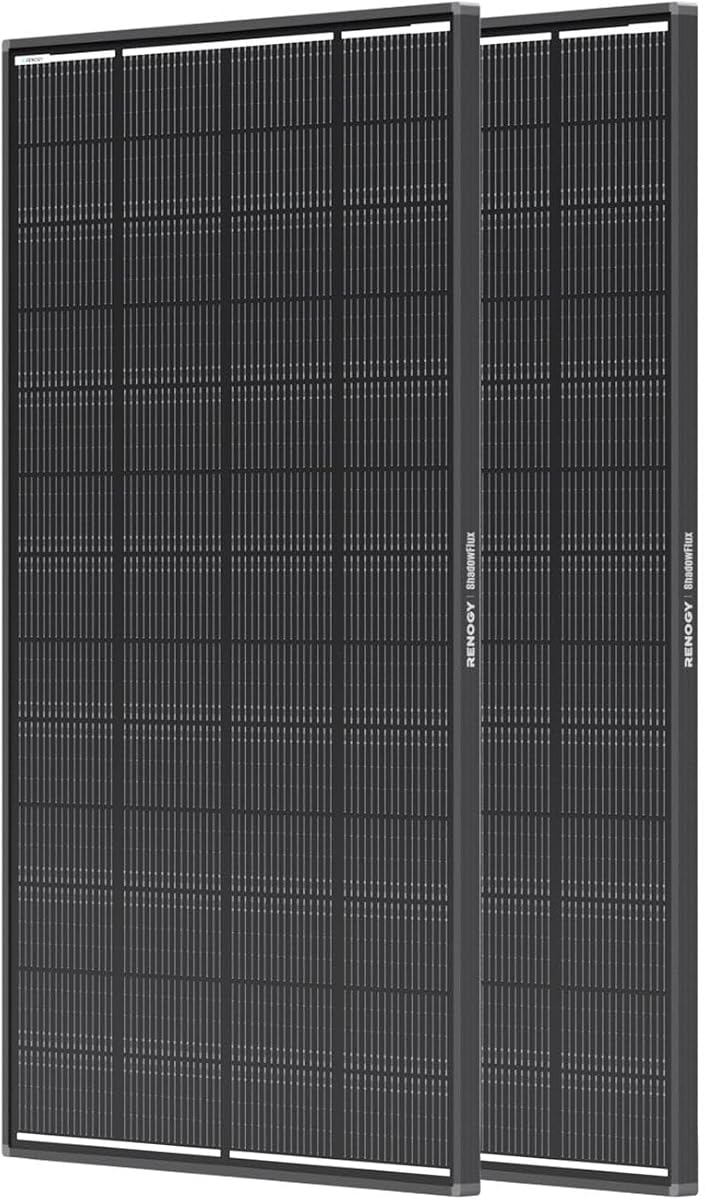
Renogy's ShadowFlux technology ensures reliable power even when part of the panel is shaded by sails, antennas, or rigging. This feature minimizes hot-spot risks, keeping power consistent during dynamic sailing conditions where sunlight angles shift frequently.
We may earn a commission when you buy through this link, at no additional cost to you.
The N-type 25% efficient cells and 16BB tech reduce micro-cracks and improve longevity. Its compact design is 10% smaller than standard panels, saving valuable deck space on yachts or smaller boats with limited roof area.
While priced higher than generic options, the performance in variable light conditions offers significant value for sailors. The IP67 rating and strong encapsulation protect against water vapor and corrosion, ensuring durability in salt spray.
Boaters facing partial shading or limited space will benefit most. It is a top choice for those seeking high efficiency without sacrificing panel real estate on their vessel's deck.
Anti-shading tech adapts to partial obstruction, preventing power drops when rigging or sails block part of the array.
Smaller footprint allows flexible placement on crowded decks without compromising power output per square foot.
We may earn a commission when you buy through this link, at no additional cost to you.
This flexible panel bends up to 240 degrees, allowing installation on curved boat surfaces like cabin roofs or radar domes. Its lightweight design is half that of rigid panels, simplifying transport and reducing stress on mounting points.
We may earn a commission when you buy through this link, at no additional cost to you.
Equipped with half-cut PERC cell technology, it delivers around 1000 Watt-hours daily under five hours of sunlight. The all-black, glare-free finish blends seamlessly with dark boat surfaces, reducing glare for crew visibility and aesthetics.
While flexible panels may be more susceptible to abrasion, the IP67 junction box ensures waterproof integrity. Pre-drilled holes and included cables make installation straightforward with adhesive or screws on curved areas.
Boaters with limited flat roof space or curved surfaces will find this model invaluable. It suits sailboats, cruisers, and luxury yachts needing adaptable solar power without rigid structural modifications.
Bendability allows perfect conformity to hull curves, maximizing roof space usage on irregular boat shapes.
High daily watt-hour generation ensures batteries stay charged even on cloudy days or partial sun exposure.
We may earn a commission when you buy through this link, at no additional cost to you.
This 120W panel offers a perfect middle ground for boats needing more power than small kits but less than large arrays. Its ShadowFlux technology handles partial shading effectively, ensuring consistent energy capture even when boats are docked under trees.
We may earn a commission when you buy through this link, at no additional cost to you.
With 25% efficiency and compact dimensions, it saves space while maintaining high output. The IP67 rating and encapsulation resist water vapor, ensuring reliability in humid or salty marine environments where corrosion is a constant threat.
The trade-off lies in its specific output capacity, which may not suffice for heavy loads without multiple units. However, its durability and shade resistance make it a smart choice for daily maintenance and moderate usage.
Boaters with medium-sized vessels will find this panel balanced and efficient. It works well as a standalone unit or part of a larger array for hybrid power needs.
10% smaller size allows fitting into tight corners or alongside other deck equipment easily.
ShadowFlux ensures power output stays high even when rigging or masts partially block sunlight.
We may earn a commission when you buy through this link, at no additional cost to you.
Delivering 400W of power, this panel is designed for vessels requiring substantial energy independence. Its ShadowFlux technology ensures reliable output even in variable lighting, making it a premium choice for full-time cruisers or off-grid marine living.
We may earn a commission when you buy through this link, at no additional cost to you.
The compact design saves valuable roof space while packing high efficiency into a smaller footprint. Built with N-Type 25% cells, it minimizes micro-cracks and offers a 25-year output warranty, guaranteeing long-term performance and peace of mind.
While it represents a significant investment, the high wattage eliminates the need for multiple smaller panels. The IP67 rating protects against rain, snow, and dust, ensuring it survives harsh marine conditions effectively.
Boaters with large yachts or complex energy systems will find this panel transformative. It simplifies wiring and maximizes daily power generation for lighting, refrigeration, and entertainment systems.
400W output reduces generator dependence, allowing extended off-grid periods without power anxiety.
Maintains high output even when partially shaded, crucial for busy marinas or tree-lined anchorages.
We may earn a commission when you buy through this link, at no additional cost to you.
This 50W charger offers significant power for maintenance with its UltraSmart MPPT controller, ensuring maximum energy extraction. It tracks up to 99% efficiency, ideal for boats needing faster battery recovery than 20W kits can provide.
We may earn a commission when you buy through this link, at no additional cost to you.
The visual charging indicators allow easy monitoring of battery levels at 25%, 50%, 75%, and 100%. It includes multiple safety protections against overcharge, short circuit, and reverse polarity, making it safe for unattended charging.
While it requires careful mounting to avoid cable strain, the convenience of plug-and-play cables simplifies installation. The three-stage charging algorithm extends battery life significantly, especially for deep-cycle marine batteries.
Boaters needing reliable mid-range charging for weekend trips or storage will find this model excellent. It balances cost and performance, offering advanced MPPT features without the complexity of larger systems.
Visual indicators provide clear status without needing extra digital meters or monitoring apps.
Full protection suite ensures the battery stays safe from electrical spikes during charging cycles.
We may earn a commission when you buy through this link, at no additional cost to you.
This small 7.5W charger is perfect for keeping small boat batteries from draining during storage. Its smart protection system prevents overcharge, ensuring safety even when left connected for long periods on anchored vessels or in garages.
We may earn a commission when you buy through this link, at no additional cost to you.
The LED indicator shows receiving sunlight and charging status clearly. It uses high-transparency glass and an ABS+PC frame that resists scratches better than flexible panels, making it durable for casual marine use.
While limited in power, it is ideal for maintaining small systems without expensive equipment. It connects easily to batteries or power outlets, offering a hassle-free solution for basic needs.
Boaters on a strict budget or with minimal power requirements will find this kit sufficient. It is a practical choice for preventing battery discharge during winter storage or idle periods.
LED lights show charging progress instantly, reducing guesswork for battery health.
Perfect for preventing flat batteries on small craft during long dock stays.
We may earn a commission when you buy through this link, at no additional cost to you.
Selecting the right marine solar panel depends on your vessel's power needs, available space, and environmental conditions. Understanding key factors like wattage, efficiency, and durability ensures you invest in a system that delivers reliable energy for your specific use case.
Determine your daily power consumption by listing essential devices like navigation lights, radios, and refrigeration. Higher wattage panels (100W–400W) suit larger vessels or full-time cruising, while smaller units (20W–70W) work for maintenance or auxiliary charging.
Always match total panel wattage to your battery bank capacity and usage to avoid energy deficits.
High-efficiency cells like N-type or PERC convert more sunlight into electricity. Look for conversion rates above 25% to maximize output in limited space, especially for smaller boats where roof area is constrained.
Efficiency is critical when space is limited or sunlight is variable.
Partial shading from masts, antennas, or rigging can drastically reduce power. Technologies like TwinCell or ShadowFlux prevent power loss by isolating shaded sections, ensuring consistent generation during dynamic sailing conditions.
Prioritize anti-shading features if your boat has complex rigging or sails.
Rigid panels offer durability but require flat surfaces. Flexible panels bend to fit curved decks, maximizing space but may wear faster. Ensure mounting hardware suits your vessel's surface, whether adhesive, screw-in, or bracket-based.
Choose flexibility based on your boat's geometry and structural limits.
Marine environments expose panels to salt spray, UV rays, and heavy rain. Look for IP67 or IP68-rated junction boxes, tempered glass, and corrosion-resistant aluminum frames to guarantee long service life in harsh conditions.
Robust weather resistance is non-negotiable for marine solar panels.
Some kits include controllers, while others require separate purchases. MPPT controllers are more efficient than PWM, optimizing power transfer. Ensure compatibility with your battery type (AGM, Lithium, flooded) to avoid damage.
A proper controller protects your battery and maximizes solar input.
Check for comprehensive warranties covering power output and materials. Most high-quality panels offer 25-year performance guarantees and 5–10-year material coverage. Reliable technical support is crucial for resolving marine-specific issues quickly.
Long warranties indicate manufacturer confidence in product quality.
While cheaper panels save money upfront, higher-quality units reduce long-term replacement costs. Balance initial investment with expected lifespan and energy savings from reduced generator or shore power use.
Invest in quality to ensure consistent performance over years of use.
Install panels where they receive maximum sunlight exposure, ideally facing true south or north depending on your hemisphere. Ensure the angle allows direct sun during peak hours; adjustable brackets help optimize this for changing seasons.
Regularly clean the panel surface to remove salt deposits, dirt, or debris that reduce efficiency. Use freshwater and a soft cloth to avoid scratching tempered glass. Inspect connections periodically for corrosion or loose cables.
Monitor system output using charge controllers or digital meters to detect issues early. Protect wiring with proper marine-grade insulation and conduit to prevent damage from UV or salt spray. Secure all components tightly to withstand high winds and vibrations.
Determine your daily energy usage in watt-hours and divide by average sun hours. For example, if you need 200Wh and get 5 sun hours, a 50W panel may suffice. Adjust for efficiency losses and seasonal variations by adding extra capacity.
Standard panels may work but marine-rated ones offer better durability against salt, corrosion, and high humidity. They often have stronger frames and better IP ratings, ensuring reliable performance in harsh boat environments.
Yes, a battery stores energy for use when sunlight isn't available. Solar panels alone cannot power devices directly at night; a battery bank with a charge controller ensures stable power delivery to all your marine electronics.
Rigid panels are more durable and efficient but require flat surfaces. Flexible panels bend to fit curved decks but may degrade faster. Choose based on your boat's space and structural capabilities.
Quality marine panels typically last 20 to 25 years. High-efficiency models often retain 80% power output after this period. Proper maintenance and protection from physical damage extend their operational lifespan significantly.
An inverter converts DC power from batteries to AC for standard appliances. It is necessary if you use AC devices like microwaves or laptops. For DC-only setups, an inverter may not be needed.
We reviewed ten top solar options ranging from compact trickle chargers to high-output arrays. The N-Type 16BB 400W panel stands out for efficiency, while the 20W kits offer budget-friendly maintenance.
Prioritize features like anti-shading technology and robust IP ratings to handle marine environments effectively. Match wattage to your boat's actual energy needs to avoid overspending or underpowering.
Remember that availability and offers may shift quickly. Always check current stock and warranties before purchasing to ensure you get the best value for your investment.