
XLUX Plant Soil Moisture Meter
4.4Editor score
Battery-free operation
Slim single-probe design
Clear color-coded display
Discover the top digital soil moisture meters for 2026. We compare features, accuracy, and ease of use to help you choose the perfect gardening tool today.
Finding the right digital soil moisture meter can transform how you care for your plants. These devices provide precise readings that help prevent overwatering or underwatering.
Our team analyzed ten leading models based on accuracy, durability, and user feedback. We focused on devices that offer reliable data for both indoor and outdoor gardening needs.
Each pick highlights unique features like wireless connectivity or multi-function testing. Please note that availability and details may change over time, so verify before buying.
4.4Editor score

4.2Editor score

4.4Editor score
This side-by-side comparison highlights key specifications and capabilities across all ten selected products to help you make an informed decision quickly.


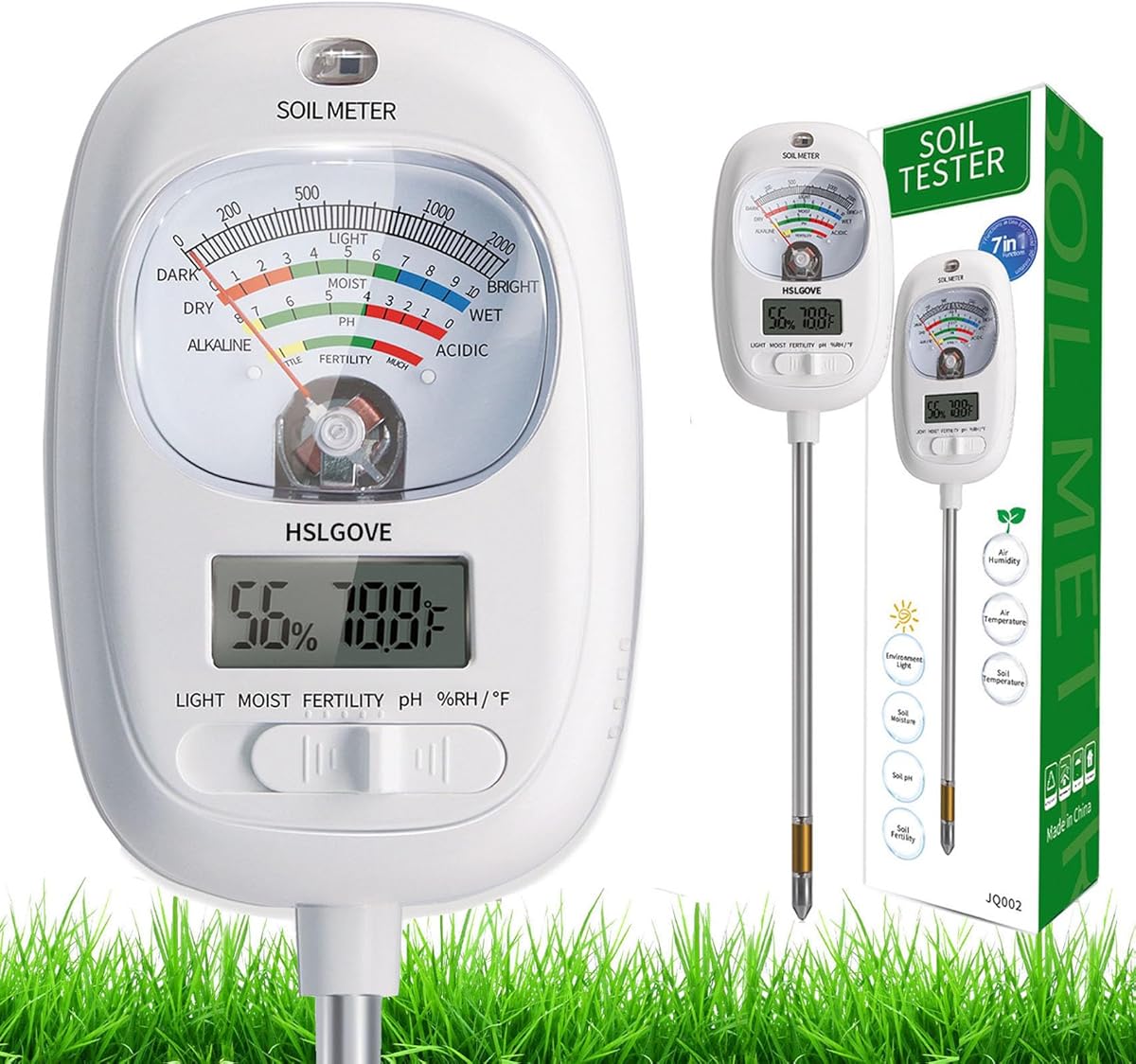


This meter stands out for its comprehensive 4-in-1 functionality that measures moisture, pH, temperature, and sunlight. It holds a solid rating and offers a large screen with backlight for easy reading day or night.
We may earn a commission when you buy through this link, at no additional cost to you.
The latest probe detection technology ensures quick and accurate measurements of soil conditions. The rotating head design allows you to view data without bending over, which is especially helpful when checking multiple plants in pots.
While it requires batteries and care in dry soil, these are minor trade-offs given the depth of information provided. You can take an average of five locations for the most precise pH and moisture values.
Ideal for growers seeking scientific care data, this device helps optimize watering and light exposure. Its visual design makes it accessible even for novice plant parents who want reliable results.
Measuring pH and sunlight alongside moisture allows for a holistic approach to plant health and cultivation.
The rotating screen lets you view readings comfortably without straining your back during garden checks.
We may earn a commission when you buy through this link, at no additional cost to you.
This kit expands beyond basic moisture by adding fertility, EC, and TDS measurements. With a 4.4 rating, it appeals to serious gardeners who want deeper insights into soil health and quality.
We may earn a commission when you buy through this link, at no additional cost to you.
The integrated light sensor and large backlight help you see precise numerical parameters clearly. It uses the latest 2025 probe technology to quickly measure pH, moisture, temperature, and soil fertility for science-based care.
While the battery requirement is standard, the added metrics like EC help you know when to water based on water quality. Just remember to moisten dry soil slightly before testing to protect the device.
Perfect for those who want to optimize plant growth scientifically, this model provides a wide range of applications from gardens to succulents. It balances functionality with ease of use effectively.
EC and TDS functions reveal essential data about dissolved solids in your soil solution.
The extra-large screen and backlight make reading data clear even in low light conditions.
We may earn a commission when you buy through this link, at no additional cost to you.
This unique model allows you to leave the meter in the soil with an always-on display. It removes the need for repeated insertion, making daily checks quick and non-invasive for delicate roots.
We may earn a commission when you buy through this link, at no additional cost to you.
The digital display shows precise moisture percentages while the color-coded gauge offers intuitive guidance. A slim flat body slips easily into drawers or pockets, weighing just as much as six nickels for easy handling.
You can monitor automatically every two hours or press a button for manual checks. The built-in tag slot helps keep care notes close by, though you must remember to turn it off to save power.
Best for busy plant owners, this meter minimizes soil disturbance and streamlines routine care. Its design prioritizes convenience and long-term stability in your plant collection.
Leaving the probe in place protects delicate roots from the stress of repeated testing.
The tag slot lets you personalize messages and notes directly near the plant pot.
We may earn a commission when you buy through this link, at no additional cost to you.
Built for commercial and agricultural settings, this meter offers high precision with a heavy-duty 8-inch probe. It targets professionals who need reliable data for crops or landscaping projects.
We may earn a commission when you buy through this link, at no additional cost to you.
Its accuracy and resolution of 0.1% ensure you get exact moisture content levels. IP65 water resistance and RoHS approval add to its durability in rugged environments.
The device holds max and min memory and completes sampling in under a second. While the cost is higher, the build quality and performance justify the investment for serious applications.
Ideal for greenhouse managers and landscapers, this tool delivers consistent results in tough conditions. It is a trusted choice when precision and durability are non-negotiable.
IP65 certification ensures the unit can withstand dust and water splashes on the job.
Memory functions let you track extreme readings to analyze soil behavior over time.
We may earn a commission when you buy through this link, at no additional cost to you.
This trusted model eliminates batteries completely, offering a simple and cost-effective solution. With over 60,000 verified ratings, it has proven its reliability for households across the country.
We may earn a commission when you buy through this link, at no additional cost to you.
The high-sensitivity probe reaches the root zone without damaging delicate roots. Its color-coded dial makes it easy to see if soil is dry, moist, or wet at a single glance.
While it lacks digital features, the analog design is intuitive and robust. Just remember to remove it within five minutes and store it in the provided sleeve to keep it pristine.
Best for beginners or casual gardeners, this meter balances affordability with quality. It removes guesswork from watering without adding battery costs or complex setup steps.
Never worry about changing batteries as the device works purely on soil resistance.
The slim single probe ensures minimal soil displacement during each test.
We may earn a commission when you buy through this link, at no additional cost to you.
This unique kit combines a traditional soil meter with an LCD screen for air and soil temperature. It provides a comprehensive view of your plant environment in one device.
We may earn a commission when you buy through this link, at no additional cost to you.
Switching modes on a single button allows quick access to moisture pH, and fertility. The integrated humidity reading helps you maintain a healthy microclimate for seedlings.
The 3 metal probe ensures durability and quick analysis of medium to large potted plants. Though it requires three batteries, the breadth of data provided makes it worthwhile for comprehensive care.
Ideal for seedlings and detailed gardeners, this tool delivers multiple data points easily. Its wide application range makes it a great gift for plant lovers.
Air temperature and humidity readings help you understand the full plant environment.
Combining soil pH and moisture in one unit simplifies your testing routine.
We may earn a commission when you buy through this link, at no additional cost to you.
This smart meter connects to an app for remote monitoring via a compatible WiFi hub. It features a capacitive probe that resists rust and provides reliable readings without frequent replacements.
We may earn a commission when you buy through this link, at no additional cost to you.
The unit detects moisture automatically every three minutes and shows data on its LCD display. It is also IPX5 waterproof, so it can handle rain or accidental spills without damage.
While the hub is sold separately, the smart features allow for deep insights into plant health. It is perfect for tech-savvy gardeners who want to track trends from their phone.
For those wanting a connected garden, this model offers modern convenience. Just ensure you have the right hub to unlock its full remote monitoring potential.
Check your plants from anywhere when connected to the home app system.
Capacitive technology ensures long life even in moist soil environments.
We may earn a commission when you buy through this link, at no additional cost to you.
Designed to stay in the soil, this model records moisture history for up to six months. It uses dual probes to give a broader view of root zone conditions rather than single point data.
We may earn a commission when you buy through this link, at no additional cost to you.
It tracks Daily Light Integral instead of just instant brightness, helping you understand full-day sun exposure. Temperature trends are also recorded independently, reducing drift in moisture readings.
While it requires Bluetooth setup and one AA battery, the long-term insights are invaluable. You can see how quickly soil dries after watering and adjust your routine accordingly.
Perfect for those who want trend data, this device simplifies complex soil behavior into readable charts. It is a powerful tool for optimizing plant care over the long haul.
Review trends over half a year to spot watering patterns and issues.
Two separate probes provide stable and representative readings across a wider area.
We may earn a commission when you buy through this link, at no additional cost to you.
This rugged meter is built for professionals and serious gardeners who need precise data. It features a durable 8-inch stainless steel probe to reach deep beneath the soil surface.
We may earn a commission when you buy through this link, at no additional cost to you.
The large LCD screen ensures quick and easy results in seconds. It is engineered to withstand field conditions and runs on standard AAA batteries for portability.
While expensive, its accuracy and durability make it ideal for forestry environmental studies or large scale agriculture. It delivers the data you can trust for critical projects.
For those needing reliable commercial-grade performance, this tool is worth the investment. It reduces guesswork and ensures your crops or plants get the right amount of water.
Tough probe and body construction allow it to handle demanding outdoor work.
Beyond gardening, it serves well in forestry and environmental research.
We may earn a commission when you buy through this link, at no additional cost to you.
This system offers 12-zone monitoring starting with two sensors for large gardens. It uses TDR technology to resist interference from soil salinity and provides precise moisture, temperature, and light readings.
We may earn a commission when you buy through this link, at no additional cost to you.
With a 230 ft wireless range, you can check data from indoors easily. The waterproof design withstands rain and sprinklers, ensuring durability in various weather conditions.
Although the setup may be more complex, the scale allows tracking raised beds and lawns simultaneously. Batteries are included, giving you a long runtime out of the box.
Best for large gardens, this system ensures you never miss a watering alert across multiple zones. It brings professional-level monitoring to complex gardening setups.
Expand to twelve zones to monitor every corner of your property effectively.
Stainless steel triple probes ensure stable readings even in tricky soil types.
We may earn a commission when you buy through this link, at no additional cost to you.
Selecting the right meter involves considering several key factors that match your specific gardening needs and preferences.
Consider how many functions you need beyond moisture. Some devices only measure water levels, while others track pH, temperature, sunlight, and fertility metrics. If you want a holistic view of plant health, look for multi-instrument options that provide comprehensive data. Simple analog tools are sufficient for basic watering, but digital testers with multiple parameters offer deeper insights.
Choose a device that aligns with how much data you want to track.
Decide between battery-operated and battery-free models. Battery-free options are convenient as they never require replacements, but digital devices often offer more features like screens and connectivity. Ensure you check how many batteries are required and if low-battery alerts are included to avoid interruptions in monitoring.
Battery-free is simple, but batteries enable advanced digital features.
Probe material and shape impact accuracy and root health. Stainless steel probes are durable and resist rust, while capacitive probes last longer in wet soil. Single probes minimize soil disturbance, but dual probes provide more representative readings over a larger area.
Select a probe that balances durability with minimal impact on roots.
Wireless and smart meters allow remote monitoring via apps or receivers. These are great for tracking trends without walking to the garden but require hubs or connections. Wired devices are standalone and simpler but need physical checking each time.
Wireless offers convenience, but standalone devices ensure reliability.
A clear display is essential for quick decisions. Look for large screens with backlighting for use in low light or shaded areas. Analog dials are straightforward, but digital displays provide precise numerical values that help fine-tune watering schedules.
Prioritize screens that are easy to read in all lighting conditions.
Ensure the unit is built for your environment. Outdoor models should have waterproof ratings like IPX5 to withstand rain. Indoor models can be lightweight and compact. Check for sturdy probes that can handle repeated insertion into various soil types.
Durability ensures longevity in both indoor and outdoor settings.
Some advanced meters store historical data to help you analyze trends over time. If you want to track how quickly soil dries or seasonal changes, a device with memory or cloud storage is useful. Basic tools offer immediate readings without history storage.
Data logging is key for long-term optimization of plant care.
Choose a device that fits your skill level. Simple plug-and-play units are best for beginners, while multi-button testers with setup steps may suit experts. Features like auto-detection and visual alerts reduce the effort required for daily checks.
User-friendly designs make daily monitoring easier and more consistent.
Start by inserting the probe into the soil at a depth relevant to your plant's root zone, usually around four inches. Wait a few seconds for the reading to stabilize before noting the value. This ensures accurate data without rushing the measurement process.
For best results, test multiple spots around the plant to get an average reading. This accounts for uneven soil distribution and gives a better overall picture of moisture levels. Avoid pushing the probe into hard, dry soil without moistening it first to prevent damage.
After use, clean the probe with a soft cloth to remove dirt and debris. Store the device in a dry place or protective case to keep it safe from scratches. If it uses batteries, replace them when the indicator alerts or at least once a year to ensure reliable operation.
Check the reading against the device's scale. Most meters use color codes like dry, moist, and wet. Water when the meter shows dry or low levels, and wait until it rises to moist. This prevents overwatering and ensures your plant gets the right amount of hydration.
Some models are designed specifically for leave-in monitoring. They feature corrosion-resistant probes and durable housings to stay in the ground long term. However, others must be inserted and removed for each check to avoid damage, so always check the product instructions.
Soil moisture can vary due to uneven watering or compacted areas. To get a reliable reading, test at least three to five locations around the plant. Averaging these values gives a more accurate representation of overall soil conditions.
Most digital meters require batteries like AAA or AA to power screens and sensors. Some specialized battery-free options exist using analog gauges. Always check the power requirements and replace batteries when low to avoid inaccurate readings or shutdowns.
Digital meters often provide precise numerical data and better resolution than analog dials. However, accuracy depends on probe quality and calibration. High-end models with advanced sensors generally outperform basic analog tools in consistency and detail.
No, soil moisture meters are designed for soil use only and should not be submerged in liquids. Testing liquids can damage the internal sensors. Always use the probe in soil or moist earth for accurate results and device safety.
We reviewed ten top digital soil moisture meters ranging from simple analog tools to advanced smart systems. Each option offers unique benefits depending on your gardening goals and environment. Whether you want basic checks or detailed analytics, there is a fit for everyone.
Prioritize features like probe durability, power source, and display clarity. If you have a large garden, consider expandable wireless systems. For indoor houseplants, compact leave-in meters work best. Balancing convenience with accuracy is key to selecting the right tool.
Remember to verify current availability and details before buying as product lines may update. With the right meter, you can take the guesswork out of watering and keep your plants thriving all year round.