
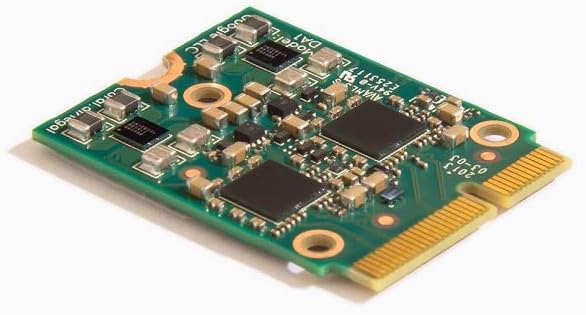
G650-04686-01 Coral M.2 Accelerator B+M Key
5.0Editor score
4 TOPS inference power
Works with Debian Linux
Excellent price value
This guide compares the top M2 Accelerator Cards for AI inferencing and edge computing, reviewing performance, compatibility, and value to help you select the
M2 Accelerator Cards are specialized hardware modules designed to boost machine learning performance on edge devices and embedded systems. They enable faster inference for computer vision and natural language tasks without relying on cloud resources. Choosing the right card depends on your specific workload requirements and system constraints.
We evaluated ten leading M2 Accelerator Cards based on their processing power, energy efficiency, and software ecosystem support. Our analysis focuses on real-world performance metrics and ease of integration into existing Linux or Windows environments. This list covers both standalone accelerators and adapter solutions for various form factors.
Each pick highlights key specifications like TOPS performance, power consumption, and supported frameworks such as TensorFlow Lite or ONNX. Prices and availability can fluctuate frequently, so please verify current details on the product pages before making a final decision. Our goal is to provide clear insights for developers and hobbyists alike.
5.0Editor score

4.6Editor score

4.3Editor score
The following table provides a side-by-side comparison of all ten M2 Accelerator Cards featured in this guide. It highlights essential specifications to help you quickly identify the right fit for your project needs.


The waveshare Hailo-8 M.2 AI Accelerator Module stands out as a top contender for edge AI applications. With a rating of 4.6 stars, it offers impressive processing power tailored for demanding workloads. Its ability to handle 26 TOPS makes it ideal for real-time image processing and object detection tasks.
We may earn a commission when you buy through this link, at no additional cost to you.
This module is built around the Hailo-8 AI processor, which delivers high-efficiency inferencing. It supports major frameworks like TensorFlow, Keras, and PyTorch, allowing flexibility for developers. The low power consumption of 2.5W ensures it can run on systems with limited thermal budgets without sacrificing speed.
While the performance is stellar, users should note that optimal cooling is necessary for sustained high-performance tasks. The documentation is comprehensive but may require some time to master for beginners. These trade-offs are acceptable given the superior capabilities it brings to embedded systems.
Ideal for developers needing high throughput on small form factors, this module is a strong investment. It balances power and efficiency better than many competitors. If you prioritize raw AI performance on the edge, this product is highly recommended.
With 26 TOPS of processing power, this module handles complex neural networks efficiently without external GPUs.
Supports TensorFlow, ONNX, and more, making integration into existing pipelines significantly smoother for engineers.
We may earn a commission when you buy through this link, at no additional cost to you.
The MX3 M.2 AI Accelerator is designed for high-performance computer vision workloads that demand speed and accuracy. It is an excellent choice for professionals who need reliable edge computing without sacrificing efficiency. Its M.2 M-key form factor allows seamless integration into existing systems.
We may earn a commission when you buy through this link, at no additional cost to you.
One of its strongest features is the comprehensive software development kit, which simplifies the deployment process. It runs on Linux and supports Raspberry Pi 5 setups with a compatible HAT. This flexibility makes it versatile for both industrial and hobbyist projects requiring robust AI capabilities.
While it offers premium features, the price is higher than standard accelerators. Additionally, it is primarily optimized for Linux, which may limit users on other operating systems. However, for specialized vision tasks, the performance justifies the investment and learning curve.
Buyers seeking top-tier vision processing will find this card unmatched in efficiency and power. It is best suited for those who can leverage the Linux ecosystem. If your project focuses on complex image analysis, this is the premier choice.
Specifically tuned for demanding computer vision tasks, delivering rapid inference speeds for critical applications.
Works easily with existing Linux systems and Raspberry Pi 5 via standard M-key 2280 slots.
We may earn a commission when you buy through this link, at no additional cost to you.
The G650-04686-01 Coral M.2 Accelerator offers exceptional value for developers starting with edge AI. With a perfect 5.0 rating, it is a favorite for its reliability and ease of use. It provides 4 TOPS of performance, which is sufficient for many standard inference tasks.
We may earn a commission when you buy through this link, at no additional cost to you.
It integrates seamlessly with Debian-based Linux systems and supports TensorFlow Lite models out of the box. This makes it incredibly easy to deploy without extensive setup. The power efficiency ensures it can run on low-power devices without overheating or draining power quickly.
While it lacks the raw power of dual TPU solutions, its cost-effectiveness is hard to beat. It is not ideal for extremely high-throughput needs but excels in cost-sensitive projects. The trade-off is acceptable for most hobbyists and entry-level industrial applications.
This accelerator is perfect for those on a budget who need reliable performance. It is the best starting point for anyone learning edge computing. If you prioritize value and ease of integration, this is the ideal selection.
Delivers solid machine learning capabilities at a price point that is accessible for everyone.
Works directly with TensorFlow Lite on Debian systems, reducing development time significantly.
We may earn a commission when you buy through this link, at no additional cost to you.
The M.2 Accelerator with Dual Edge TPU brings double the inference power to your system. Rated at 4.1 stars, it is a robust choice for applications needing parallel processing. It offers 8 TOPS total peak performance, making it suitable for handling multiple AI streams simultaneously.
We may earn a commission when you buy through this link, at no additional cost to you.
Its energy efficiency stands out, delivering 2 TOPS per watt which is vital for battery or power-constrained environments. The PCIe Gen2 x1 interface per TPU ensures enough bandwidth for most edge tasks. It fits into standard 2230 slots, making it versatile for small form factor devices.
However, dual TPU operation generates heat, so thermal management is crucial to maintain peak performance. The 2230 form factor might be limiting for some larger enclosures compared to 2280. These factors are minor considering the significant performance boost it offers.
This card is best for projects that need more power than a single TPU can provide. It allows you to run complex models without moving to a full GPU system. If you need scalability and efficiency, this is a strong contender.
Dual TPUs allow running multiple models or streams concurrently, significantly boosting throughput.
Delivers high performance per watt, ensuring efficient operation in thermally constrained spaces.
We may earn a commission when you buy through this link, at no additional cost to you.
The Coral M.2 Accelerator A+E Key is a reliable module for standard machine learning tasks. With a rating of 4.2, it provides a balance of performance and compatibility. It delivers 4 TOPS peak performance, which is adequate for basic vision and classification projects.
We may earn a commission when you buy through this link, at no additional cost to you.
It supports both Windows and Linux systems, giving it broader compatibility than many competitors. The A+E key interface ensures easy integration into laptops and embedded devices. Industrial-grade reliability with a wide temperature range makes it suitable for harsh environments.
While it lacks the raw power of more premium options, its versatility is a key strength. It is not ideal for high-throughput scenarios but works well for steady, low-latency inference. The build quality ensures longevity in challenging conditions.
This accelerator is perfect for users needing a stable, compatible solution across different operating systems. It is a safe choice for those unsure about their specific OS requirements. If you prioritize compatibility and reliability, this is a solid option.
Supports both Windows and Linux, allowing flexibility in system architecture without hardware changes.
Designed to withstand extreme temperatures, ensuring long-term reliability in outdoor settings.
We may earn a commission when you buy through this link, at no additional cost to you.
This waveshare module brings high-end processing capabilities to the edge. Its 26 TOPS performance makes it suitable for demanding tasks like multi-object tracking. It supports simultaneous processing of multiple streams and models, which is rare in this category.
We may earn a commission when you buy through this link, at no additional cost to you.
Developers appreciate its compatibility with TensorFlow, PyTorch, and ONNX. The low latency ensures real-time responsiveness for critical applications. Windows and Linux support broadens the potential user base significantly compared to Linux-only solutions.
However, maintaining optimal temperatures is essential to sustain performance levels. The software setup can be intricate for those new to edge AI. Despite this, the power it offers is unmatched for similar form factors.
It is best for advanced users needing maximum performance from an M.2 module. If your project requires scaling multiple AI models efficiently, this is the top choice. It balances power and flexibility better than most competitors.
Handles multiple video feeds and models at once, increasing system utility for complex tasks.
Works with TensorFlow, ONNX, and PyTorch, allowing easy migration from cloud to edge models.
We may earn a commission when you buy through this link, at no additional cost to you.
This adapter allows users to maximize the potential of Coral Edge TPU modules. It is designed exclusively for these accelerators, ensuring stability and performance. With a 5.0 rating, it is trusted by the community for its reliability and functionality.
We may earn a commission when you buy through this link, at no additional cost to you.
It fits standard M.2 2280 slots and provides bidirectional Gen2 bandwidth. This ensures efficient data transfer between the TPU and the system. The included mounting screws add vibration resistance, which is crucial for mobile or industrial applications.
While it does not add processing power itself, it provides a robust platform for existing hardware. Users should ensure they have compatible modules before purchasing. The added bulk is minor compared to the stability it offers.
This is the perfect accessory for anyone building a Coral TPU-based system. It ensures your hardware stays secure and runs efficiently. If you need a reliable way to mount your modules, this is the best pick.
Includes stainless steel mounting screws to secure the card in high-vibration environments effectively.
Bidirectional Gen2 bandwidth ensures data moves quickly between the system and TPU module.
We may earn a commission when you buy through this link, at no additional cost to you.
The Dual Edge TPU PCIe Adapter transforms a standard PCIe slot into a dual-TPU powerhouse. It is perfect for AI edge computing projects needing enhanced inference capabilities. By splitting Gen3 lanes to Gen2 for dual TPUs, it offers a powerful configuration.
We may earn a commission when you buy through this link, at no additional cost to you.
It includes a heatsink to manage the heat generated by two active TPU modules. This is crucial for maintaining performance during long workloads. The design is space-efficient, saving valuable slot space compared to using two separate adapters.
While it requires a free PCIe slot, it is cost-effective for scaling AI workloads. It is not compatible with non-Coral modules, which limits its use. However, for Coral users, it is a vital tool for expanding capacity.
This adapter is ideal for developers needing to run more models without upgrading the whole system. It is the best choice for scaling existing hardware investments. If you are building an edge computing workstation, this is a must-have.
Runs two TPUs in a single PCIe slot, saving space and preserving room for other expansion cards.
Integrated heatsink ensures TPUs stay cool, preventing throttling during intensive inference tasks.
We may earn a commission when you buy through this link, at no additional cost to you.
While primarily for storage, the QNAP QM2-2P10G1TB supports fast data access for AI workloads. It offers two M.2 NVMe slots and a 10GbE network port. This combination is useful for servers that need to process data locally at high speeds.
We may earn a commission when you buy through this link, at no additional cost to you.
The Marvell AQtion controller ensures stable performance under heavy load. It supports Windows and Linux systems, making it versatile for various setups. The low-profile bracket pre-installed makes it easy to fit into standard chassis.
However, it is not an AI accelerator card itself. It serves as a supporting component for high-performance computing environments. For those building AI servers, it helps manage data flow efficiently.
This card is best for infrastructure where data access speed is critical. It is the best way to enhance storage and network bandwidth in a single device. If you need high-speed storage expansion, this is the ideal choice.
Dual M.2 PCIe Gen3 slots allow for fast caching and data storage to support processing tasks.
Built-in 10GbE port connects to high-speed networks, essential for data-intensive workloads.
We may earn a commission when you buy through this link, at no additional cost to you.
The Rocket 1604L provides future-proof connectivity for M.2 NVMe devices. It features PCIe Gen5 x16 interface, allowing maximum bandwidth for storage. This is beneficial for systems needing to handle large datasets for AI training or inference.
We may earn a commission when you buy through this link, at no additional cost to you.
It supports up to four M.2 drives with dedicated x4 lanes per port. This ensures each drive operates at full speed without contention. It is natively supported by mainstream operating systems, simplifying installation and use.
While designed for storage, its high-speed data delivery supports accelerated compute tasks. However, it requires a motherboard with PCIe Gen5 support. The cost is higher than standard options, reflecting its advanced technology.
This card is ideal for high-end workstations needing maximum storage performance. It ensures your system keeps up with data demands without bottlenecks. If you need top-tier storage speed, this is the leading option.
PCIe Gen5 x16 interface offers the fastest possible connection for data-intensive applications.
Supports up to four drives with dedicated lanes, ensuring consistent high performance across all drives.
We may earn a commission when you buy through this link, at no additional cost to you.
Selecting the right M2 Accelerator Card requires understanding your project's specific demands. Here are the key factors to consider before purchasing.
Performance is typically measured in TOPS (Trillions of Operations Per Second). Higher TOPS values indicate the ability to handle more complex AI models or run multiple models simultaneously. For simple tasks like object detection, 4 TOPS might suffice, whereas advanced applications may require 20+ TOPS. Always match the performance tier to your workload complexity.
In short, prioritize higher TOPS if you expect heavy computational loads or multitasking.
Power consumption is critical for edge devices that rely on limited power budgets. Look for accelerators with low wattage per TOPS to ensure efficient operation without generating excessive heat. Efficient cards can run on passive cooling solutions or smaller power supplies, reducing overall system cost.
In short, choose energy-efficient models for battery-powered or thermally constrained environments.
A robust software ecosystem is vital for deployment success. Check if the accelerator supports popular frameworks like TensorFlow Lite, PyTorch, or ONNX. Strong SDKs with good documentation reduce development time significantly. If you rely on specific tools, ensure the card is compatible.
In short, verify framework compatibility to avoid lengthy development hurdles.
Different cards support different operating systems. Some are optimized for Linux, while others offer Windows support. Ensure the card works with your OS to avoid driver issues. Linux support is common in embedded systems, but Windows flexibility can be useful for general development.
In short, confirm OS compatibility with your existing hardware setup.
M.2 form factors vary, including 2230 and 2280 sizes. Ensure the card fits your device's slot and physical space constraints. M-key and E-key types are different and not interchangeable. Adapter boards might be needed if your system requires different connectors.
In short, check the physical dimensions and key types before buying.
High-performance accelerators generate heat. Cards without integrated fans or heatsinks might throttle under load. Consider the ambient temperature of your deployment environment. Passive cooling is sufficient for low-power tasks, but active cooling may be needed for intense workloads.
In short, assess thermal needs to maintain consistent performance.
Price varies widely between entry-level and premium cards. While cheaper options are attractive, they might lack features you need later. Evaluate the total cost of ownership including necessary adapters or cooling solutions. Balance your budget against the required capabilities.
In short, look for the best balance between cost and features for your project.
If your project might grow, consider scalable options. Dual TPU adapters allow you to expand capacity without replacing the main unit. Cards with versatile interfaces can support more complex setups later. Planning for future needs saves money in the long run.
In short, choose options that allow for future upgrades if possible.
Start by identifying the correct M.2 slot and key type on your motherboard or device. Insert the card carefully to avoid bending pins, and secure it with the mounting screw. Ensure the system is powered off during installation to prevent hardware damage.
Next, install the required drivers and software SDK from the manufacturer. Configure your environment variables to recognize the accelerator. For Linux users, check that the TPU service is enabled. For Windows, ensure driver compatibility is verified.
Regularly monitor the card temperature using system tools to prevent overheating. Clean dust from heatsinks periodically to maintain airflow. If using active cooling, ensure fans are functioning properly. Proper maintenance extends the lifespan and performance of the card.
M.2 accelerators are smaller and designed for direct insertion into M.2 slots, while PCIe cards require larger expansion slots. M.2 is better for compact devices, whereas PCIe offers higher bandwidth for desktop systems.
Yes, some M.2 cards are compatible with Raspberry Pi 5 via specific HATs. Ensure the card supports the Raspberry Pi's interface type, such as M-key 2280. Check manufacturer documentation for specific compatibility.
Most high-performance M.2 accelerators benefit from a heatsink to prevent thermal throttling. Passive cooling works for light tasks, but active cooling is better for sustained workloads. Always check the manufacturer's thermal recommendations.
Coral TPUs primarily support TensorFlow Lite. Models need to be compiled specifically for the Edge TPU. While ONNX and other frameworks can be used, conversion is often required for best performance.
TOPS stands for Trillions of Operations Per Second. It measures the computational power of an AI chip. Higher TOPS generally mean the ability to handle more complex tasks or process data faster.
Some accelerators like Hailo-8 support Windows, but many are optimized for Linux. Check the specific product details for Windows driver availability. Linux is more common for embedded AI solutions.
In summary, the waveshare Hailo-8 module and MX3 accelerator offer top performance for advanced users. The Coral M.2 Accelerator remains the best budget-friendly option for beginners. Each option serves different needs depending on your system constraints.
When choosing, prioritize performance, power consumption, and software support. These factors will determine how effectively your project runs in real-world scenarios. Also consider the physical fit within your enclosure to avoid installation issues.
Prices for M2 Accelerator Cards fluctuate often due to market demand. Always verify the latest pricing and stock before making your purchase. Check the links provided for the most up-to-date deals available today.